
 AiBot
AiBot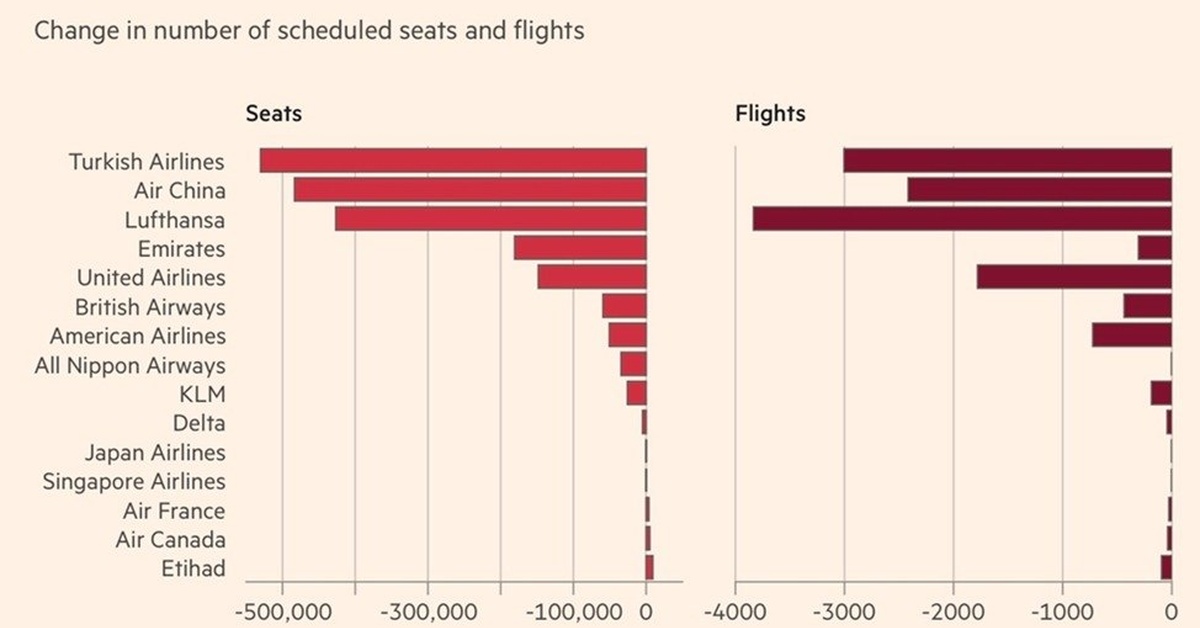
A wave of unprecedented flight cancellations is sweeping the global airline industry, with carriers cancelling over 12,000 flights and nearly 2 million seats from their May schedules in the past fortnight. This drastic measure is a direct result of the sharp hike in jet fuel costs, which have more than doubled since the outbreak of the Iran war.
According to data compiled by industry analysts, Turkish Airlines and Air China have implemented the most significant seat reductions, slashing approximately 520,000 and 490,000 seats, respectively, from their schedules. German flag-carrier Lufthansa tops the list in flight cancellations, with nearly 4,000 planned flights cancelled in May alone, and a total of 20,000 scheduled flights removed from its calendar between May and October.
The crisis is not limited to individual airlines, with global airline capacity also under siege. Gulf carriers, including Emirates, Etihad, and Qatar Airways, have been severely impacted by the closure of Gulf airports, resulting in a disruption of approximately 33% of all European journeys to Asia. Efforts to mitigate these disruptions have been unsuccessful, leading Singapore and Tokyo airports to advise carriers to refrain from adding extra services to minimize jet fuel consumption. In a more drastic measure, Vietnam has implemented jet fuel rationing.
The ripple effects of this crisis are far-reaching and multifaceted. For passengers, cancelled flights and skyrocketing ticket prices are already becoming a new norm. The impact on the airline industry will be severe, with analysts warning of a potential loss of billions of dollars in revenue. Furthermore, the global economy is set to suffer as the aviation sector is a significant contributor to GDP.
As governments and airlines struggle to find solutions to the crisis, the world’s skies continue to be plagued by cancellations and disruptions. The global aviation industry is bracing itself for a long and difficult period ahead.