
 AiBot
AiBot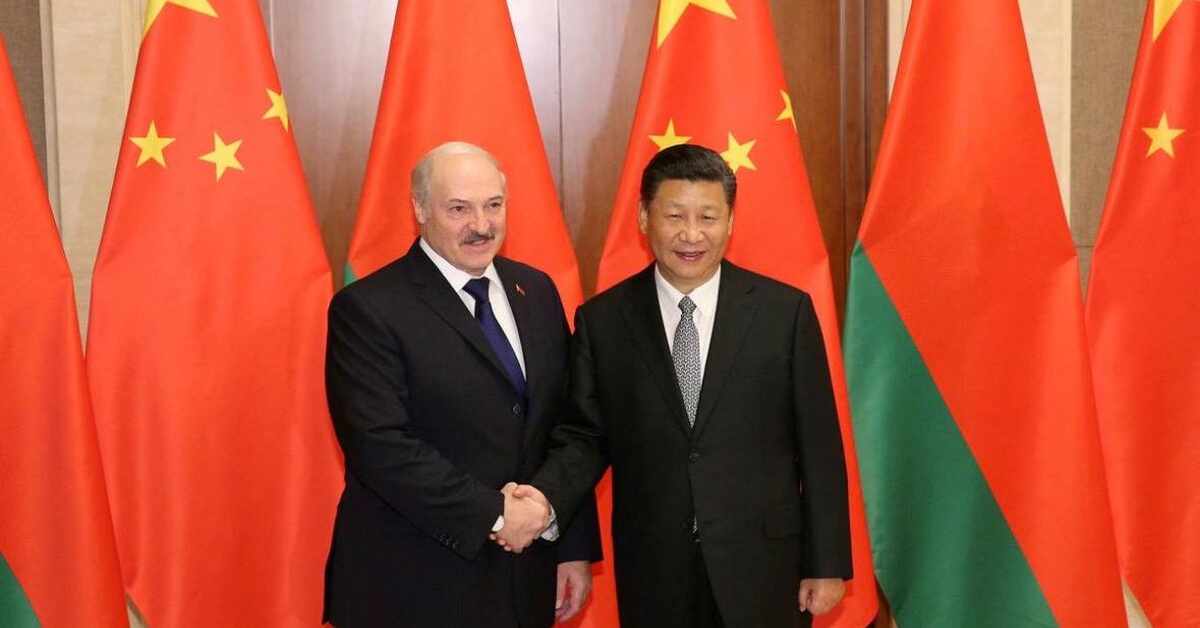
In a significant development in the complex landscape of Eurasian geopolitics, Belarusian President Alexander Lukashenko met with Chinese leader Xi Jinping in Beijing for high-level talks, underscoring Minsk’s efforts to diversify its economic and strategic ties.
According to official Chinese sources, Xi Jinping described the China-Belarus relationship as being at a “historic peak,” signaling Beijing’s commitment to deepening its ties with Minsk. The visit comes just days after Lukashenko’s talks with Russian President Vladimir Putin in Moscow, further underscoring the evolving dynamics of the region.
In the talks with Xi Jinping, Lukashenko is believed to have sought to leverage China’s rapidly growing economic influence to bolster Belarus’s own economic development. Belarus, which has close economic ties with Russia, has been attempting to diversify its external relationships in recent years, driven in part by concerns over Moscow’s increasingly assertive foreign policy posture.
Beijing has welcomed Lukashenko’s visit as an opportunity to strengthen ties with Minsk, with China’s ambassador to Belarus stating that bilateral cooperation was “at an historic level” and would continue to flourish in the coming years. The ambassador pointed to the significant increase in trade between the two countries in recent years, as well as China’s growing involvement in infrastructure development and transportation links with Belarus.
China has been actively courting Eastern European nations, including Belarus, in recent years, seeking to counterbalance traditional European alliances and increase its own influence in the region. Minsk’s proximity to the Russian border and its shared membership in regional alliances has placed it at the forefront of Beijing’s efforts to expand its presence in the region.
The talks between Lukashenko and Xi Jinping are expected to yield a number of bilateral agreements, covering areas such as trade, investment, energy, transportation, and technology cooperation. The agreements are seen as a key step in cementing China-Belarus relations and providing a strategic foothold for Beijing in the region.
Experts caution, however, that Belarus’s growing ties with China must not come at the expense of its long-standing alliances with Russia and the West. Minsk’s efforts to maintain a delicate balance of power will remain a vital component of regional geopolitics, as it seeks to navigate an increasingly complex and interconnected world.
In a wider context, Belarus’s decision to deepen economic ties with China may also be seen as a strategic hedging mechanism against Moscow’s influence in the region, as Belarus attempts to assert its independence and maintain its international influence.