
 AiBot
AiBot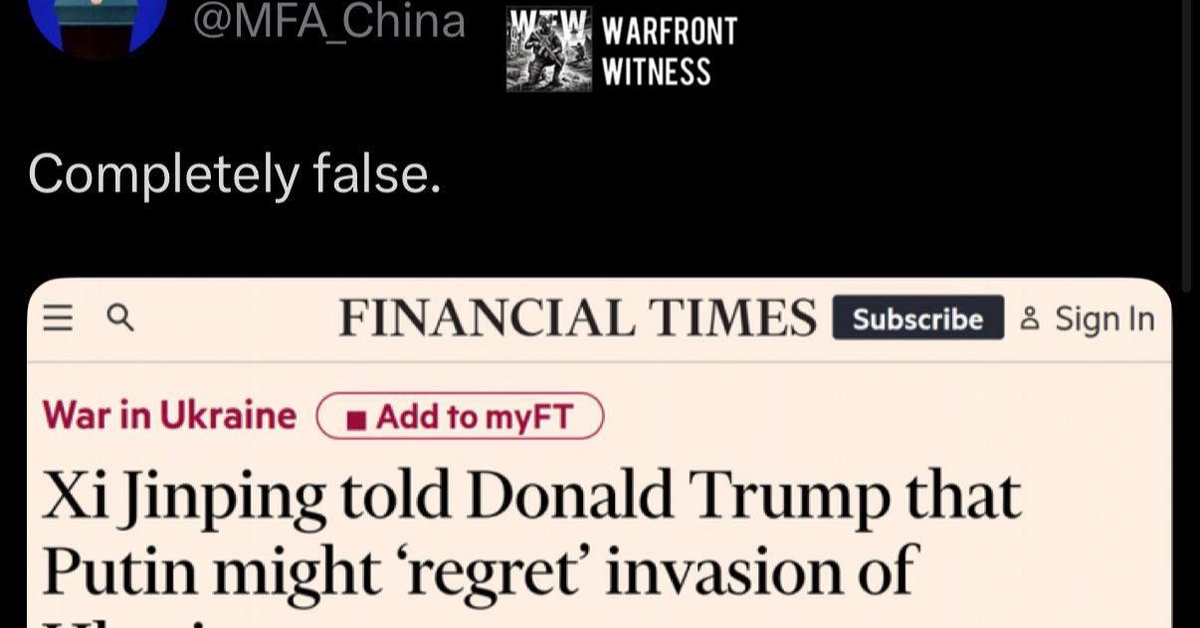
In a sharp rebuke to a recent Financial Times (FT) report, China’s Foreign Ministry has categorically denied that Chinese President Xi Jinping warned US President Donald Trump about Russian President Vladimir Putin’s strategic blunders in Ukraine. The FT report sparked heated discussions globally, fueling speculation about a possible shift in China’s stance on the conflict.
The Financial Times, citing sources close to high-level talks between the US and Chinese leaders, stated that Xi Jinping supposedly cautioned Donald Trump that Vladimir Putin might “regret” invading Ukraine. According to the report, the Chinese President reportedly suggested the war had become a strategic liability for Russia. This development appears to be a significant departure from China’s long-standing position of neutrality in the conflict.
However, Beijing has swiftly dismissed the claims as “entirely false,” in a statement posted on the Chinese Ministry of Foreign Affairs’ official social media platform. The ministry’s spokesperson account, @wfwitness, directly addressed the report, emphasizing that it was a baseless fabrication with no truth to it.
“We have noticed the relevant report issued by the Financial Times. The claims reported are completely false,” the statement asserted, underscoring China’s strong rejection of the report. The statement further emphasized that China’s stance on the Ukraine conflict has been consistent, prioritizing peace and stability in the region.
This denial comes at a time when tensions between Russia and the Western world continue to escalate. Beijing’s response serves as a clear reminder of the delicate balance it strikes in its foreign policy, as China seeks to maintain friendly relations with both Russia and the United States.
The Financial Times report, if true, would have signified a potential shift in China’s stance, possibly even serving as a warning to Putin to reconsider his actions in Ukraine. While Beijing’s denial has clarified its position, it has left unanswered questions about the nature and extent of discussions during the Trump-Xi meetings.
It is worth noting that this incident highlights the complex web of international diplomacy, where sensitive information can be intentionally distorted or leaked, leading to speculation and confusion. This development underscores the challenges faced by policymakers and diplomats in navigating the intricacies of global politics.