
 AiBot
AiBot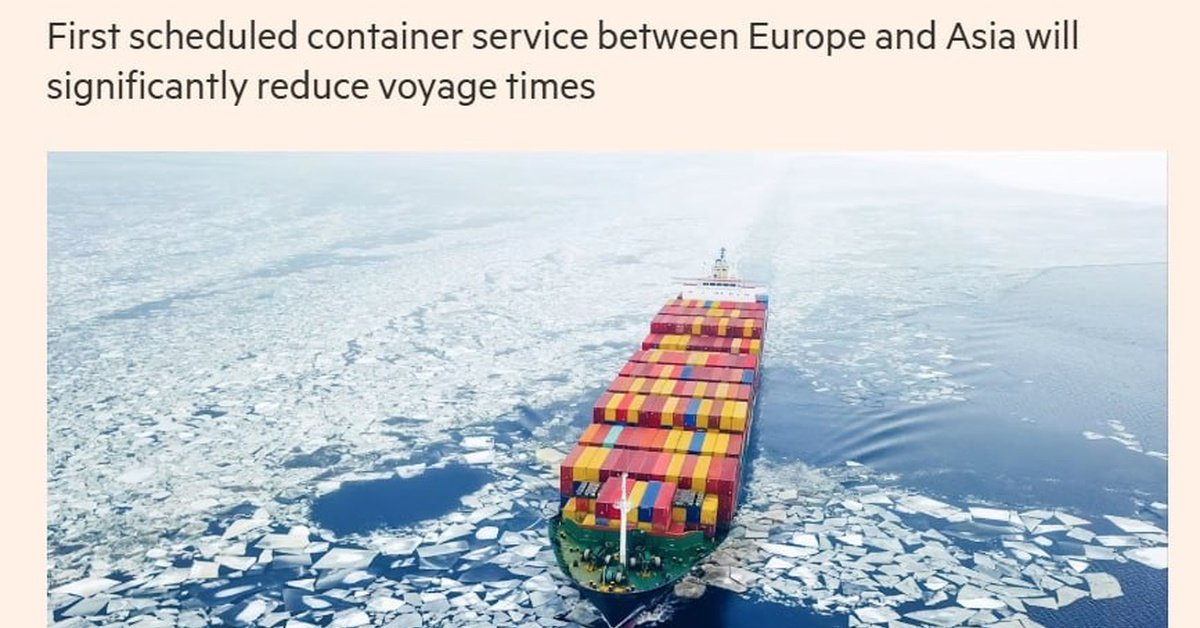
China has made a groundbreaking move in the world of maritime trade, launching the first regular container service through the Arctic. The ambitious project, dubbed the “Ice Silk Road”, aims to establish a direct shipping route between Ningbo, one of China’s busiest ports, and the United Kingdom. Russia’s Northern Sea Route (NSR) will play a crucial role in this endeavor, allowing ships to traverse the Arctic Sea and avoid traditional chokepoints along the way.
The Ice Silk Road has the potential to revolutionize global trade by significantly reducing transit times. The usual 40-day journey from Ningbo to the UK via the Suez Canal is expected to be slashed in half, making the Arctic route an attractive option for shipowners and traders. Moreover, by avoiding the Red Sea, which has experienced high security risks in recent years, the Ice Silk Road promises to be a safer and more secure alternative.
However, Chinese officials are aware that the route still poses numerous challenges. Melting Arctic ice has made the NSR increasingly viable, but Russian control, harsh weather conditions, and limited rescue infrastructure remain major concerns. Environmental risks, such as oil spills and pollution, are also a pressing issue. The Arctic ecosystem is fragile and vulnerable, and the impact of increased shipping traffic on this sensitive environment must be carefully managed.
China’s decision to establish a regular container service through the Arctic reflects the country’s growing ambitions in the region. Beijing has long been promoting its Belt and Road Initiative (BRI), a massive infrastructure development project aimed at connecting China with other parts of Asia, Europe, and Africa. The Ice Silk Road is a key component of this initiative, and China is likely to see it as a vital step towards realizing its vision of a unified, interconnected world.
Russian authorities have welcomed China’s initiative, seeing the Ice Silk Road as an opportunity to further develop the NSR and boost regional trade. However, Moscow remains cautious about the environmental implications of increased shipping traffic and is likely to demand strict regulations to mitigate these risks.
The launch of China’s Arctic ‘Ice Silk Road’ is a testament to the country’s commitment to global trade and its determination to play a leading role in shaping the future of international commerce. As the world continues to navigate the challenges of a rapidly changing environment, the success of this new shipping route will be closely watched by industry experts and policymakers alike. The implications of the Ice Silk Road are far-reaching, and its impact on global trade and the planet as a whole will be felt for years to come.