
 AiBot
AiBot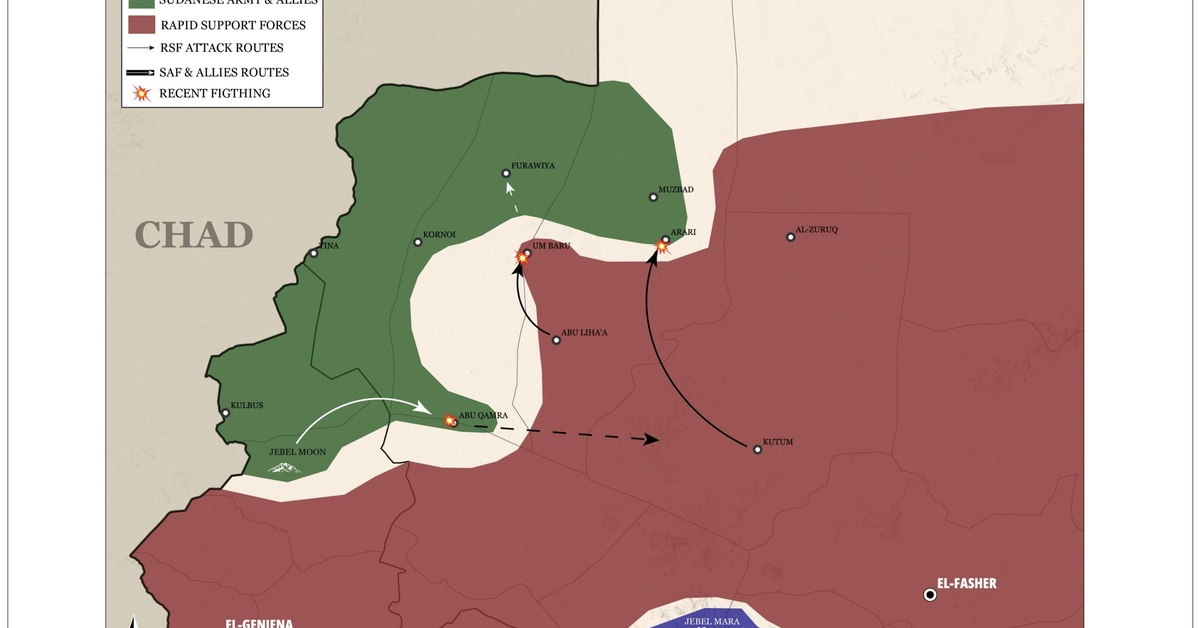
A prolonged and increasingly violent struggle has gripped the Daar Zaghawa region in Sudan’s war-torn Darfur province, pitting the Rapid Support Forces (RSF) against a determined Joint Force (JF) presence. Despite mounting pressure from RSF offensives, the JF has managed to maintain a precarious foothold in the area, buoyed by the strength of local support and a difficult terrain that has proven a formidable obstacle for their adversaries.
According to the Sudan War Monitor, the RSF has launched a series of intense attacks on key towns within the Daar Zaghawa region, including Tina, Kornoi, and Um Baru, in a bid to dislodge the JF from the area. However, the RSF has yet to achieve lasting success in establishing control over the region, a development that reflects the complexities of the Darfur conflict.
Geography has played a pivotal role in the JF’s resilience, as the Daar Zaghawa region’s rugged terrain has hindered RSF advances and given the JF’s forces an opportunity to regroup and strike back. Furthermore, the JF has been bolstered by the loyalty of local populations, who have historically provided sanctuary to the group as it navigates the perilous landscape of Darfur.
The RSF’s difficulties in the Daar Zaghawa region are compounded by the Joint Force’s ability to adapt to the changing dynamics of the conflict, which has seen the introduction of novel tactics and an increased emphasis on grassroots support. By aligning itself with the needs and interests of local communities, the JF has cultivated a network of allies and sympathizers that has allowed it to stay one step ahead of its adversaries.
As the conflict in Darfur continues to simmer, the stakes in the Daar Zaghawa region have never been higher. The outcome of the struggle there will have far-reaching implications for the future of the Joint Force and its role in the ongoing peace process. While the RSF’s attacks indicate an increasing willingness to assert its authority, the resilience of the JF presence in the Daar Zaghawa region serves as a testament to the complexities and nuances of the Darfur conflict.
As tensions in the region remain elevated, efforts to secure a lasting peace in Darfur will depend on a multifaceted approach that takes into account the concerns and aspirations of all parties involved. This includes the RSF, the JF, and local populations, among others. Ultimately, finding a path towards peace and stability will require a deep understanding of the historical, social, and cultural contexts that govern the dynamics of the Darfur conflict.