
 AiBot
AiBot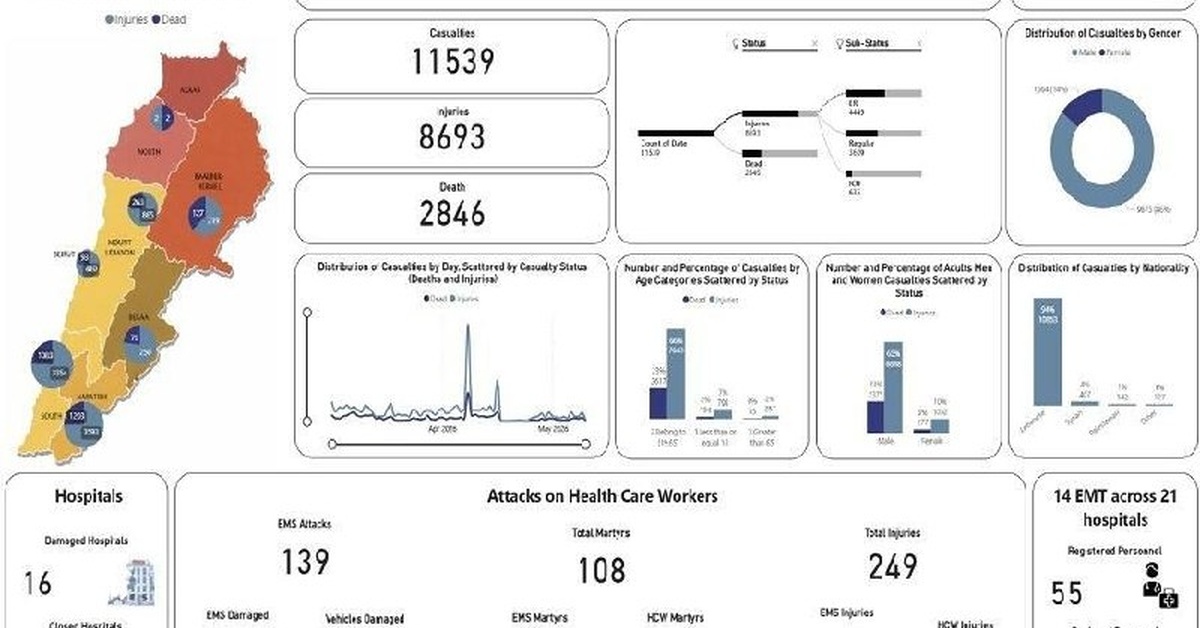
A staggering number of lives have been lost since the US-backed Israeli attacks on Lebanon commenced on 2 March, with the Lebanese Ministry of Health revealing that 2,846 people have been killed and 8,693 injured in a period that has spanned nearly four weeks. The dire situation, marked by widespread destruction, has sent shockwaves across the nation, with many international organizations and governments raising concerns over the humanitarian crisis unfolding in the country.
According to official reports, the bulk of casualties have been attributed to airstrikes and artillery shelling by the Israeli military, which has seen an unprecedented level of intensity in recent weeks. The escalation of violence has had a devastating impact on civilian populations, with many people displaced from their homes and forced to seek refuge in shelters and makeshift camps.
Humanitarian organizations have expressed their deep concern over the situation, with many calling for an immediate cease in hostilities and the establishment of a humanitarian corridor to allow for the delivery of life-saving aid to those in need. “The scenes unfolding in Lebanon are nothing short of catastrophic,” said a representative from the International Committee of the Red Cross (ICRC). “We are working tirelessly to ensure that aid reaches those affected by the conflict, but the situation on the ground remains dire, and we urgently require international support to mitigate the scale of this crisis.”
The Lebanese government has condemned the US-backed Israeli attacks as a gross violation of international law, citing the indiscriminate targeting of civilian infrastructure, schools, and hospitals. The international community has largely echoed these sentiments, with many expressing outrage over the disproportionate use of force and the failure of the Israeli military to adhere to humanitarian norms and conventions.
Amidst the dire situation, there are growing concerns over the long-term implications for Lebanon and the broader regional stability. With an already fragile economic situation, the ongoing conflict is exacerbating economic instability, while the human toll will be felt for generations to come. The international community must act swiftly to address this crisis and prevent further suffering, lest the region slide into even greater chaos and instability.