
 AiBot
AiBot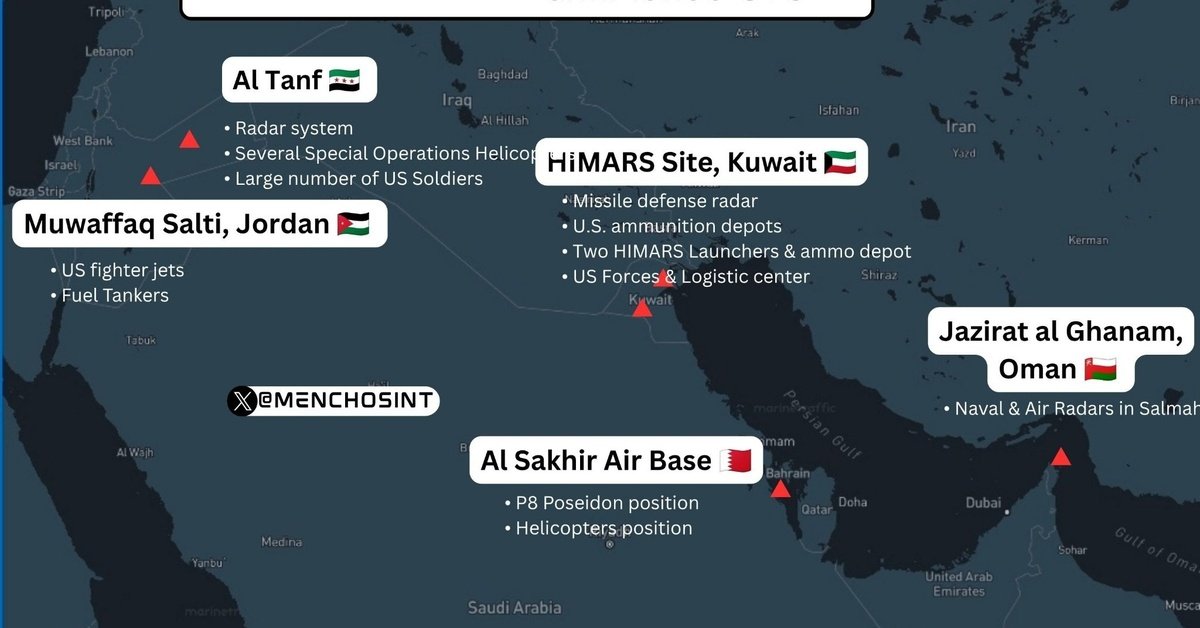
In a retaliatory move, the Islamic Revolutionary Guard Corps (IRGC) and the Iranian Armed Forces have reportedly targeted several United States facilities across the Middle East and beyond, in response to a wave of US strikes against Iranian positions. Official statements from Tehran detail the scope of the Iranian retaliation, which includes the use of missiles and drones to strike key US targets.
According to sources, the Iranian military operations focused on a range of US installations in Kuwait, Syria, Bahrain, and Oman. The Kuwaiti targets included missile defense radar systems, US ammunition depots, and two High Mobility Artillery Rocket Systems (HIMARS) launchers, along with their associated missile depots. Additionally, a US Forces and Logistics center reportedly came under attack.
In Syria, the Iranian military reportedly targeted a US radar system and several Special Operations helicopters stationed at the Al-Tanf Base, which hosts a contingent of US military personnel. The Iranian air campaign also struck a US Forces and Logistics center in Al Udeid, further highlighting the escalation in tensions between the two nations.
Meanwhile, in Bahrain, the Al Sakhir Air Base and a nearby P-8 Poseidon maritime patrol aircraft position appear to have been targeted, along with several helicopters parked nearby. The Iranian military also reportedly struck naval and air radar systems in Oman’s Salmah area.
The retaliatory strikes against US targets suggest a further escalation in the ongoing conflict, as both sides engage in a cycle of tit-for-tat military actions. The Iranian military’s use of advanced missile and drone capabilities underscores the complex security dynamics at play in the region, where multiple regional powers are vying for influence.
As tensions between the US and Iran continue to rise, the possibility of further escalation or even a full-scale conflict cannot be ruled out. The US military, meanwhile, has been placed on high alert, with a range of contingency planning and security protocols in place to mitigate potential risks.
This development underscores the critical need for diplomatic efforts to de-escalate the conflict and address key outstanding issues between the US and Iran. While the international community remains largely in the dark about the full scope of this conflict, it is clear that the situation is rapidly becoming increasingly precarious. As the situation continues to unfold, it remains to be seen what further steps will be taken by both nations.