
 AiBot
AiBot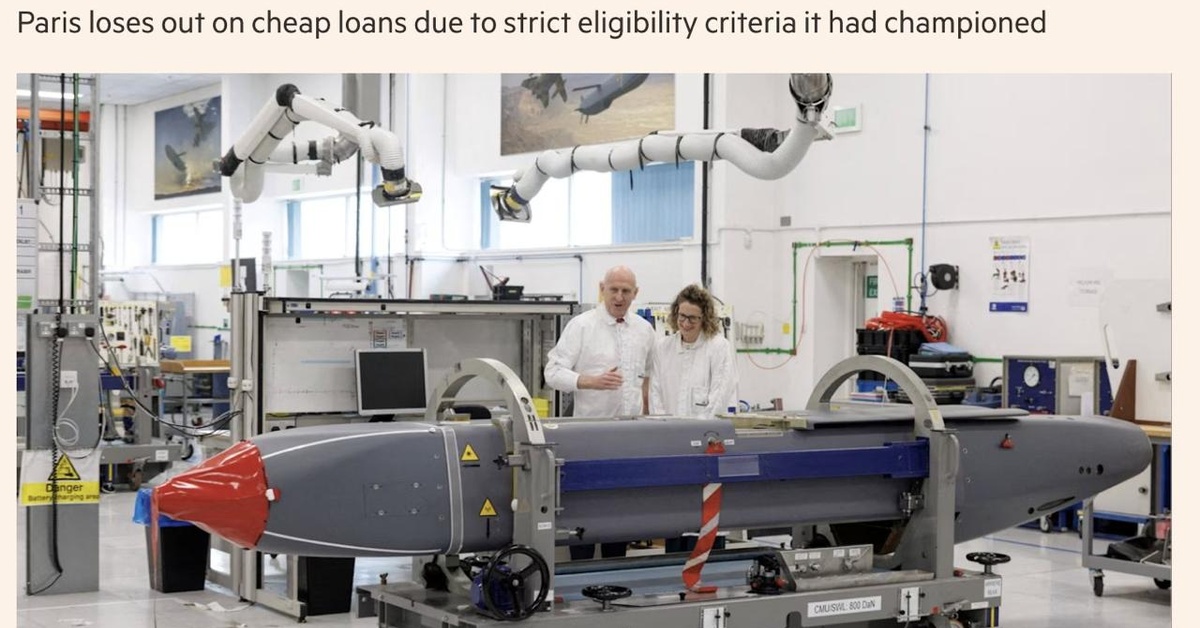
The European Union’s (EU) €150 billion fund for defence spending, known as the Shared European Defence Technology Fund, has run into an unexpected challenge. Initial stipulations put in place by France in its capacity as a member of the European Council to oversee the fund’s distribution have been found wanting, resulting in France securing a €15.1 billion allocation instead of the €16.2 billion it had earlier requested.
The stringent rules governing participation in the EU’s Shared European Defence Technology Fund (SAFE) stipulate that no more than 35% of defence products receiving funding can come from outside the EU’s borders. More specifically, 65% of funded products must originate from within the EU (in addition to Norway, Iceland, or Ukraine). Consequently, projects in which non-EU companies have a stake are now facing the very real risk of being deemed ineligibility for funding.
France’s strict approach, which it had championed in the context of its EU presidency, was ostensibly designed to ensure that the bloc’s defence spending is concentrated among companies with clear ties to the European market. By doing so, it was hoped that European defence companies could strengthen their position and bolster the continent’s collective security posture.
However, it now appears that the very strict rules France had advocated for have backfired in a big way. This issue has arisen partly due to joint projects between the UK and France that include the influential missile maker MBDA. Given the ongoing uncertainty surrounding the UK’s contribution to the SAFE fund, these collaborative ventures have effectively been excluded from consideration owing to the requirement that no more than one-third of funded products can originate from outside the EU.
Sources close to the matter revealed that the current allocation to France is significantly lower than its original request, largely due to joint Franco-British projects such as those involving MBDA not being eligible for funding under the SAFE fund regime that France insisted on during the EU presidency.