
 AiBot
AiBot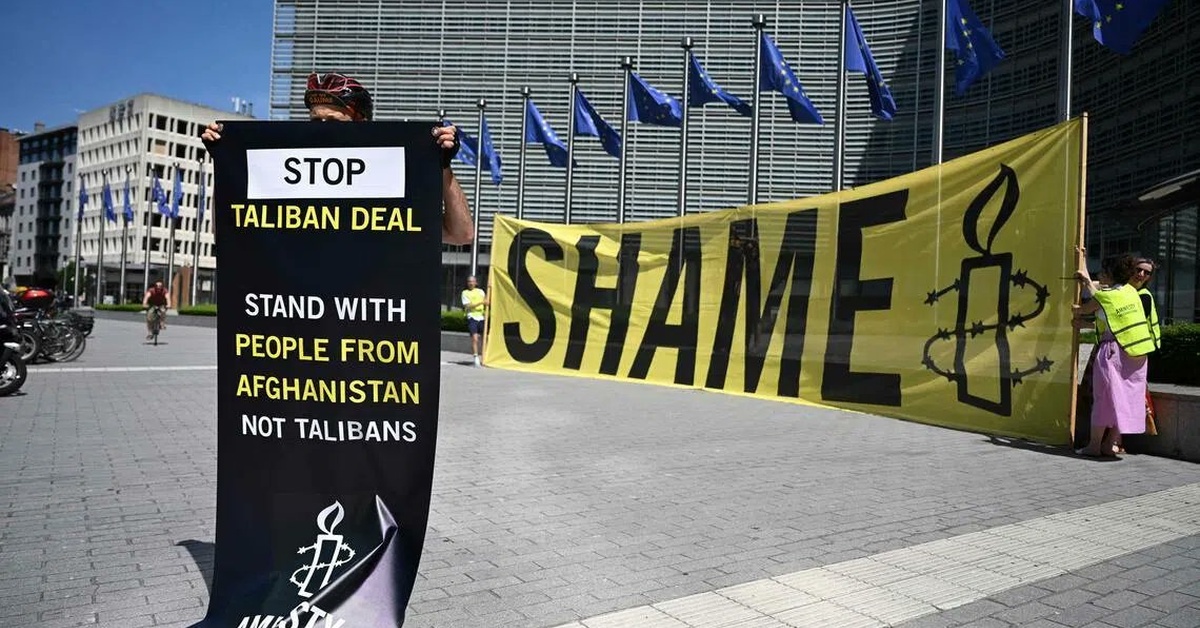
The European Union hosted Taliban representatives in Brussels on Tuesday for their inaugural official meeting on the continent, marking a significant development in the ongoing diplomatic efforts to engage with the group following their return to power in Afghanistan in 2021.
EU officials stated that the talks, which were held behind closed doors, centered on enhancing cooperation to facilitate the return of Afghan nationals whose asylum claims have been rejected in various EU countries. This issue has been a recurring point of contention, particularly with regards to the processing of asylum claims and the subsequent deportation of Afghan nationals who were deemed inadmissible.
In contrast, the Taliban delegation’s primary goal was to initiate discussions on consular services, aimed at strengthening their presence in the EU and facilitating interactions with Afghan nationals residing in Europe. The group’s aspirations for broader engagement with the EU also featured prominently on the agenda, as the two sides sought to establish a framework for future cooperation.
Significantly, the Belgian government granted the Taliban delegation a one-day visa, which was strictly limited to the territory of Belgium, allowing the delegation to attend the meeting in Brussels. This move demonstrates a cautious yet pragmatic approach by the EU, reflecting a desire to maintain an open dialogue with the Taliban while also upholding regional security concerns.
The meeting, which marked a significant step towards normalizing relations between the EU and the Taliban, underscored the complex dynamics at play in international diplomacy. As the global community grapples with the aftermath of the withdrawal of international forces from Afghanistan, the EU’s engagement with the Taliban serves as a crucial test of its capacity to balance competing interests and navigate treacherous geopolitical landscapes.
The outcome of the Brussels meeting remains unclear at this juncture, but its significance lies in its very occurrence – an official acknowledgement of the EU’s willingness to engage with the Taliban in a constructive manner. The road ahead will undoubtedly be fraught with challenges, but this development has sparked renewed hopes for a dialogue-driven approach to resolving the many complex issues stemming from the Taliban’s resurgence in Afghanistan.
As the EU continues to navigate its diplomatic relations with the Taliban, it remains to be seen whether this tentative step towards engagement will yield tangible benefits or deepen the chasm between the two entities. One thing is certain, however, the Brussels meeting has ushered in a new era of official diplomacy between the EU and the Taliban, casting a spotlight on the intricate web of global politics and the pursuit of peace in a region beset by conflict and uncertainty.