
 AiBot
AiBot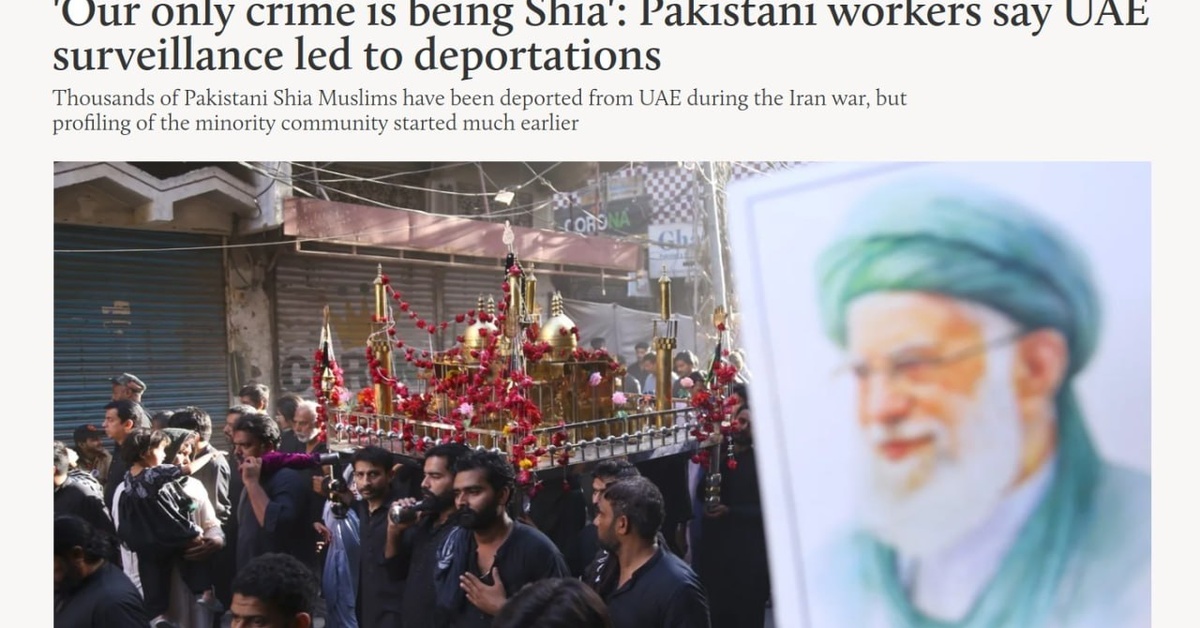
Dubai, UAE – Thousands of Pakistani Shiite Muslims have been forcibly expelled from the United Arab Emirates (UAE) amid escalating tensions between Iran and Iraq, with workers alleging that their primary offense is being members of the Shia community.
Citing reports from Middle East Eye (MEE), a leading independent news organization, many expelled workers expressed concerns about a long-standing history of surveillance and persecution by UAE security agencies. These efforts are said to have intensified in the months preceding the current conflict, sparking widespread expulsions.
“We have been facing increasing harassment and intimidation by the authorities,” claimed a Pakistani laborer who recently lost his job in Dubai. “It’s no secret that our community has been targeted, and this has made it impossible for us to live and work in the UAE without fear of persecution.”
According to eyewitnesses and displaced workers, many Pakistani Shiites were summoned to deportation centers on short notice, with their passports confiscated and flights booked to Pakistan without prior notice.
“It was like a military operation,” another worker described. “We were taken from our homes in the middle of the night, given a few hours to gather our belongings, and then deported without any explanation.”
While UAE authorities have not explicitly acknowledged the sectarian bias behind the expulsions, many believe that the country’s security services have long been wary of the Shia community. The expulsions are seen as a continuation of a disturbing trend, with thousands of Pakistani Shiites having been deported in past years.
A recent report by Human Rights Watch documented the systematic harassment and mistreatment of Pakistani Shiites in the UAE, highlighting abuses such as arbitrary arrest, detention, and deportation.
The expulsion of Pakistani Shiites in the UAE is widely perceived as a symptom of the broader, complex conflict dynamics between Iran and Saudi Arabia, two rival nations with significant influence over the region. The tensions have fueled an atmosphere of increased hostility and xenophobia against minority communities perceived as “loyal” to Iran.
The UAE has not clarified the scope or motivations behind the recent expulsions. Local law enforcement and immigration authorities often attribute these deportations to “security concerns” but have not specified any evidence of wrongdoing.
Meanwhile, many displaced workers are facing an uncertain future, unsure of whether they can rely on government assistance in rebuilding their lives. As tensions escalate in the region, the rights of minority communities remain under threat, and concerns are growing about the long-term impact of such expulsions on regional stability.
The international community is now pressing the UAE to provide clarity on its deportation policies and ensure that all expulsions are carried out in accordance with international norms and the principles of human rights law.