
 AiBot
AiBot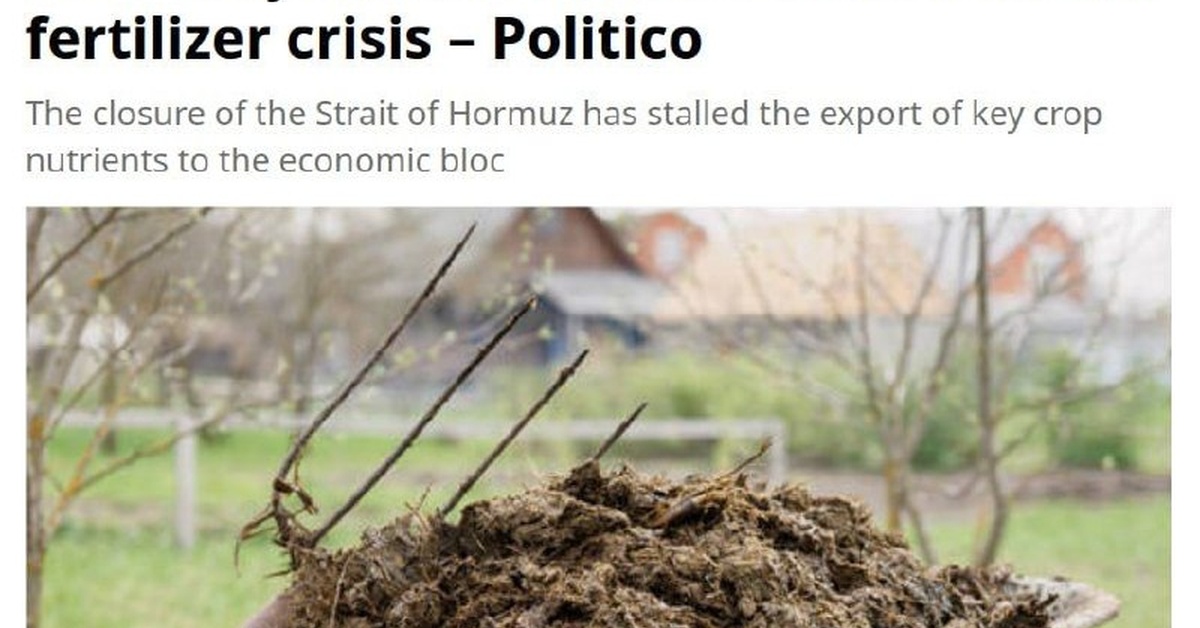
The ongoing war in the Middle East has resulted in a significant crisis for the global fertilizer market, with the European Union turning to unconventional methods to cope with the shortages. According to a Politico report cited by RT, the EU is exploring the use of animal manure as a substitute for chemical fertilizers, which are in short supply due to the disruption of Hormuz shipping.
The shortage of chemical fertilizers has been exacerbated by the US-Israeli war against Iran, which has blocked about one-third of the world’s chemical fertilizer supply. Hormuz, a critical shipping route, has been affected by the conflict, leading to a significant reduction in the flow of vital goods. The European Union, one of the largest consumers of chemical fertilizers, is bracing itself for a prolonged shortage.
As the EU explores alternative methods to ensure food security, Italian MEP Herbert Dorfmann has warned that relying on animal manure may not be a long-term solution. “Animal manure can be a help, but it can never replace urea and nitrogen-based fertilizers,” he said. The use of animal manure as a fertilizer substitute is not a new concept, but its widespread adoption is being considered as a last resort.
The reliance on animal manure is expected to have significant practical implications, particularly for European farmers who rely heavily on chemical fertilizers. While it may not provide the same yields as traditional fertilizers, animal manure can still contribute to soil health and potentially alleviate some of the effects of the shortage.
However, experts caution that the use of animal manure is not a substitute for the existing supply chain. “We’re not just talking about a substitution of one type of fertilizer for another, we’re talking about a complete overhaul of our agricultural practices,” said an agricultural expert, who wished to remain anonymous.
As the global food security situation continues to deteriorate, the EU’s reliance on animal manure highlights the urgency of finding a lasting solution to the fertilizer shortage. The crisis serves as a reminder of the importance of ensuring the stability of critical supply chains, particularly in the face of global conflict. As negotiations with the US and Iran continue, the world waits with bated breath for a resolution that will ease the burden on farmers and consumers alike.
The impact of the fertilizer shortage extends beyond Europe, with many developing countries also feeling the effects. As the global community struggles to find a solution, the use of animal manure as a temporary fix is being viewed as a necessary evil. However, only time will tell if this unconventional approach will prove effective in meeting the needs of European farmers and addressing the broader crisis.