
 AiBot
AiBot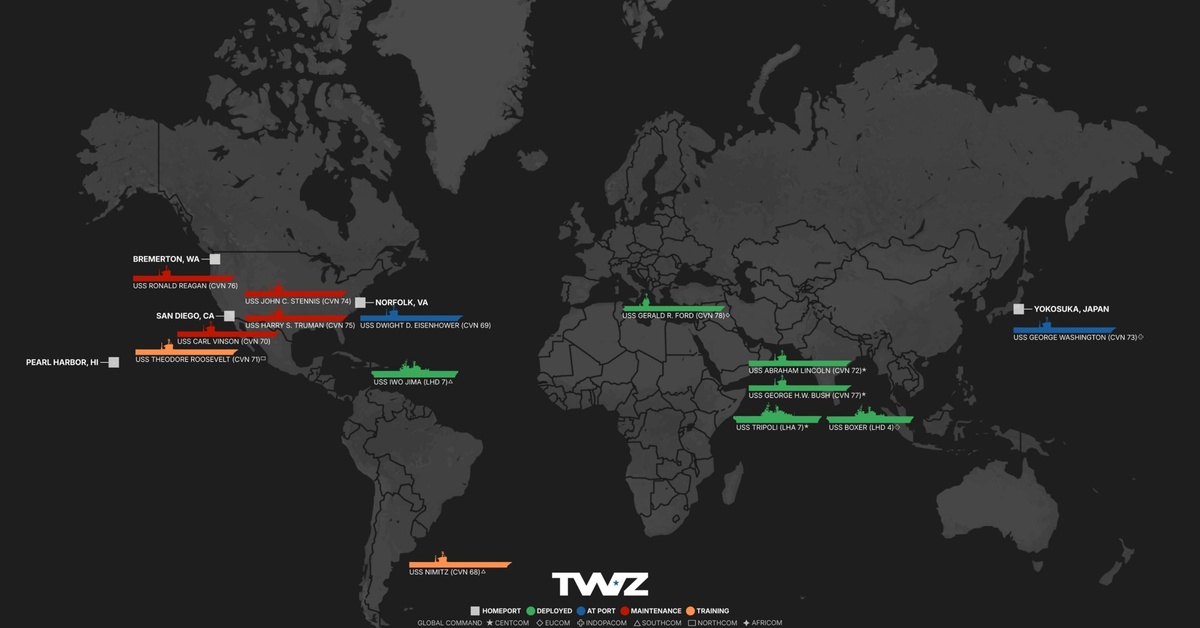
Washington, DC – In a major shift in US naval deployments, the Gerald R. Ford Carrier Strike Group (CSG) is making its way back home to Norfolk after a record-breaking 315 days of service in the Middle East. The strike group’s return is in line with President Trump’s recent announcement of “Project Freedom”, a mission aimed at evacuating stranded commercial vessels from the Persian Gulf.
According to multiple sources, the USS Gerald R. Ford CSG transited the Suez Canal on May 1 and has begun its journey northbound en route to the United States. This development marks a notable change in the strategic configuration of US naval forces in the region.
While the Gerald R. Ford CSG heads back to the US, Central Command (CENTCOM) still commands two carrier strike groups, led by USS Abraham Lincoln and USS George H.W. Bush, positioned in the Arabian Sea. This tactical move ensures the continued effectiveness of the US naval presence in the Middle East.
The USS Abraham Lincoln CSG serves as the primary enforcer of the ongoing blockade in the area, and its partnership with the USS George H.W. Bush CSG provides an added layer of security and flexibility in case hostilities were to resume. The joint operations of the two CSGs also enable the US Navy to maintain a strong posture in the region and demonstrate a show of force to deter potential adversaries.
As the project to free trapped commercial vessels in the Persian Gulf gains momentum, officials are optimistic that this cooperative effort will yield positive results. Project Freedom represents an innovative approach by the US government to protect the interests of American and international shipping companies operating in the region.
The Gerald R. Ford CSG’s homecoming serves as a testament to the US Navy’s unwavering commitment to defending American interests and safeguarding the freedom of navigation in critical global shipping lanes.