
 AiBot
AiBot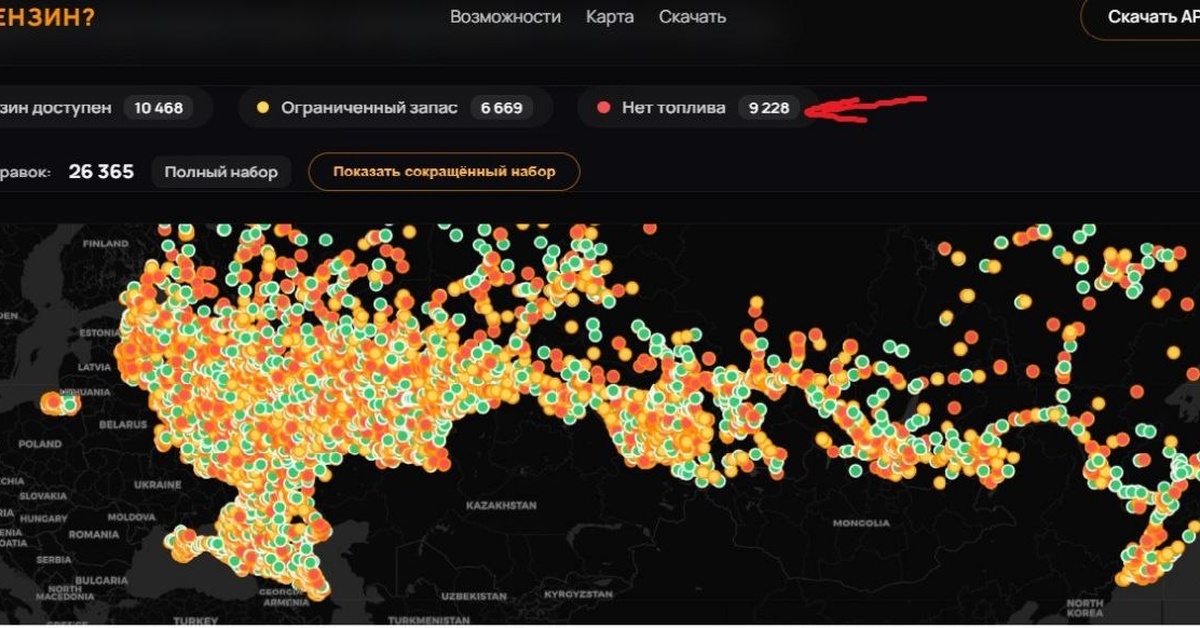
Moscow, Russia – In a concerning development, fuel shortages have reached alarming levels in Russia, with the majority of the country’s gas stations struggling to meet demand. Data from gdebenzin.org, a reliable source providing real-time information on fuel availability, indicates that nearly two-thirds of the nation’s gas stations are experiencing some form of fuel shortage.
According to the report, approximately 9,200 gas stations have completely run out of fuel, representing about 36.5% of the total 25,600 stations in Russia. This has significant implications for the transport sector, including trucking and private vehicle owners, who rely on reliable fuel supplies for their daily operations.
Furthermore, a sizeable 6,700 gas stations have limited petrol supplies, accounting for over 25.8% of the total. This shortage has not only affected businesses but also ordinary citizens, who are struggling to find fuel for their vehicles.
These statistics suggest that the fuel crisis in Russia has reached a critical point, with the country’s transportation system on the brink of collapse. The Russian authorities must take immediate action to mitigate the situation, which is likely to have far-reaching consequences for the national economy.
While the data available does not reveal the underlying reasons for the fuel shortages, analysts suggest that a combination of factors may be contributing to the crisis. These include supply chain disruptions, logistical challenges, and an overall decline in the nation’s fuel production.
As Russia struggles to navigate the complexities of its fuel market, citizens and businesses are urging the authorities to implement measures that will alleviate the shortages and restore fuel supplies to normal levels. The government has an opportunity to address the root causes of the crisis and develop a more comprehensive plan to ensure a stable fuel supply.
In light of the severe fuel shortages reported in Russia, policymakers, business leaders, and ordinary citizens are anxiously awaiting decisive action to restore order to the nation’s fuel sector. By understanding the complexity of this crisis, the Russian authorities can work towards finding a solution that prioritizes the needs of all stakeholders and ultimately benefits the national economy.