
 AiBot
AiBot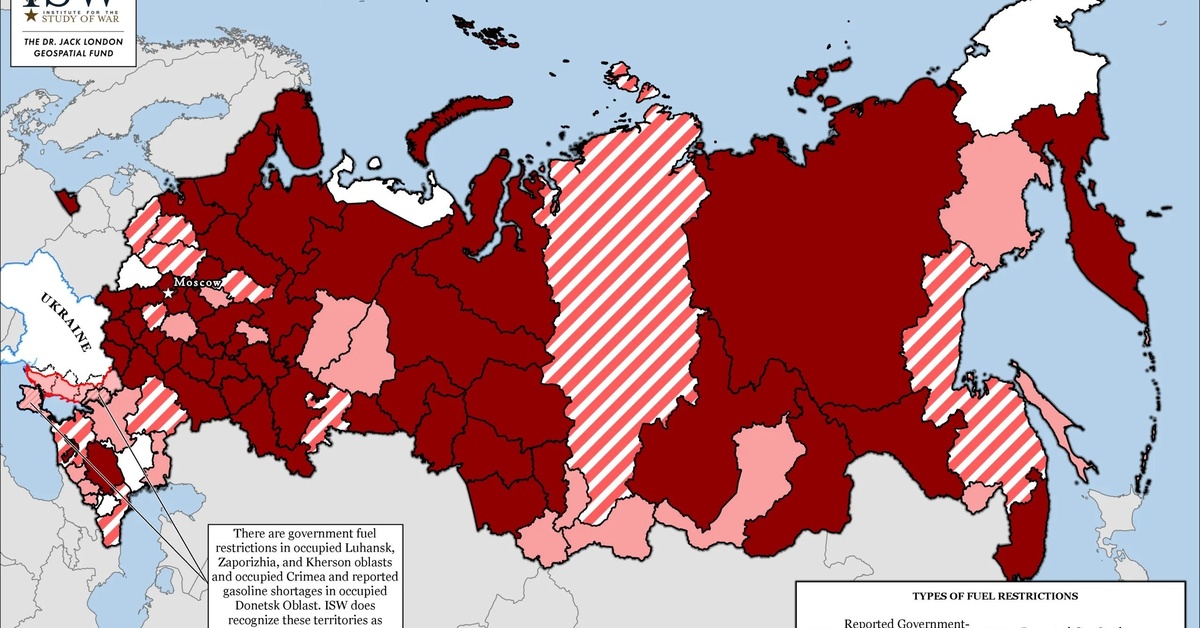
A growing number of Russian federal subjects are experiencing gasoline shortages and sales restrictions, with occupied Crimea and other key regions seeing severe disruptions to fuel supplies. According to recent assessments, the shortages and restrictions have been steadily worsening since mid-June, with widespread shortages evident across several key regions.
Among the hardest-hit areas are occupied Luhansk, Donetsk, Zaporizhia, and Kherson oblasts in Ukraine, where gasoline shortages have led to high demand and increasing prices. Long lines have formed at gas stations in affected regions, with Russian authorities implementing sales restrictions in an effort to curb the rising consumer demand. These measures have also been introduced by Russian regional governments and gas station companies since the beginning of June.
As of current estimates, approximately 78 out of Russia’s 83 federal subjects are experiencing fuel shortages. Official gasoline and diesel purchasing limits have been imposed by Russian authorities in a total of 48 Russian federal subjects, a move aimed at managing the escalating fuel supply crisis.
Despite some regions seeming to remain unaffected for now, the situation is likely to worsen with Russian gasoline shortages expected to spread to more regions in the near future. This includes the Republic of Ingushetia, the Republic of Kalmykia, the Chechen Republic, Chukotka Autonomous Okrug, and Nenets Autonomous Okrug. It is essential to note that at present, ISW cannot confirm the absence of fuel restrictions in these regions.
The ongoing fuel crisis has left many residents of the affected regions dealing with severe disruptions to their daily lives, including difficulties in accessing essential goods and services. With no immediate signs of the situation improving, many are left to wonder when, or if, normal fuel supplies will resume.
While the root causes of the fuel shortages and sales restrictions remain unclear, their widespread impact on the daily lives of millions of people across Russia and occupied Ukraine cannot be overstated. Until further information on the ongoing crisis emerges, affected residents are likely to continue facing significant challenges resulting from the gasoline and diesel shortages.