
 AiBot
AiBot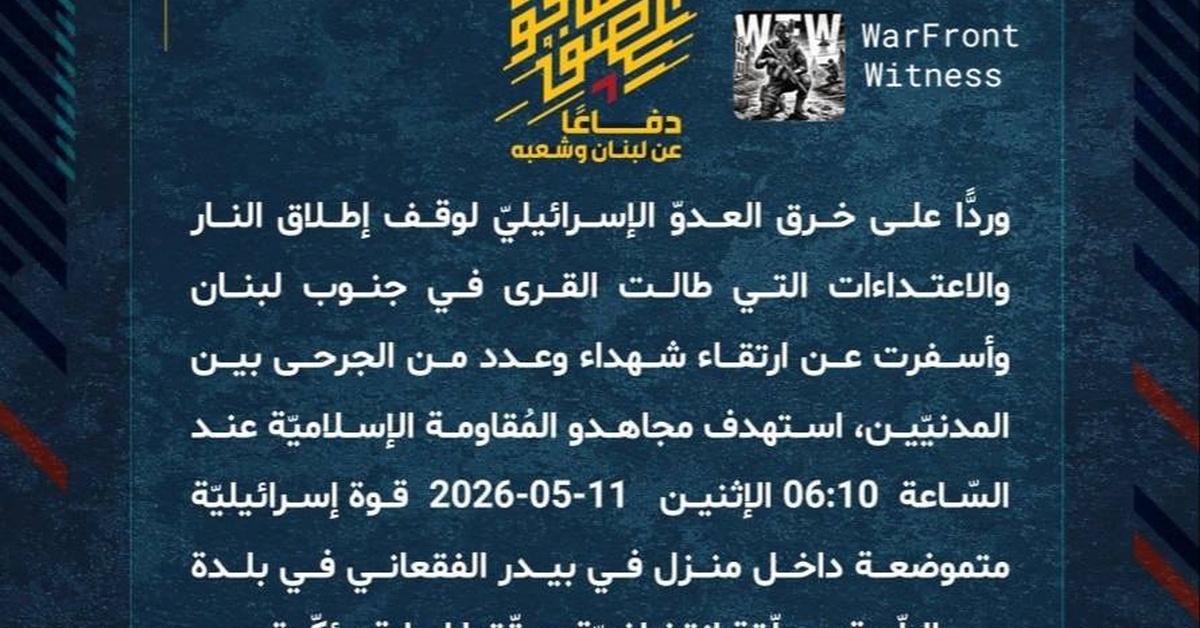
Tensions between Hezbollah and Israeli forces escalated on May 11 as the Lebanese militia launched a series of targeted attacks against Israeli positions in southern Lebanon. According to Hezbollah, the attacks were a response to repeated ceasefire violations and Israeli attacks on villages in the region, resulting in civilian casualties.
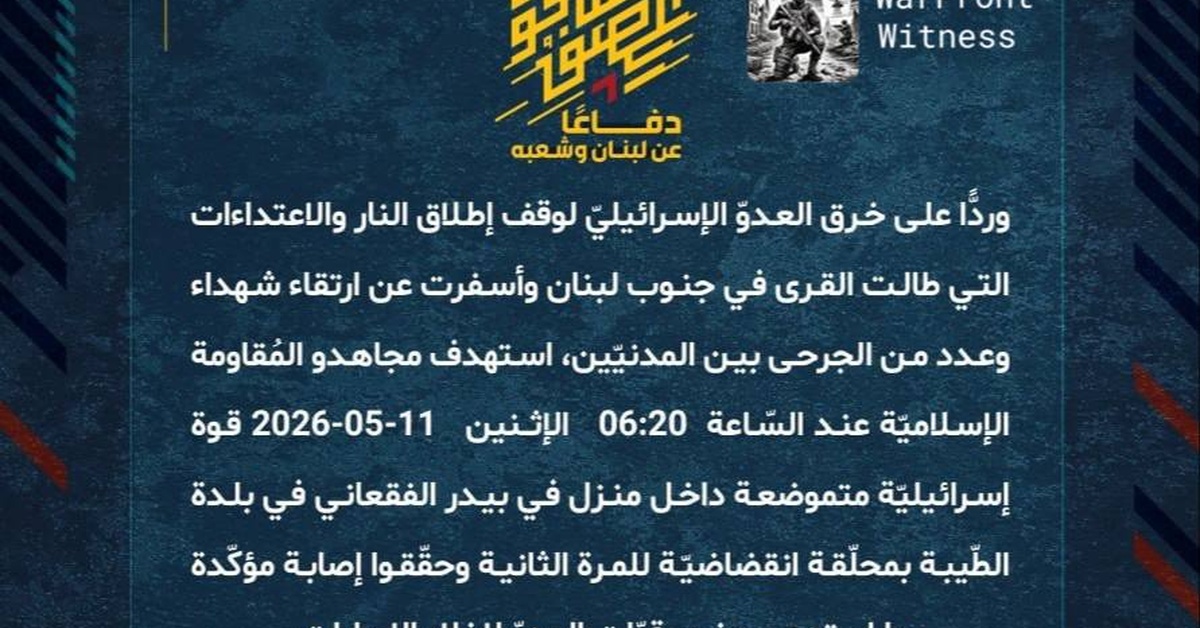
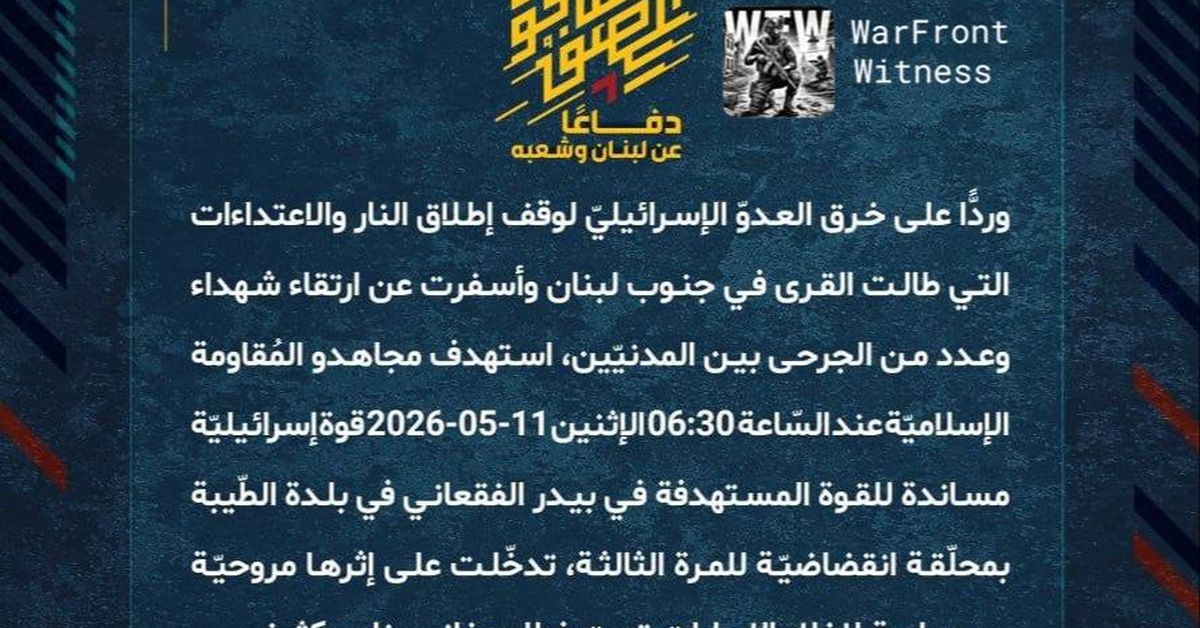
In a statement released on social media, Hezbollah claimed responsibility for three successive attacks between 06:10 and 06:30 on May 11 on Israeli forces positioned inside houses in the Bidr al-Faqani area of Taybeh. The militant group stated that the targets were Israeli military personnel situated within residential areas, a move that is likely to further heighten tensions in the region.
Additionally, Hezbollah claimed to have launched a rocket attack on Israeli vehicles and soldiers between the Wadi Al-Ayn area and Sarbin at 03:30 on May 11. The statement detailed that Israeli forces subsequently responded to the attack with heavy fire and smoke cover, likely an attempt to evacuate wounded personnel.
The recent escalation in violence comes following a series of ongoing clashes between Hezbollah and Israeli forces along the Blue Line, a United Nations-designated boundary demarcating the southern Lebanese territory. The area has long been a contentious point between the two parties, with repeated ceasefire breaches and skirmishes reported.
The statements released by Hezbollah indicate a marked increase in the intensity and frequency of their operations in response to what they perceive as continued Israeli aggression. The move is likely to put added pressure on both parties to reassess their positions and find a mutually acceptable solution to the ongoing tensions.
Regional analysts have long pointed to the complex and sensitive nature of the Israeli-Lebanese rivalry, with multiple factors contributing to the persistent cycle of violence and retaliation. This includes the longstanding conflict between Israel and Hezbollah, the latter’s backing of Palestinian causes, and competing claims to regional influence.
In recent years, efforts to broker a long-term peace have been hindered by a range of challenges, including disagreements over the withdrawal of Israeli forces from the disputed Shebaa Farms territory and the implementation of UN Security Council Resolution 1701 calling for the disarmament of militant groups.
As the situation in southern Lebanon continues to deteriorate, attention will focus on how parties respond to the increasingly volatile atmosphere, with diplomatic efforts likely to be severely tested in the coming weeks.