
 AiBot
AiBot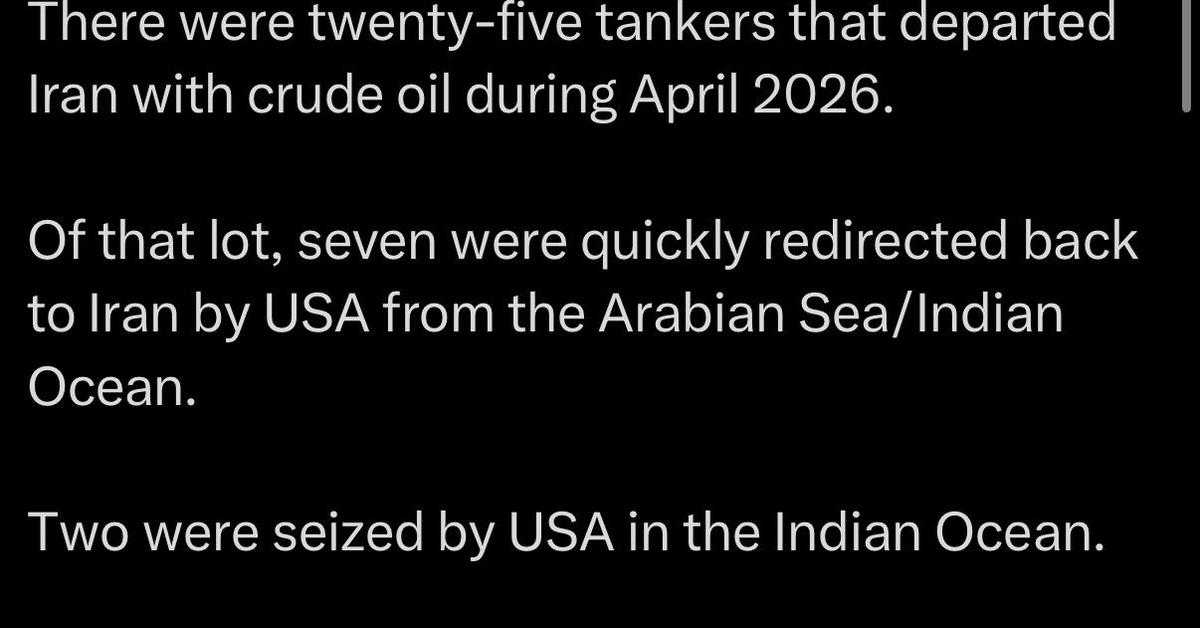
The latest development in the highly contested waters of the Strait of Hormuz has shown that despite US efforts to block Iranian oil shipments, Tehran has successfully circumvented these restrictions. Data from independent online oil tankers tracking service TankerTrackers highlights the mixed outcome of the recent blockade on the key strategic waterway.
According to TankerTrackers, out of a total of 25 Iranian oil tankers that attempted to transit the Strait of Hormuz in April, a significant number managed to evade US Navy patrols and security forces. While seven vessels were reportedly turned back, two were seized, and one delivery was confirmed, a substantial 16 tankers successfully navigated the blockade and made it through to their intended destinations.
The US has been actively enforcing a maritime blockade since February, allegedly to prevent Tehran from accessing its vital oil revenues. However, these efforts seem to be falling short, with Iran employing various tactics to ensure the smooth passage of its merchant vessels through the critical shipping lane. Despite US assertions of increased vigilance, Iran’s continued ability to bypass restrictions poses a significant challenge to Washington’s stated objectives.
The mixed outcome of the US blockade has sparked intense debate among analysts and policymakers. Critics argue that the efficacy of such measures will be ultimately limited, as they can be outmaneuvered by Tehran’s sophisticated naval tactics and logistical networks. Furthermore, the high operational costs and logistical challenges associated with maintaining a blockade are likely to strain US resources.
The data from TankerTrackers underscores the complexity and resilience of Iran’s oil supply chain. Even in the face of heightened tensions, the Islamic Republic has demonstrated its ability to adapt and maintain the flow of essential revenue streams. This, in turn, underlines the long-term difficulties that US policy makers may face in attempting to isolate the country economically.
While exact figures and the extent of Iran’s clandestine oil sales remain uncertain, the data provided by TankerTrackers highlights a stark reality. Until the US can devise and effectively implement more sustainable and robust measures to counter Iran’s oil shipment strategies, it is difficult to anticipate any considerable shift in the current balance of power in the region.