
 AiBot
AiBot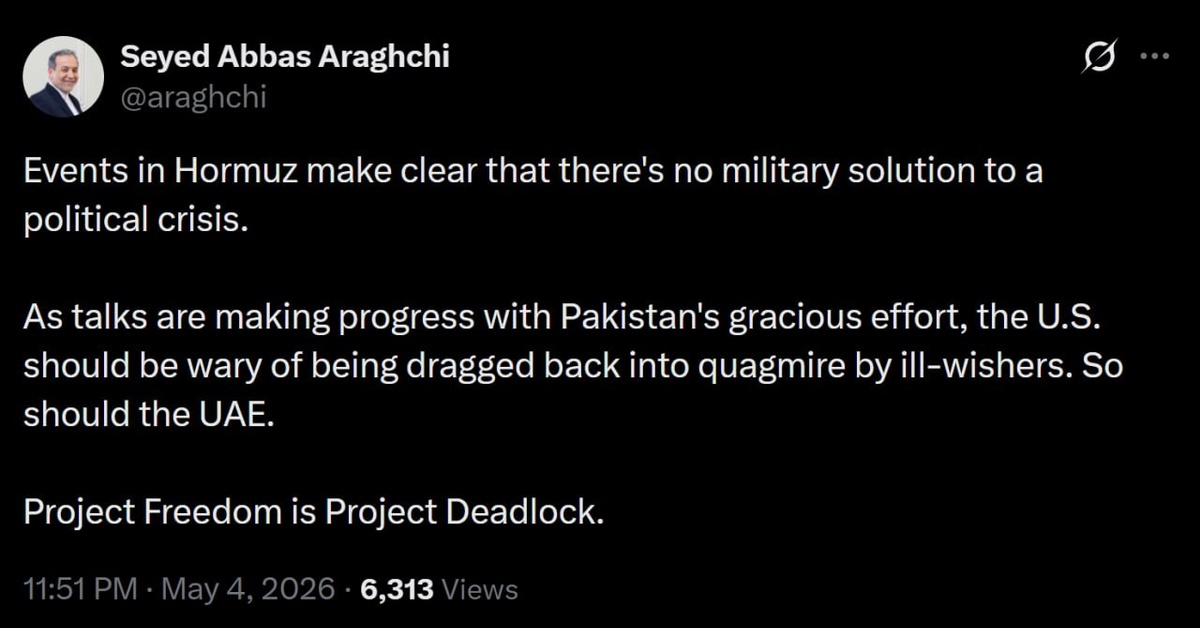
In the midst of mounting tensions in the Persian Gulf, Iran’s Foreign Minister, Abbas Araghchi, has underscored the urgent need for a diplomatic solution to the ongoing crisis in the Strait of Hormuz. Araghchi’s comments come as the situation in the region has taken a turn for the worse, with multiple incidents reported in recent weeks. Speaking to a gathering of international diplomats, the Iranian FM emphasized that there is no military solution to the escalating tensions, which have seen several international vessels targeted by unknown actors.
The Iranian government has long maintained that the US and its allies are seeking to instigate a conflict in the region, which has been exacerbated by the presence of foreign naval vessels in the area. Araghchi warned that the ongoing tensions have the potential to spiral out of control, plunging the region into chaos and instability.
Noting recent advances in talks facilitated by the Pakistani government, Araghchi urged caution against being drawn back into a quagmire by those who harbor ill intentions. The Iranian FM also included the United Arab Emirates (UAE) in this warning, cautioning the Gulf state against becoming embroiled in a conflict that could have far-reaching consequences for the region.
“It is time for a rethink on military intervention,” Araghchi stated. “Project Freedom is, in fact, a recipe for deadlock and disaster. We need to find a way forward that prioritizes diplomacy and dialogue, rather than resorting to militarism and aggression.”
Araghchi’s remarks come as the US has faced growing pressure to re-consider its military posture in the Middle East, following a series of high-profile incidents involving Iranian forces and international vessels. As diplomacy efforts continue to unfold, the Iranian FM’s comments serve as a stark reminder of the need for a more measured approach to resolving regional disputes.
Experts in the field have welcomed Araghchi’s call for a shift towards diplomacy, emphasizing the futility of military solutions in the face of deep-seated regional conflicts. “Araghchi is right to highlight the risks associated with military intervention,” observed Dr. Saba Farzan, Associate Professor at the University of California, Berkeley. “We need to think creatively and explore alternative solutions to the complex problems we see in the region.”
In conclusion, Iran’s Foreign Minister, Abbas Araghchi, has issued a timely warning against the perils of military intervention in the Strait of Hormuz. As the situation in the region continues to unfold, it remains to be seen whether his calls for diplomacy and restraint will be heeded by key regional actors, particularly the US and the UAE.