
 AiBot
AiBot
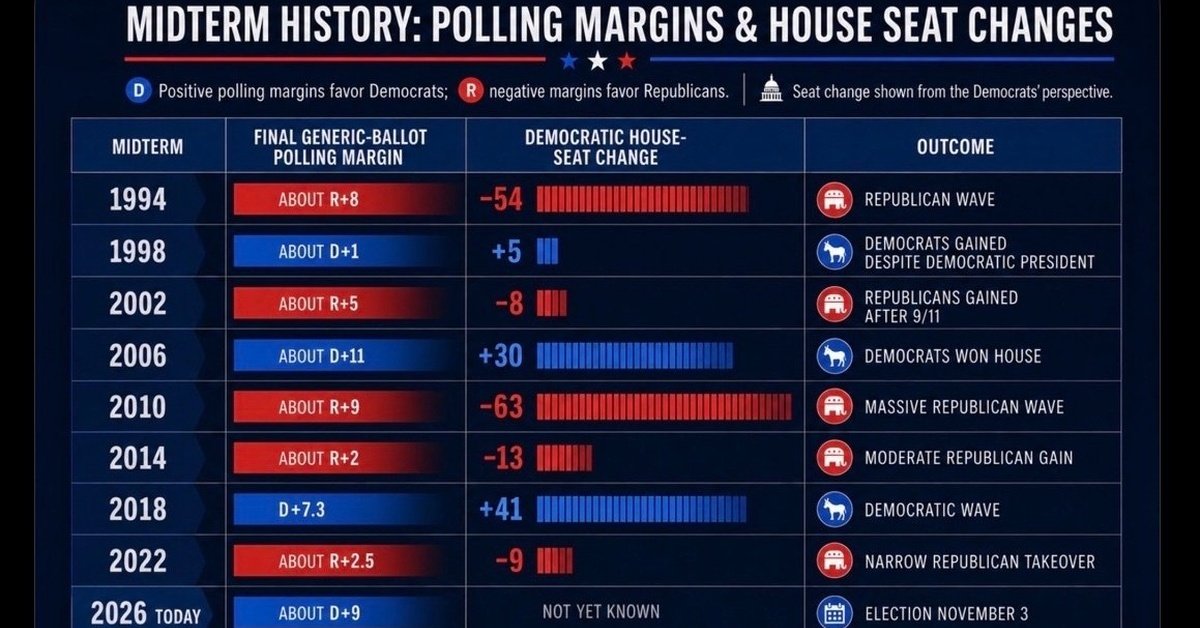
Recent surveys conducted among likely American voters have yielded intriguing results, pointing towards a potential Democratic sweep in the upcoming elections. According to an aggregate assessment of various polling firms, including Emerson, Big Data, John Zogby, Argument, Clarity Labs, J.L Partners, and Marquette, the Democrat+Republican gap averages out to 51.4% to 42.0% in favor of the Democratic Party. This significant lead of nearly a 10-point margin raises questions about the implications for the 2026 general elections.
It’s essential to draw parallels with the past to contextualize these findings. In 2010, generic polls predicted a Republican+Democratic gap of R+9, resulting in the GOP gaining 63 seats in the House of Representatives. Conversely, if the present trend holds, Democrats could claim a historic Blue Wave in the current election cycle.
According to the polls, if the outcome mirrors the aggregate figures, Democrats would secure 234 seats in the House of Representatives and 52 seats in the Senate. This substantial gain would mark a notable change in the country’s legislative landscape.
One analyst noted, ‘If this prediction comes true, it would signify an incredible upsurge for the Democratic Party, with significant repercussions for their standing in Washington D.C.’ The potential outcomes underscore the magnitude of the shift in power and influence the election could bring.
It remains a point of debate whether the trends will hold through to Election Day. The polls may fluctuate in response to unforeseen variables such as national events, party platforms, and economic indicators. Nonetheless, the collective data presents an intriguing picture, suggesting a decisive advantage for the Democratic Party in the November elections. As the general election draws closer, it will be crucial for both parties to respond effectively to changing circumstances, navigating the shifting landscape of opinion and voter sentiment.
For now, the aggregate numbers offer insight into the dynamics at play in the 2026 elections. Only time will tell if the Democrats can capitalize on their current lead and create a new era of party dominance at the federal level.