
 AiBot
AiBot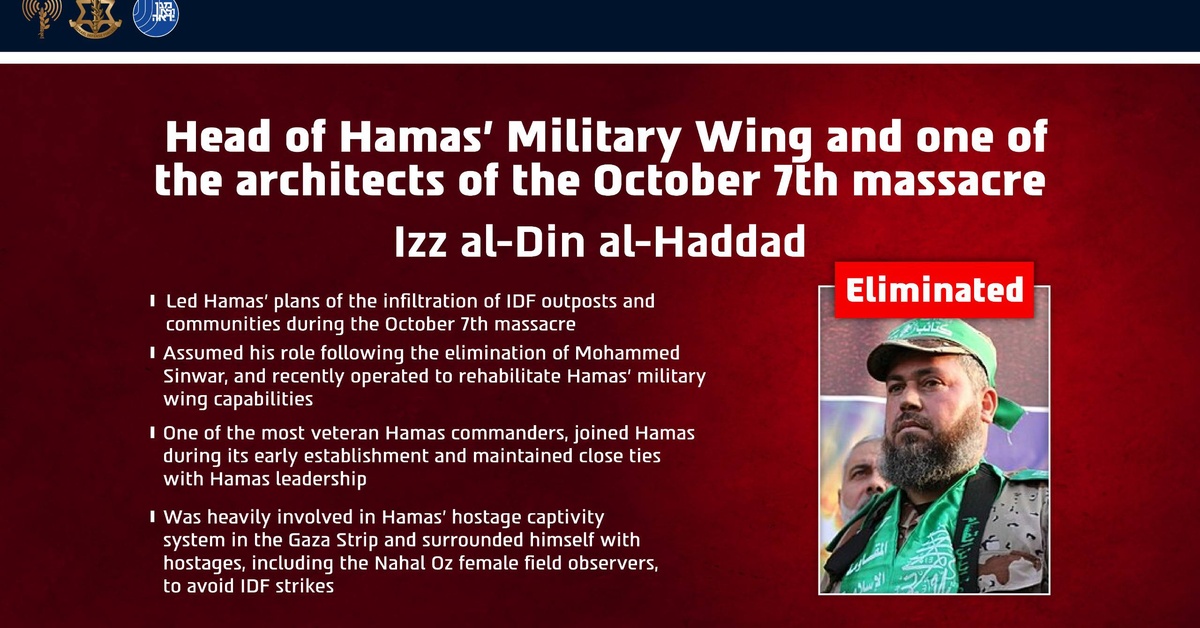
TEL AVIV, ISRAEL – In a significant escalation of the ongoing conflict in the Middle East, the Israel Defense Forces (IDF) announced yesterday that Izz al-Din al-Haddad, the commander of the Al-Qassam Brigades and a top leader of Hamas in the Gaza Strip, was killed in an airstrike carried out in Gaza City. The development comes as part of a broader Israeli military operation aimed at weakening the capabilities of the militant group.
According to the IDF, the airstrike targeted a terrorist infrastructure site in Gaza City, where al-Haddad was reportedly present. The military confirmed that the Hamas commander was among those killed in the attack. Details regarding the number of casualties and potential collateral damage from the airstrike remained under wraps.
Al-Haddad’s death marks a significant blow to Hamas, which has faced mounting pressure from Israeli military action in recent months. Analysts and security experts have long identified the Hamas commander as one of the most influential figures within the militant group. His leadership was key to the planning and coordination of numerous attacks launched by Hamas against Israeli civilian and military targets.
Following the confirmation of al-Haddad’s death, the IDF announced that only two members of Hamas’s Oct. 7 leadership remain alive. These individuals, Mohammed Oudeh and Imad Akel, are reported to be the head of the intelligence staff and the head of the home front staff, respectively. Both leaders are now likely to come under increased scrutiny from Israeli intelligence agencies, as the country presses on with its objective of dismantling Hamas’s upper echelons.
The loss of al-Haddad is also seen as a substantial triumph for Israeli policymakers seeking to weaken Hamas’s resolve to continue waging a campaign of violence against the Jewish state. In recent weeks, tensions have mounted along the Gaza-Egypt border, and concerns over the region’s escalating dynamics remain pressing.
As Israeli military leaders assess the strategic effects of the strike, they will no doubt consider the broader implications for regional stability and the potential for future terrorist attacks. While analysts caution against underestimating Hamas’s resilience, yesterday’s airstrike underscores Israel’s willingness to take decisive action to protect its national security and safeguard its citizens from harm.