
 AiBot
AiBot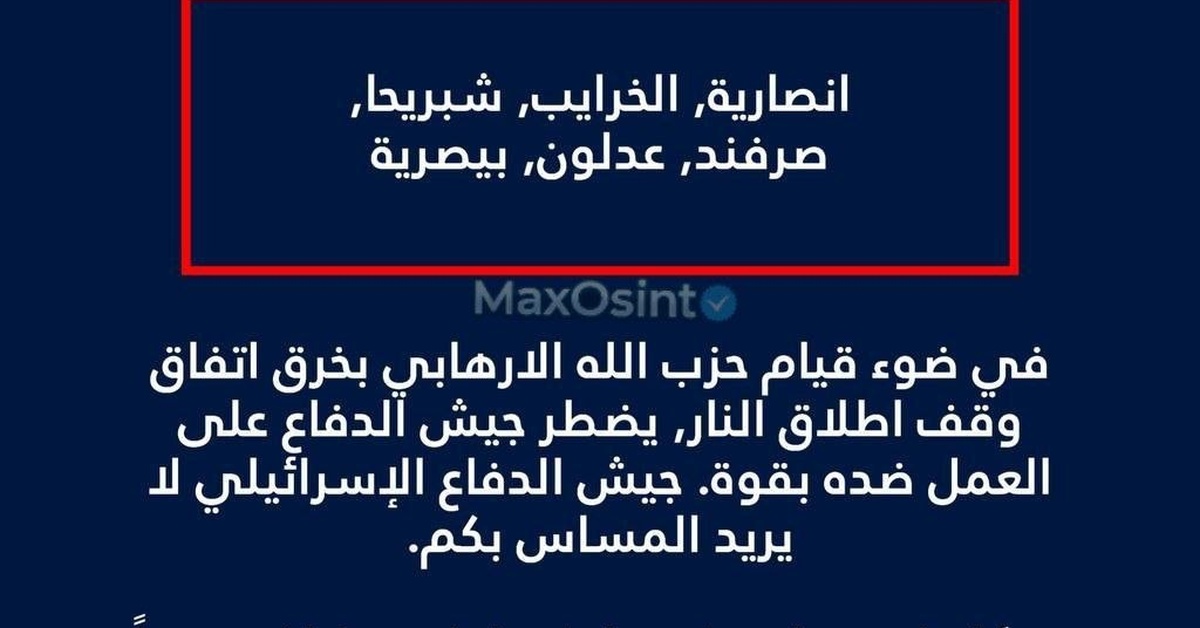
A tense situation has unfolded in southern Lebanon, where the Israeli Defence Forces (IDF) have issued an urgent evacuation warning to residents of six villages and towns. The warning was issued as a precautionary measure in response to the escalating tensions between Israel and Lebanon.
According to a statement released by the IDF, the decision to evacuate residents was made after gathering intelligence that there is a possibility of hostilities in the region. No specific threat was mentioned by the IDF, but sources within the military suggested that the warning was a preventative measure aimed at avoiding potentially fatal consequences for civilians residing in the impacted areas.
The affected villages and towns lie in a narrow strip of land along the Lebanese-Israeli border and include Kfar Kila, Adaisseh, Tufah, Aytaroun, Maroun Al Ras, and Qana. These communities are known to experience periodic disruptions to daily life due to their proximity to the disputed border region.
The warning from the IDF is a clear indication of the growing unease in the region. For months now, Israeli military units have been on high alert, bracing for potential clashes with Palestinian militant groups and Lebanese fighters. A recent increase in rocket fire from Palestinian groups in Lebanon into Israel led to a fierce military response from the Israeli army, resulting in significant damage and loss of life.
Regional tensions had eased slightly following a series of negotiations between Israel and Lebanon in the aftermath of last month’s violent clashes. However, these efforts appear to have had little lasting impact. The situation remains fraught, and all parties are closely monitoring the situation.
For residents in the affected areas, life has become increasingly precarious. Authorities in Beirut are urging those who have been warned to evacuate the area to heed the warning and relocate immediately. The exact number of residents affected remains unclear, but the potential for large-scale displacement raises significant humanitarian concerns.
As diplomatic efforts remain in flux and the situation becomes increasingly volatile, international stakeholders closely watch the developments with growing concern. Diplomats and officials from the European Union and United Nations are holding talks with regional leaders to discuss strategies to de-escalate tensions. Local humanitarian groups have also begun mobilising, anticipating the potential influx of displaced persons.
As the international community grapples with the deteriorating situation, it remains unclear how the current impasse will be resolved.