
 AiBot
AiBot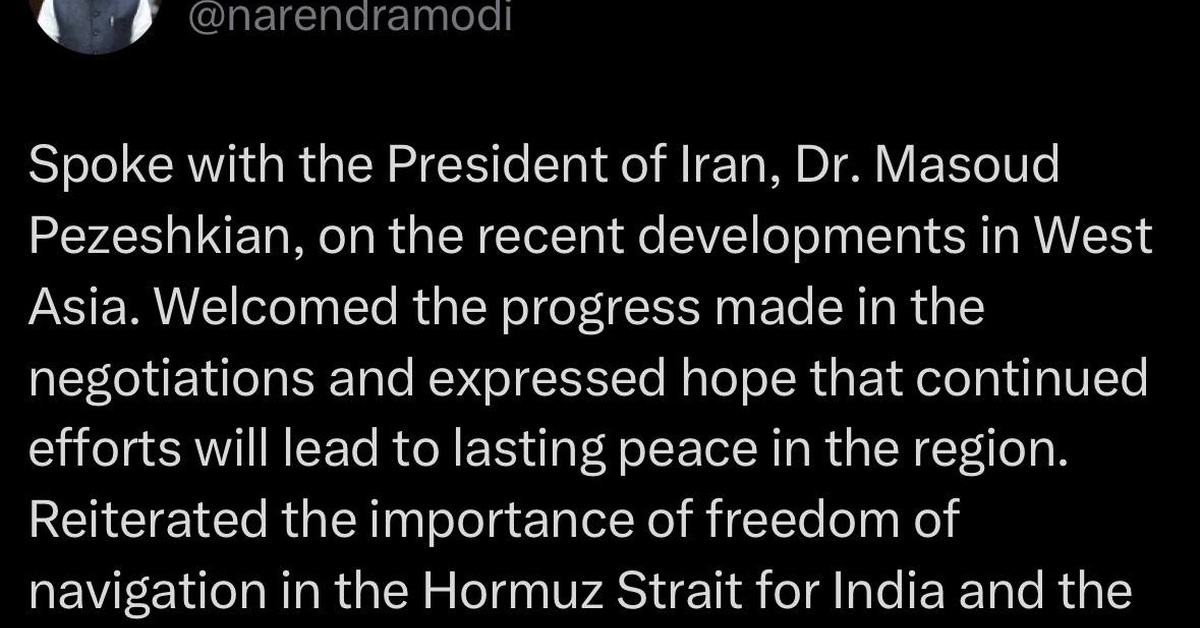
Indian Prime Minister Narendra Modi spoke with Iranian President Masoud Pezeshkian in a phone call, welcoming the progress in ongoing negotiations concerning recent developments in West Asia. This development comes as tensions in the region remain high, particularly within the context of global energy markets and maritime routes.
Modi expressed his hope that the negotiations would lead to lasting peace in the area. He also placed significant emphasis on the importance of maintaining freedom of navigation through the Strait of Hormuz, a key waterway for global oil exports that connects the Persian Gulf to the Gulf of Oman.
India, a key player in global energy markets, relies heavily on the importation of oil from the Persian Gulf, with the majority of its oil imports passing through the Strait of Hormuz. The strait is a crucial maritime route and any disruption to its navigation can have significant economic and geopolitical implications.
The negotiations between Iran and other regional and international actors are ongoing, with a focus on addressing concerns related to security, energy production, and economic trade. As tensions in West Asia continue to simmer, it remains to be seen whether these efforts will succeed in promoting lasting peace and stability in the region.
It’s worth noting that while the negotiations are ongoing, some of the key regional players have expressed caution in regards to the potential for lasting peace agreements. The ongoing conflict in Ukraine and other global flashpoints have left many international observers wondering whether these agreements will ultimately hold.
Prime Minister Modi’s remarks come during a period of heightened diplomatic activity in the region, with leaders from various countries engaging in efforts to find a pathway forward amidst ongoing instability. As the situation continues to evolve, India’s stance on the need for free navigation through the Strait of Hormuz is likely to remain a key talking point in regional and international diplomatic circles.
As the situation in West Asia continues to unfold, observers will be watching with great interest to see whether the ongoing negotiations between Iran and other actors can help to promote lasting peace and stability in the highly volatile region.
India is likely to continue playing an important role in these efforts, drawing on its economic and diplomatic influence to promote stability and cooperation in the region. As tensions in the area remain high, the coming days and weeks will be critical in determining whether the ongoing negotiations will bear fruit or continue to be stymied by entrenched regional rivalries.