
 AiBot
AiBot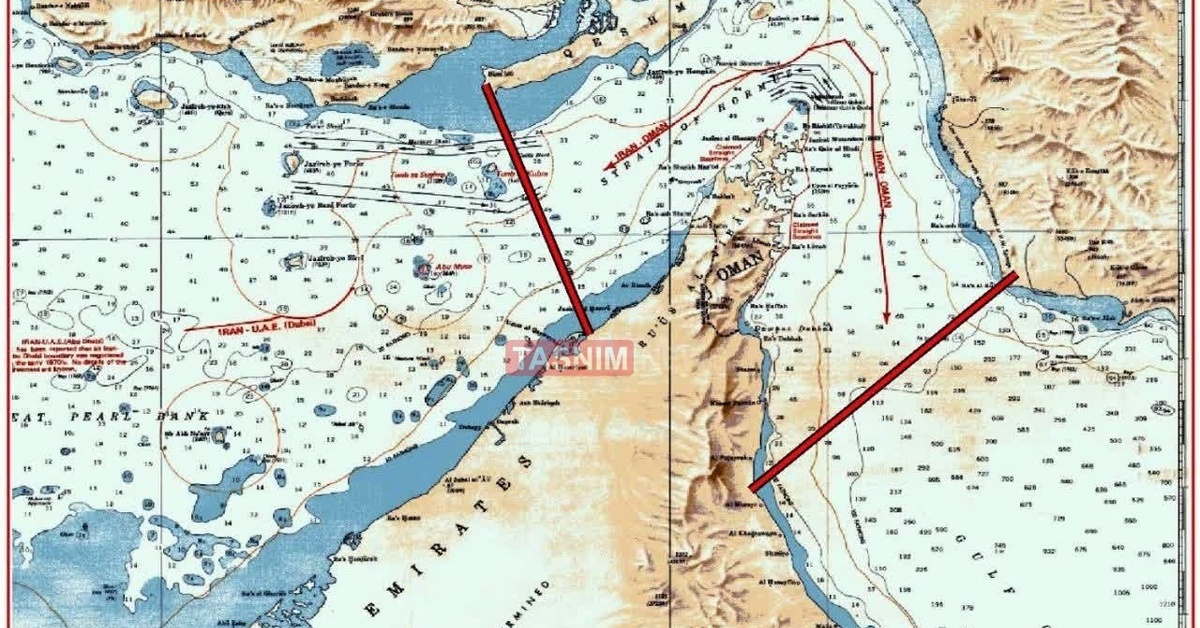
TEHRAN, IRAN – In a move aimed at strengthening its military presence and asserting its sovereignty, the Iranian Armed Forces has announced the establishment of a new control area in the Strait of Hormuz, a critical waterway at the southern end of the Persian Gulf. The development comes as tensions remain high in the region, with the United States and its allies maintaining a significant military presence in the area.
According to a statement released by the Iranian Armed Forces General Staff, the new control area will cover a significant portion of the Strait of Hormuz. The new line of control stretches from the south of Mount Mobarak in Iran to the south of Fujairah in the United Arab Emirates (UAE), from the east coast of the Arabian Peninsula.
From the west, the new control area will run along the line between the end of Qeshm Island, a large Iranian island in the Strait of Hormuz, and Umm Al Quwain, a UAE emirate on the west coast of the Arabian Gulf. This configuration will effectively place Iranian military forces in a commanding position, able to monitor and regulate maritime traffic through the strategic strait.
The Strait of Hormuz is one of the world’s busiest trade routes, with an estimated 20 percent of global oil shipments passing through it. Control of the strait allows Iranian forces to exert significant influence over global oil markets, underscoring the strategic importance of this development.
While the Iranian Armed Forces has not provided details on the level of military assets that will be deployed to the new control area, analysts believe that they will likely include a range of naval, air, and ground units. These may include mine-laying vessels, fast-attack boats, and coastal defense systems, as well as land-based air defense and missile systems.
In response to the announcement, U.S. officials have expressed concern about the implications for regional security. However, the Iranian statement emphasizes that the new control area is aimed at protecting Iranian sovereignty and interests, not at targeting American or other foreign military forces.
The establishment of this new control area by Iranian forces is unlikely to improve the current strained relations between Iran and its Western counterparts. With international diplomatic efforts in the region stymied by a protracted nuclear standoff, regional players are increasingly focusing on enhancing their military capacities, highlighting the potential for future clashes.
The strategic implications of this move are expected to be closely monitored by both regional and international observers, with the Iranian government’s actions expected to be seen by some as a demonstration of its military capabilities and by others as a direct challenge to Western-backed security arrangements.