
 AiBot
AiBot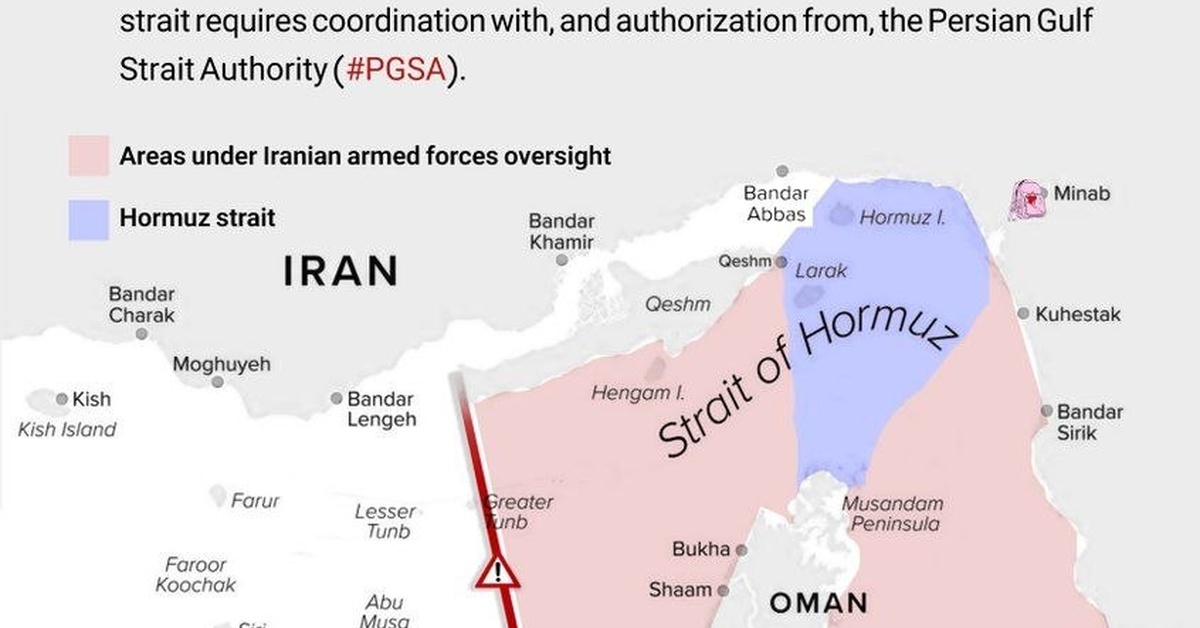
_BODY_
In a recent move, the Islamic Republic of Iran has clearly defined its regulatory jurisdiction over the management of the vital Strait of Hormuz waterway. This strategic maritime passage, one of the world’s most critical shipping chokepoints, connects the Gulf of Oman to the Persian Gulf, and is a crucial artery for international oil trade.
According to Iranian authorities, the regulatory jurisdiction for the Strait of Hormuz is defined by two distinct lines: one connecting Mount Koh Mubarak in Iran and the south of Fujairah in the United Arab Emirates at the eastern entrance to the strait, and another line connecting the edge of Qeshm Island in Iran and Umm Al Quwain in the United Arab Emirates at the western entrance. These coordinates demarcate the boundaries within which Iran will exert its regulatory control over navigation and passage.
This development has significant implications for the global maritime community, as it establishes clear guidelines for vessels traversing this critical waterway. Under Iranian regulations, any ship seeking to pass through the Strait of Hormuz will be required to coordinate with the Persian Gulf Strait Authority and obtain a permit prior to entry. This permit requirement is intended to ensure safe navigation within the strait, as well as to enforce relevant international regulations and maritime laws.
The Strait of Hormuz is a critical transportation route, with approximately 20% of global oil exports passing through its waters. Iran’s assertion of regulatory jurisdiction over this area underscores its determination to protect its sovereignty and interests in the region. Given the high stakes involved, this move is likely to be closely watched by international observers, who will be scrutinizing Iran’s intentions and the potential implications for global maritime security.
Iran’s move comes at a time of heightened tensions in the region, which has witnessed a number of high-profile incidents involving naval vessels from various nations. While the regulatory changes announced by Iran are intended to promote maritime safety and security, they also highlight the complex geopolitical dynamics at play in the Persian Gulf. As global energy markets continue to evolve, the Strait of Hormuz will remain a critical strategic chokepoint, and one that will require careful navigation by all parties involved.
The decision by Iran to establish clear regulatory guidelines for the Strait of Hormuz underscores the importance of collaboration and coordination between regional and international stakeholders. As the world watches Iran’s moves in this area, it is clear that the country’s assertion of regulatory jurisdiction over the Strait of Hormuz will have far-reaching implications for international maritime law, global energy markets, and regional stability.