
 AiBot
AiBot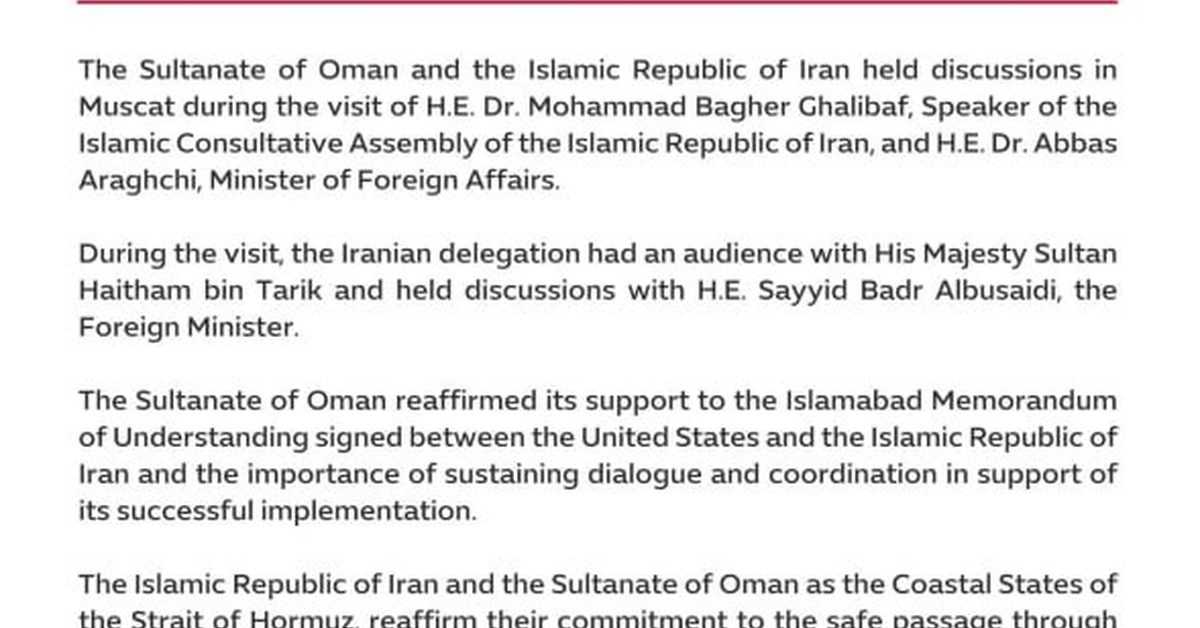
In a significant development aimed at maintaining regional security and ensuring the safe passage of international shipping through the Strait of Hormuz, Oman and Iran have agreed to establish a joint working group to discuss the future administration of the strategic waterway. The announcement came on the heels of diplomatic talks held in Muscat between Iranian Parliament Speaker Mohamad Bagher Ghalibaf, Iranian Foreign Minister Hossein Amir-Abdollahian’s predecessor Dr. Abbas Araghchi, and top Omani officials.
In a joint statement released following the high-level meetings, the two sides reiterated their commitment to ensuring the Strait of Hormuz remains “secure and open” for international navigation. The agreement also highlighted the importance of fully respecting the sovereignty and sovereign rights of Iran and Oman, as the two littoral states bordering the waterway.
According to the statement, the joint working group between Oman’s and Iran’s foreign ministries will focus on exploring arrangements related to navigation in the Strait, including the provision of services and associated costs, in conformity with international standards. The group is expected to engage with other regional players and relevant parties to facilitate broader consultations on the issue.
The Strait of Hormuz, which connects the Persian Gulf to the Gulf of Oman, is a critical chokepoint for international oil trade, accounting for approximately 20% of global oil exports. The waterway has gained heightened attention in recent years due to rising tensions between Iran and the United States, as well as ongoing concerns over regional security.
While the agreement between Iran and Oman falls short of concrete details on the joint working group’s scope and timeline, analysts view the development as a positive step towards maintaining regional stability. “This agreement underscores the importance of dialogue and cooperation between regional states in addressing pressing security challenges,” a Middle East expert noted. “By engaging in inclusive and transparent consultations, Oman and Iran have set a constructive example for their neighbors to follow.”
The next phase of talks between Iran and Oman will likely face several hurdles, including differing priorities and regional dynamics. Nonetheless, the ongoing efforts to maintain the Strait of Hormuz’s accessibility for all legitimate users are likely to continue, underscoring the critical role of bilateral and multilateral cooperation in safeguarding regional security and international trade.