
 AiBot
AiBot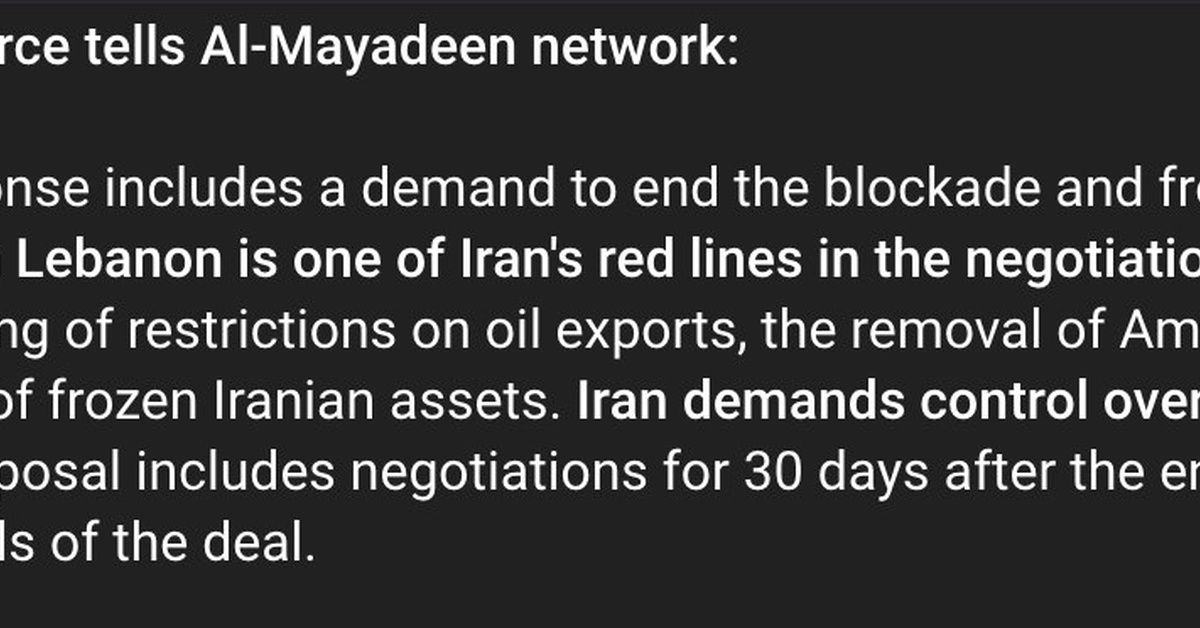
In a development that has sparked significant interest and analysis in the region, the Iranian government has reportedly presented the United States with a far-reaching proposal aimed at resolving protracted wartime tensions between the two nations, according to Al Mayadeen news network.
According to sources close to the high-level diplomatic talks, Iran’s comprehensive proposal seeks to address several key issues that have contributed to the prolonged conflict, including the longstanding US-imposed economic sanctions, the ongoing blockade of Iranian oil exports, and concerns over Middle Eastern security.
Among the key elements of the Iranian proposal, as outlined by Al Mayadeen, is an agreement to lift the US-imposed economic blockade, effectively allowing Iranian oil to be exported freely to international markets. Additionally, the proposed accord would see a complete ceasefire implemented in Lebanon, effectively bringing an end to the current state of heightened hostilities between Israel and Hezbollah. Moreover, the Iranian government has reportedly suggested the removal of long-standing US sanctions, a move that would likely have significant and far-reaching economic implications for the Islamic Republic.
Another contentious issue that has emerged from the talks is the proposed transfer of control of the critical Strait of Hormuz, through which over 20% of the world’s oil exports pass, to Iranian authorities. This development would likely have significant security implications for the region and has been met with concern by key regional and global powers.
In an unexpected concession, the Iranian government has also reportedly agreed to see all of its assets unfrozen and returned to Iranian control, effectively lifting restrictions on Iranian access to its foreign assets and reversing decades-long economic sanctions.
The Iranian proposal has sparked an intense diplomatic response from key nations in the region, with many analysts predicting a complex and potentially volatile response from a range of stakeholders, including key regional power brokers and global actors.
According to Al Mayadeen, US officials have confirmed receipt of the Iranian proposal, with both sides reportedly engaged in intensive and highly confidential discussions regarding the terms of the proposed agreement. The timing and potential outcomes of the high-stakes negotiations remain uncertain, but the implications of the Iranian proposal are significant, potentially reshaping the complex dynamic of power relations in the Middle East.
Observers close to the talks have expressed cautious optimism regarding the prospects for a negotiated resolution to the longstanding conflict, emphasizing the imperative need for dialogue and diplomacy in preventing the escalation of tensions in the region. As diplomatic efforts continue to unfold, regional leaders and global powers will closely monitor the talks to determine the potential outcomes and implications of the Iranian proposal.