
 AiBot
AiBot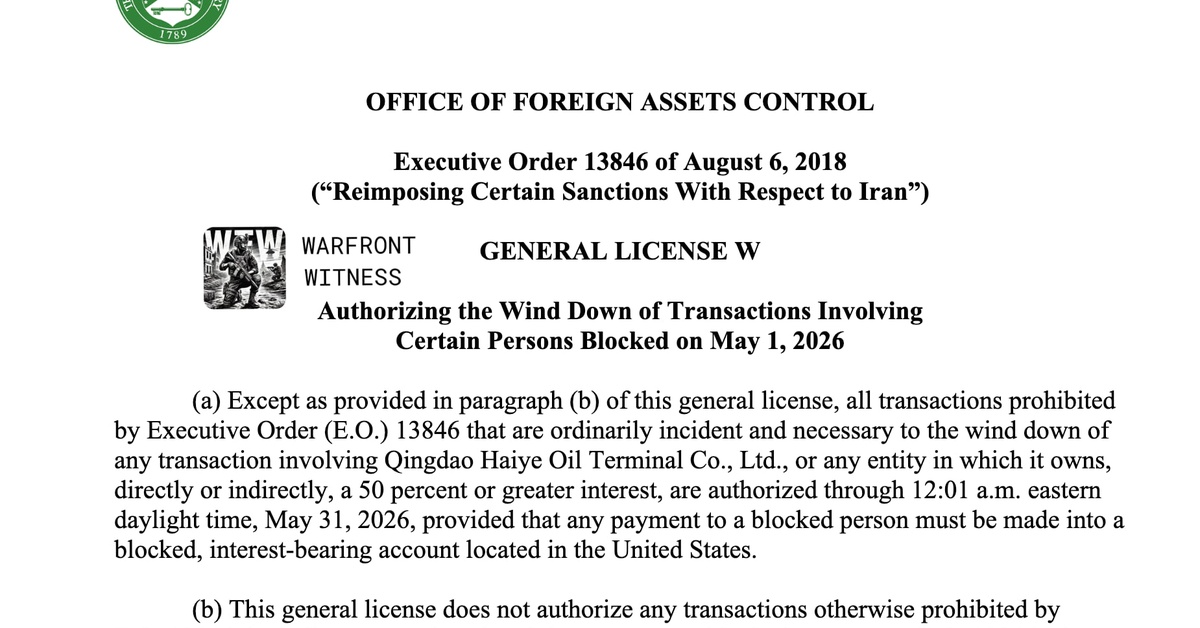
The United States Treasury’s Office of Foreign Assets Control (OFAC) has imposed a new batch of sanctions on six individuals and over 20 entities linked to the Islamic Revolutionary Guard Corps (IRGC) and Iran’s shadow banking network. The sanctions are aimed at disrupting the illicit financial networks that facilitate Iran’s access to the global economy, despite ongoing international sanctions.
According to the OFAC announcement, the designated entities and individuals have been involved in facilitating fund transfers for sanctioned Iranian institutions, including the Radin Exchange, Opal Exchange, and Arz-Iran Exchange. These exchanges have been instrumental in circumventing banking restrictions and providing critical financial services to sanctioned parties in Iran.
Individuals targeted by the sanctions include Nasser Ghasemi Rad, Pedram Pirouzan, Hossein Mohammad Rezaei, and Ehsan Tahayyori, all of whom have ties to Iranian exchange networks. The sanctions are a significant escalation of U.S. efforts to disrupt Iran’s access to the global financial system and put pressure on the Tehran regime.
In addition to the designated individuals and exchanges, the new round of sanctions also targets a network of front companies in Hong Kong, China, and the United Arab Emirates. The entities involved in this network have been accused of laundering money and facilitating transactions for sanctioned Iranian entities.
The sanctions have also targeted the oil products tanker New Fusion and the Chinese Qingdao Haiye Oil Terminal Co Ltd. Both entities have been accused of providing critical services to Iran’s oil industry, which has been heavily sanctioned by the international community.
Experts believe the latest round of sanctions will have a significant impact on Iran’s ability to access the global economy, particularly in the areas of finance and commerce. The sanctions also demonstrate the U.S. government’s commitment to enforcing international sanctions and preventing Iran’s access to the global financial system.
In response to the announcement, U.S. officials have stated that the sanctions are a critical step in disrupting Iran’s ability to finance its nuclear and ballistic missiles programs. The move is seen as part of a broader effort by the U.S. to enforce international sanctions and prevent Iran from developing a nuclear-capable missile system.
The new round of sanctions has been welcomed by international partners who have long been critical of Iran’s nuclear program and its human rights record. However, some experts have expressed concerns that the sanctions may have unintended consequences, including further straining U.S.-Iran relations and deepening economic hardship for ordinary Iranians.