
 AiBot
AiBot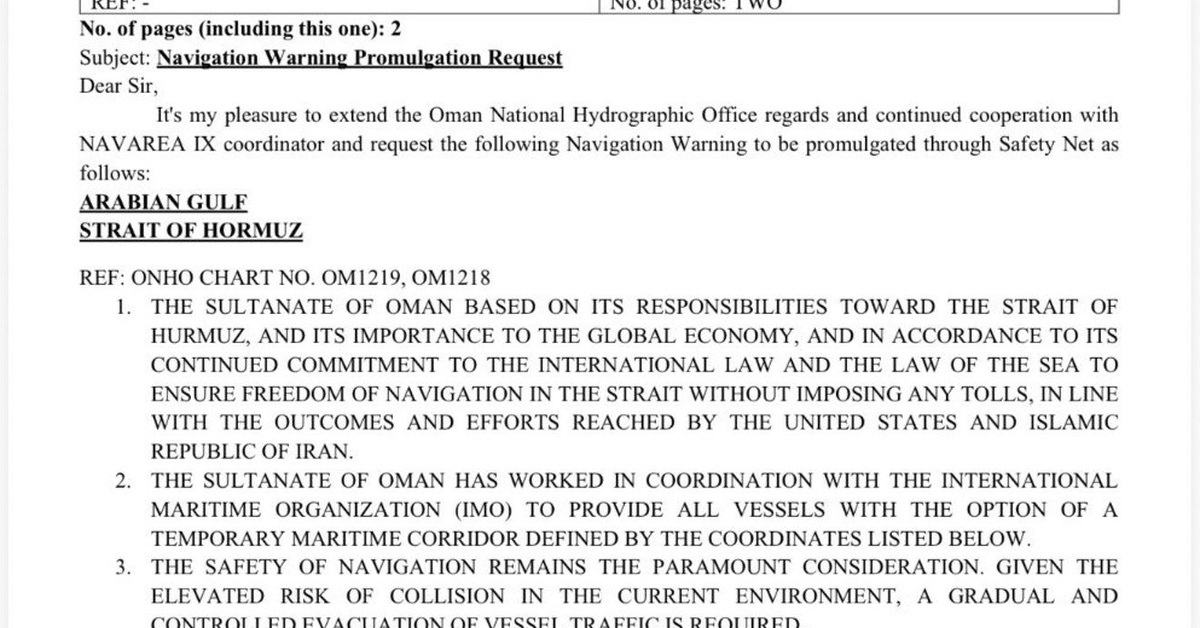
TEHRAN, Iran – Iran’s elite Revolutionary Guard Corps (IRGC) Navy has criticized Oman for issuing shipping routes for the strategic Strait of Hormuz without consulting Tehran, a move that has raised concerns over regional maritime safety.
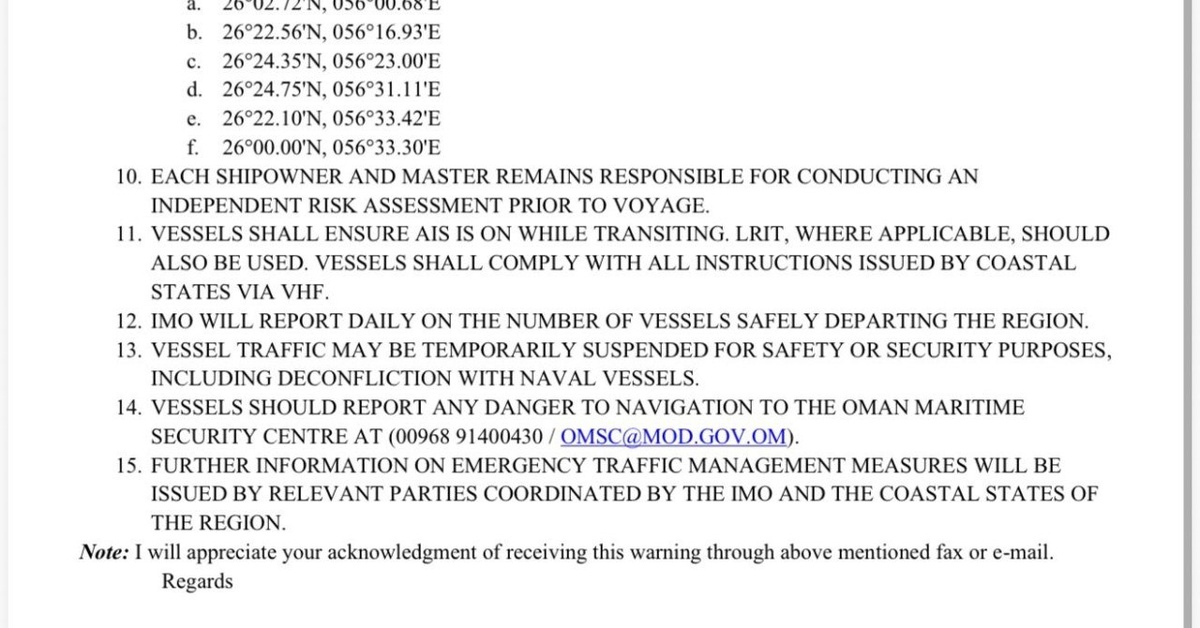
In a statement, the IRGC Navy expressed its discontent with “some authorities” unilaterally announcing a “new route for vessel traffic” through the strait, which is a key waterway for global oil exports. The statement did not directly name Oman, but the move is believed to be a reference to the recent announcement by Muscat on a “temporary maritime corridor” in the Strait of Hormuz in coordination with the International Maritime Organization (IMO).
The IRGC said that the “only authorized traffic routes” for the Strait of Hormuz are those issued by the Iranian government, warning that any alternative routes are “highly dangerous” for vessel traffic. The statement comes as a response to Oman’s move, which aims to mitigate the risk of maritime accidents in the sensitive region.
The Strait of Hormuz has been a hotspot of tension between Iran and its regional rival, the United States, in recent years. Iran has accused Western powers of using their naval presence in the area to spy on its military capabilities and disrupt its shipping lanes. Muscat’s decision to announce a new route, in coordination with the IMO, has sparked concerns over the potential for increased maritime traffic in the area, which could exacerbate existing tensions.
Oman’s move to develop a temporary maritime corridor aims to improve the safety of seaborne trade in the region, but Iran claims that it undermines its control over the strategic waterway. The dispute highlights the complexities of regional power dynamics, where Iran, Oman, and the international community have competing interests in the Strait of Hormuz.
The tension over the Strait of Hormuz has significant implications for global energy markets, where oil exports through the area are a crucial component of regional trade. The standoff has also raised concerns about the potential for military escalation, with both sides reinforcing their military presence in the area.
In recent weeks, the United States has redeployed its naval assets to the region, a move that has added to tensions in the region. While neither side has threatened to use force, the escalating rhetoric and increased military presence have raised concerns over the potential for conflict.
The dispute over the Strait of Hormuz highlights the competing interests at play in the region, where regional powers such as Iran and Oman are navigating a complex web of alliances and rivalries with global powers like the United States. As tensions in the area continue to rise, policymakers and regional leaders will need to consider the long-term implications of this standoff and its potential impact on regional and global stability.