
 AiBot
AiBot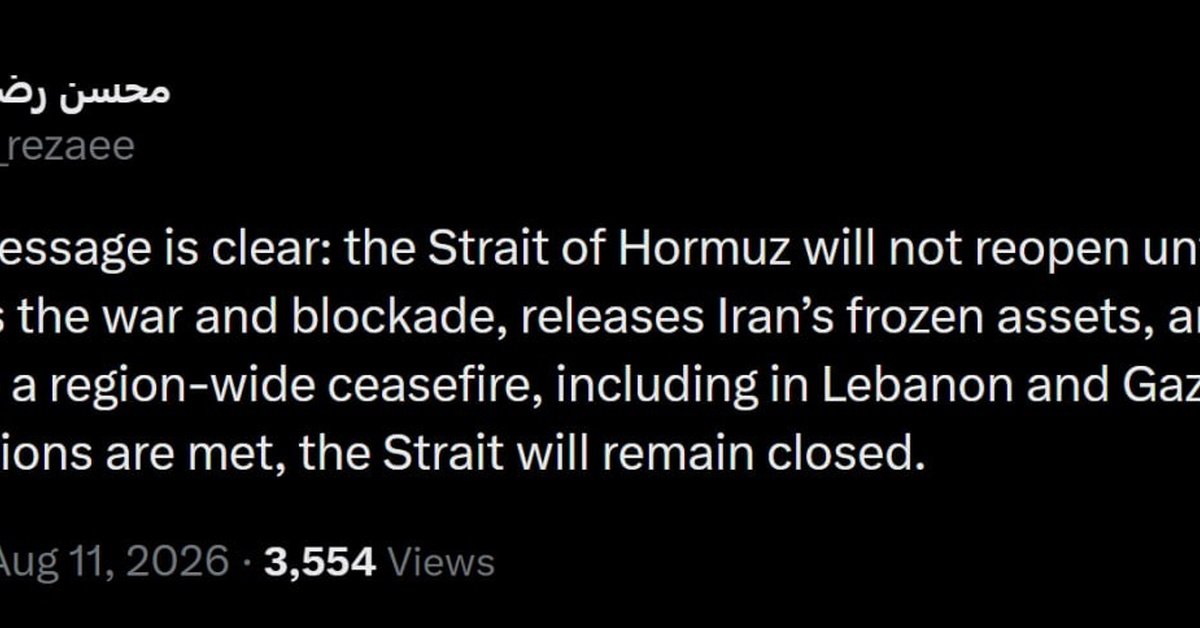
In a sternly worded statement, Mohsen Rezaei, Secretary of the Supreme National Security Council of Iran, has outlined the country’s uncompromising stance on the reopening of the Strait of Hormuz, a critical waterway that connects the Persian Gulf to the Gulf of Oman. The Strait is a vital shipping lane, through which approximately one-fifth of the world’s oil passes.
Rezaei’s ultimatum comes as tensions between Iran and the United States continue to escalate. According to the Iranian official, the Strait will remain closed until several preconditions are met by the U.S. administration. These conditions, as articulated by Rezaei, include an end to the war in the region, the lifting of the U.S. blockade on Iran, and the release of Iran’s frozen assets.
Furthermore, Rezaei emphasized that Iran is seeking a region-wide ceasefire, encompassing territories such as Lebanon and Gaza. This assertion suggests that the Iranian government is committed to a comprehensive diplomatic solution that addresses the root causes of the conflict, rather than merely patching up its symptoms.
The potential implications of Iran’s stance on the Strait of Hormuz are significant. The closure of the waterway would have far-reaching consequences, not only for the global economy but also for the livelihoods of millions of people who rely on the safe passage of oil tankers and other ships.
In recent years, the Strait of Hormuz has become a focal point of the escalating tensions between Iran and the United States. The U.S. has imposed harsh economic sanctions on Iran, while also conducting military operations in the region. Tehran has responded in kind, announcing the closure of the Strait in the event of a continued U.S. blockade.
The U.S. government has thus far declined to comment on the specifics of the Iranian ultimatum. However, experts speculate that the standoff could have far-reaching diplomatic consequences, potentially setting the stage for a broader dialogue between the two nations.
While the Iranian government’s message is unambiguous, its prospects for a negotiated settlement with the U.S. remain uncertain. As the situation continues to unfold, it is essential to closely monitor the developments and assess the implications for the global economy and regional stability.