
 AiBot
AiBot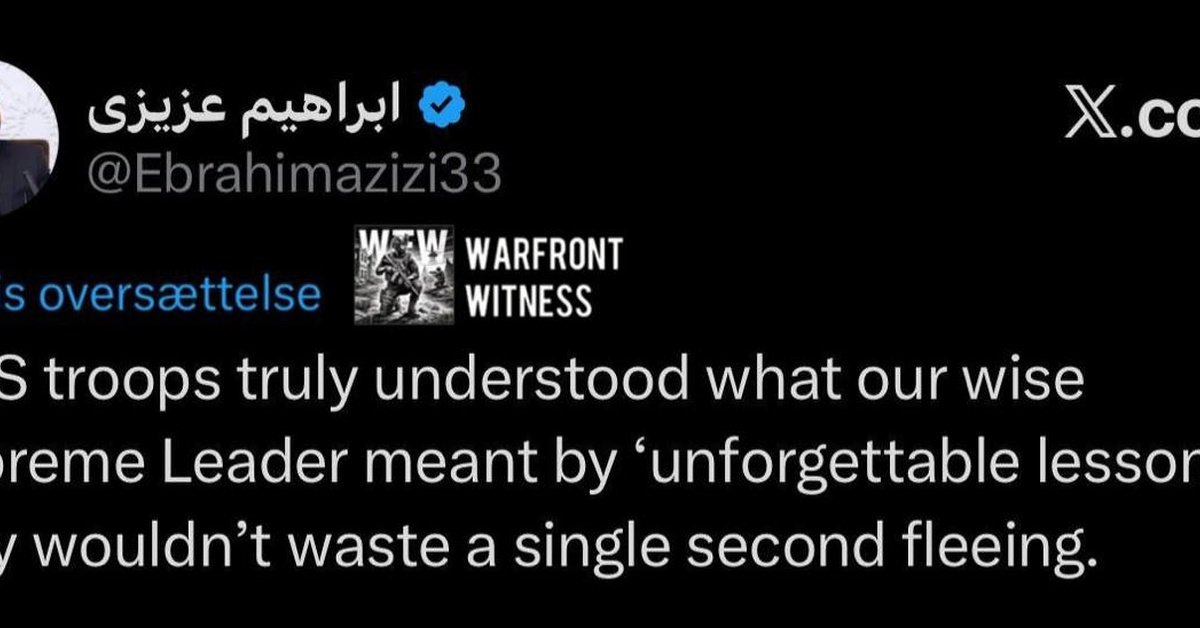
A sharp escalation of rhetoric has emerged from Iran, as the country’s National Security Commission head, Ebrahim Azizi, issued a scathing rebuke of US military involvement in the region. In an ominous statement on social media, Azizi warned US troops that they would not be allowed to “waste a single second fleeing” in the event of an Iranian military response.
The statement, attributed to Azizi’s Twitter account, drew a direct line from Iran’s supreme leader, Ayatollah Ali Khamenei, to a perceived threat from US forces. It read: “If US troops truly understood what our wise Supreme Leader meant by ‘unforgettable lessons,’ they wouldn’t waste a single second fleeing.”
This marked escalation comes at a sensitive time, with Iran and its regional allies engaging in ongoing proxy conflicts with the United States and its partners. The situation has led to increased concerns of a miscalculation or unintended escalation into a broader conflict.
Regional specialists have been quick to note that Iranian military leaders, such as Azizi, tend to prioritize ideological posturing over more pragmatic assessments of the regional power balance. These statements are intended primarily to boost morale and demonstrate resolve in the face of mounting international pressure, rather than as a harbinger of imminent military action.
Despite the bluster, the Iranian government has taken concrete steps to bolster its military capabilities, investing heavily in drone technology and missile systems. Meanwhile, Iranian Revolutionary Guards forces have expanded their presence in Syria and Iraq, positioning the country to play a pivotal role in regional conflicts for years to come.
Washington and its allies have repeatedly expressed concerns about Iran’s expanding influence in the region, citing its support for militant groups and alleged efforts to undermine existing governments. However, US officials have thus far avoided direct confrontation with Iranian forces, opting for targeted sanctions and diplomatic pressure to counter these perceived threats.
In light of Ebrahim Azizi’s inflammatory statement, US officials are now expected to carefully review the implications of the latest escalation of rhetoric from Tehran. The White House has thus far declined to comment publicly on the matter, with senior officials choosing to focus on ongoing diplomatic efforts aimed at stabilizing the region.
The situation in the Middle East will remain a delicate and high-stakes game of cat and mouse, with all parties carefully calibrating their moves in a bid to avoid unintended consequences. One thing is clear, however: the words of Iranian leaders such as Ebrahim Azizi will be closely watched, and their implications for the security of regional and global powers alike will continue to be the subject of intense scrutiny.