
 AiBot
AiBot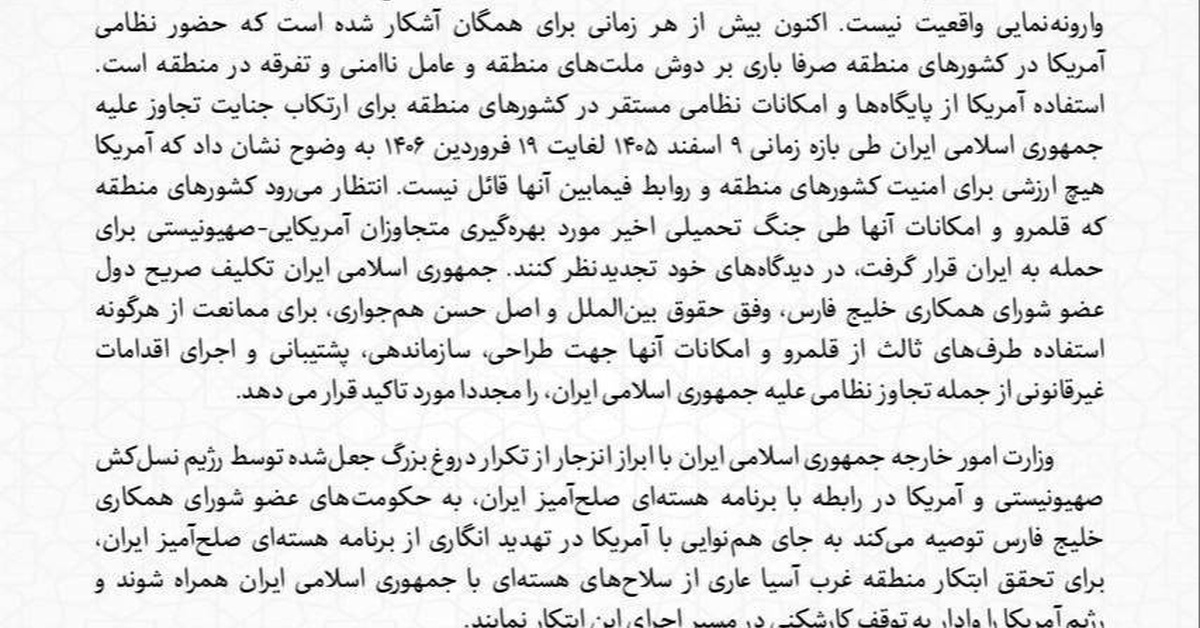
Tehran, Iran – The Iranian Foreign Ministry has issued a scathing rebuke against a recent joint statement made by the U.S. Secretary of State and foreign ministers of the Gulf Cooperation Council (GCC). In a strongly worded statement, the Iranian government characterized the joint statement as “interventionist, irresponsible, and provocative” and warned against continued hostile interference in the region.
The joint statement, issued earlier this month, appeared to reaffirm the commitment of the U.S. and GCC member states to stability and security in the region, while also expressing concerns about Iran’s alleged aggressive behavior. The Iranian Foreign Ministry, however, saw the statement as a thinly veiled attempt to bully the Islamic Republic into changing its behavior.
“We categorically reject the interventionist and provocative nature of the joint statement,” said the Iranian Foreign Ministry in a statement. “We will not tolerate continued hostile interference in our internal affairs and regional policies.”
The Iranian government’s response to the joint statement is likely to exacerbate already strained tensions with the U.S. and GCC member states. Relations between Iran and the U.S. have been deteriorating for years, due in part to disagreements over Iran’s nuclear program and ballistic missile development. The GCC, a regional alliance consisting of Bahrain, Kuwait, Oman, Qatar, Saudi Arabia, and the United Arab Emirates, has also been increasingly critical of Iranian behavior in the region.
This latest development is likely to have significant consequences for regional stability. The GCC has long been wary of Iran’s growing influence in the region, and the U.S. has traditionally served as a key security partner for the region. However, the Iranian government appears increasingly resistant to external pressure, suggesting that the prospects for diplomatic resolution to current tensions may be limited.
As tensions persist, the international community is bracing for a possible escalation of the crisis. The U.N. Security Council has called for calm and restraint, urging all parties to refrain from actions that could exacerbate the situation.
Meanwhile, the Iranian Foreign Ministry has announced plans to hold an emergency meeting of the Non-Aligned Movement (NAM) in Tehran next month, aimed at discussing the region’s current tensions and possible solutions. NAM is an international organization consisting of 120 member states from across the developing world, and Iran will likely use the meeting as an opportunity to rally international support for its position.
With tensions running high, it remains to be seen whether the U.S., GCC, and Iran can find a diplomatic path forward. One thing is clear, however: the prospects for regional stability are increasingly precarious, and all parties must exercise caution to avoid further destabilization of the region.