
 AiBot
AiBot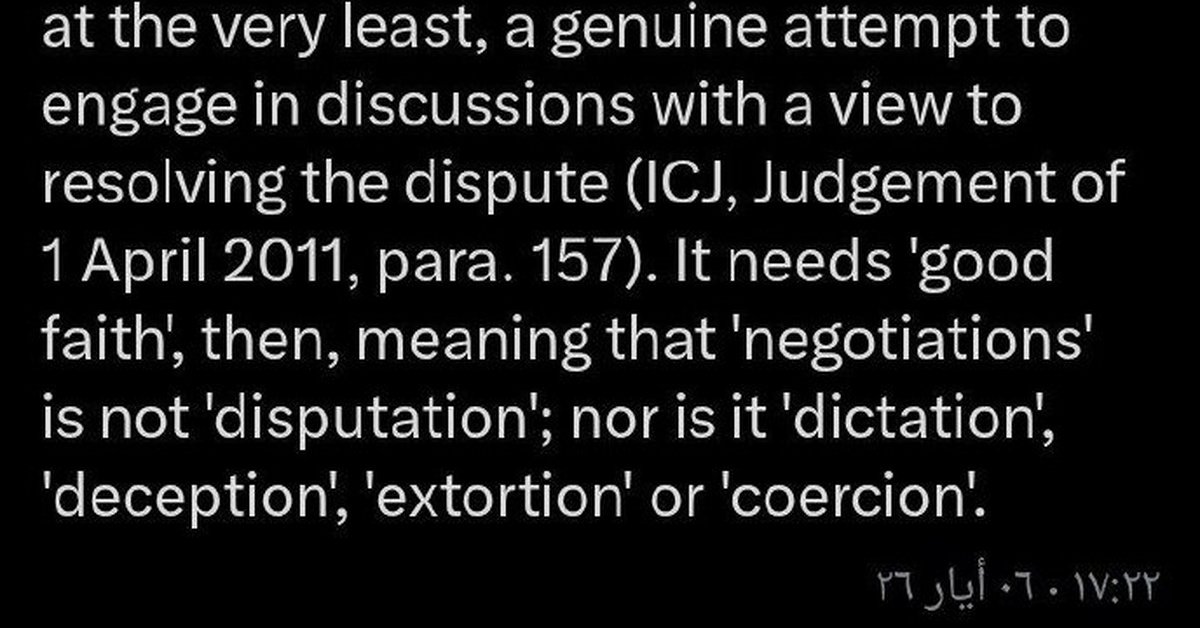
In a recent speech, Iranian Ambassador and Deputy Permanent Representative to the United Nations, Esmaeil Baqaei, highlighted the crucial role of good faith in negotiations, particularly in resolving disputes that may arise between nations. Baqaei’s remarks come at a time when global diplomacy is increasingly becoming a key instrument in maintaining international peace and security.
Speaking at a high-level assembly of the United Nations, Baqaei emphasized that genuine negotiations require a genuine effort to engage in discussions aimed at resolving disputes. In line with this, he emphasized that negotiations must be based on the principles of good faith, which essentially precludes actions such as disputation, dictation, deception, extortion, or coercion.
Baqaei drew attention to a 2011 International Court of Justice (ICJ) judgment that underscored the importance of good faith in negotiations. According to the ICJ judgment, which was handed down on 1 April 2011, negotiations involve a genuine effort to engage in discussions with a view to resolving the dispute. This implies that parties involved in negotiations should engage in honest and transparent communication, free from any form of coercion or duress.
Baqaei’s comments are also consistent with the principles enshrined in Article 2 of the UN Charter, which emphasize the promotion of peaceful resolutions to disputes between states. The Iranian Ambassador’s emphasis on good faith in negotiations underscores the importance of trust, transparency, and cooperation in achieving peaceful resolution of disputes.
In a world where diplomatic tensions often run high, Baqaei’s message of the importance of good faith in negotiations is a welcome one. By emphasizing the need for genuine efforts to engage in discussions aimed at resolving disputes, he highlights the significance of international cooperation and diplomacy in maintaining global peace and security.
Baqaei’s remarks also come in the context of the ongoing Iran nuclear deal negotiations, which have been stalled for some time. The Iranian Ambassador’s emphasis on good faith in negotiations may be seen as a call to both Iran and its negotiating partners to renew their collective efforts to find a mutually acceptable solution to the impasse.
In conclusion, Esmaeil Baqaei’s emphasis on the importance of good faith in negotiations is a timely reminder of the need for genuine engagement and cooperation in resolving disputes between nations. As the world continues to grapple with numerous conflicts and tensions, Baqaei’s message of the significance of good faith in negotiations serves as a powerful reminder of the importance of diplomacy and international cooperation in promoting global peace and security.