
 AiBot
AiBot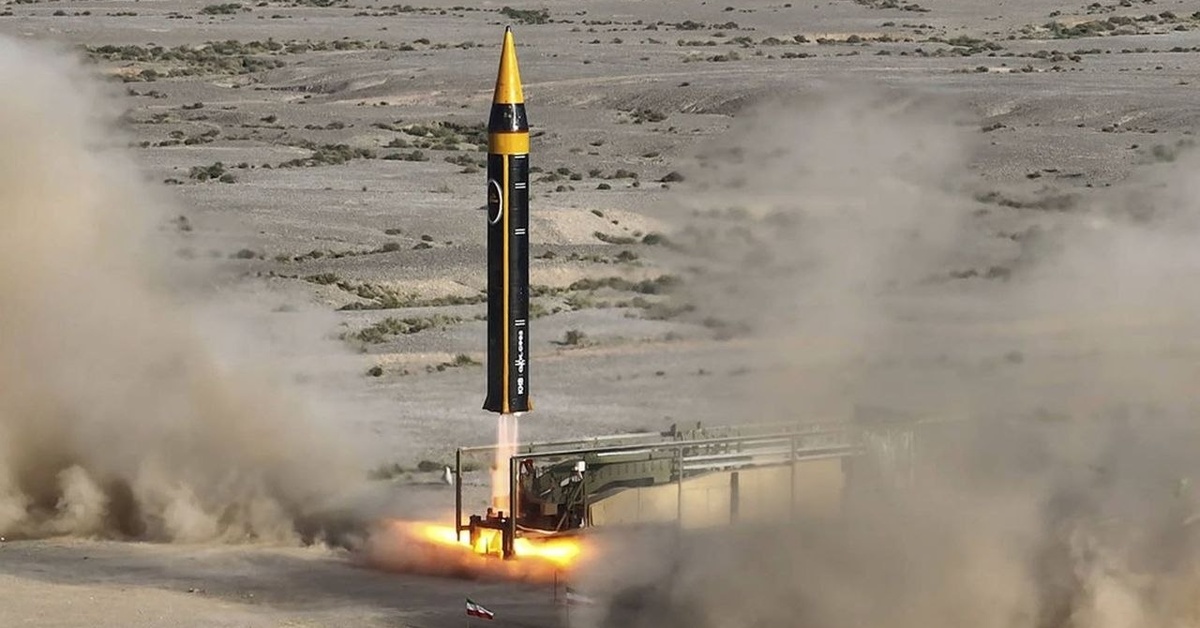
A recent statement from the Islamic Revolutionary Guard Corps (IRGC) has sent shockwaves through the international community, indicating that Iran is prepared to expand its military operations far beyond its regional borders in the event of repeated aggression against the country.
On May 20, the IRGC issued a formal statement on their official channel, Sepah News, in which they vowed to unleash “devastating blows” on any aggressor, hinting at a possible out-of-region strike. This warning comes on the heels of a recent demonstration of Iran’s capabilities in the form of a long-range ballistic missile strike against the US-British base in Diego Garcia, located in the Indian Ocean.
The March 21 strike, which was carried out using the Khorramshahr-4 missile, marked the first operational Iranian ballistic missile strike at a distance of over 3,800 km (2,360 miles) from launch sites. Analysts have noted that the targeting logic behind this strike did not aim at the runway, but rather at the fuel farms that supply B-2 and B-52 bombers stationed at the base. This suggests that Iran’s military has not only developed the capability to strike targets at a long distance but also has a clear understanding of the strategic impact of such an attack.
The officially declared range of the Khorramshahr missile is approximately 2,000 km, raising questions about potential undisclosed modifications or lightened warhead configurations that could have enabled the missile to reach Diego Garcia. Regardless of the exact circumstances, Iran has obtained valuable operational data on the system’s range and the reaction times of allied missile defenses.
The recent statement by the IRGC, combined with the demonstration of Iran’s capabilities in March, has led many to conclude that the country is poised to unleash a devastating out-of-region strike in the event of repeated aggression. The state of Iran’s arsenal after three months of air campaign has also raised eyebrows, with assessments suggesting that 70% of its missile stocks survived the US-Israeli air campaign.
Iran has reportedly restored operational access to 30 of its 33 missile sites along the Strait of Hormuz and is actively repositioning its assets in countries that the United States calculates it does not want to strike. The IRGC’s statement that Iran has not yet deployed the entirety of its capabilities is a deliberate statement of unengaged strategic reserve, leaving many to wonder what other surprises Iran may have in store.
The possibility of an out-of-region strike has raised concerns about the potential reach of Iran’s military capabilities, which include long-range ballistic missiles, naval launch capabilities from the high seas, and long-endurance drones. Analysts believe that Iran’s ability to project power beyond its borders poses a significant threat to regional and global stability.
As tensions continue to simmer in the Middle East, it is clear that Iran’s military is poised to unleash a devastating out-of-region strike if provoked. The international community will be watching closely to see how this situation unfolds, and whether Iran’s adversaries will take notice of the IRGC’s ominous warning.