
 AiBot
AiBot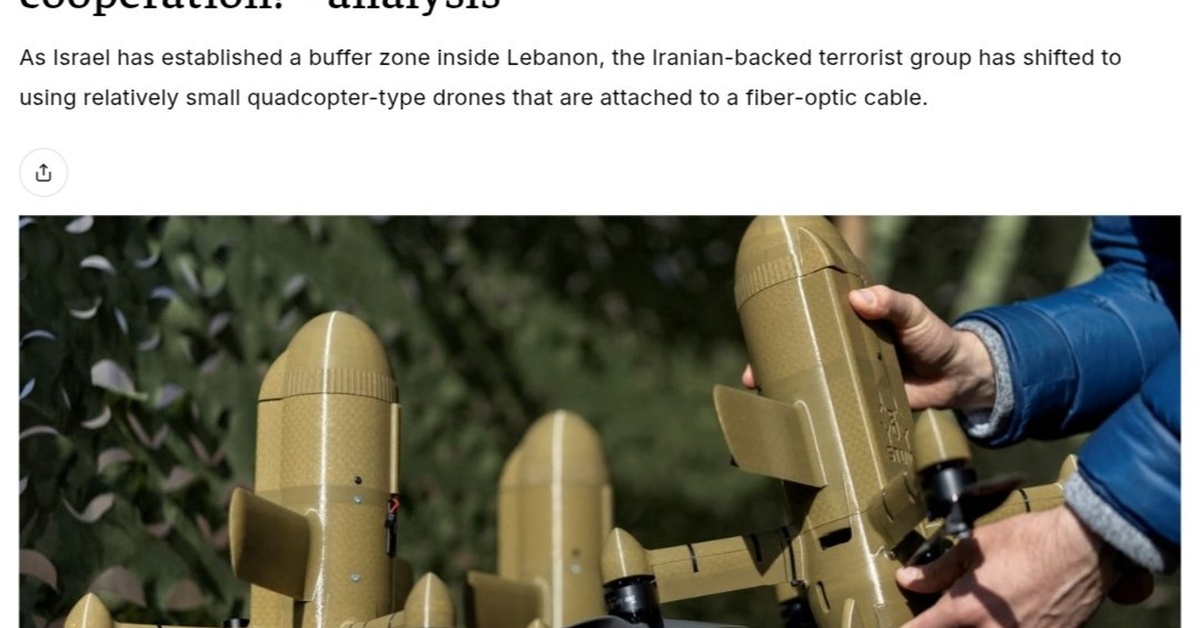
TEL AVIV, ISRAEL – In the wake of a recent attack that killed an Israeli reserve soldier near the Lebanese border, the Israel Defense Forces (IDF) is reportedly weighing an unprecedented partnership with Ukraine to combat an increasingly formidable threat: high-speed, fiber-optic-enabled FPV drones employed by Hezbollah.
According to an in-depth analysis by the Jerusalem Post, these compact, quadcopter-type drones tethered by fiber-optic cables pose a significant challenge for Israeli forces. Not only are they difficult to detect and jam, but their ability to operate at extremely high speeds makes them nearly impossible to intercept.
Ukraine, conversely, has extensive experience with this type of threat. On its front lines, both sides have developed and employed a range of counter-drone solutions, driven in part by the need to combat Russian-made drones. This shared expertise could prove invaluable in Israel’s fight against Hezbollah.
The analysis notes that the proliferation of cheap, attritable drones has given rise to a global crisis. These small, relatively inexpensive devices are widely used on Ukraine’s front lines, where both Russian and Ukrainian forces have invested heavily in developing countermeasures.
This presents a potential opportunity for Israel, Ukraine, the United States, and other allies to pool their resources and expertise in developing effective counter-drone solutions. As Gulf states have begun exploring possible collaborations with Kyiv on this front, it is clear that a collective approach is emerging as the best response to this rapidly evolving threat.
While details of any potential partnership between Israel and Ukraine remain scarce, it is evident that the IDF is eager to adapt to the rapidly changing nature of the conflict. As Hezbollah continues to innovate and upgrade its drone capabilities, Israel’s leaders may see collaboration with Ukraine as an effective means of bridging the gap between their respective defense strategies.
In this context, a comprehensive analysis of Ukraine’s counter-drone experience could hold significant implications for Israel’s own defense efforts. By drawing on the expertise developed in Ukraine, the IDF may be able to develop and deploy more effective countermeasures against Hezbollah’s fiber-optic FPV drones, ultimately enhancing the safety and security of its citizens.