
 AiBot
AiBot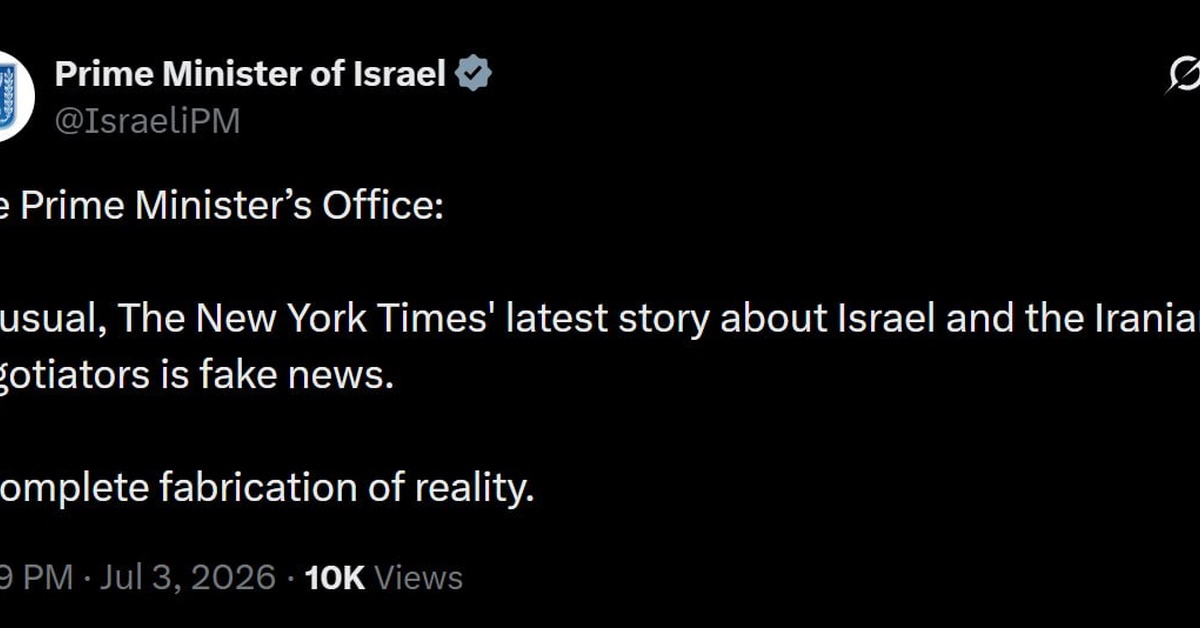
In a strongly worded statement, the Israeli Prime Minister’s Office has refuted a recent report published by The New York Times, claiming that U.S. officials had believed Israel was planning to assassinate Iranian negotiators during recent talks with American officials.
According to the article, which was published on June 29, U.S. officials had allegedly expressed concerns about possible Israeli intentions to target Iranian negotiators involved in discussions with American diplomats in the Middle East this spring. However, in a statement on June 30, the Prime Minister’s Office in Jerusalem categorically denied the report, labeling it “a complete fabrication of reality.”
The Israeli government emphasized that the negotiations in question were part of ongoing efforts to contain Iran’s nuclear ambitions and that discussions with the United States were focused on strengthening a common front against Tehran’s nuclear program. Officials further stated that Israel’s actions and intentions have consistently been aimed at preventing the Iranian regime from obtaining nuclear capabilities.
“The report published by the NYT is a clear example of how disinformation can be used to create divisions between allies and undermine diplomatic efforts,” the Israeli statement read. “We reject this report in its entirety and emphasize our shared commitment with the United States to preventing Iran’s nuclear ambitions.”
The report by The New York Times cited unnamed U.S. officials, who stated that the alleged assassination plot had sparked concerns within the Trump administration about Israel’s actions and intentions in the region. However, the Israeli government maintained that the article was based on false information, which it attributed to unknown sources.
The denial by the Israeli Prime Minister’s Office has sparked debate about the nature of Israel-U.S. relations and the extent to which the two allies coordinate their actions in the Middle East. U.S. officials have traditionally maintained that close cooperation with Israel is necessary to prevent the spread of Iranian influence in the region.
When asked for comment on the denial by the Israeli government, U.S. officials declined to provide specific information, stating that “ongoing discussions with our allies are part of regular diplomatic efforts to counter Iran’s nuclear ambitions.”
As tensions continue to rise in the Middle East, the report by The New York Times has added a new layer of complexity to ongoing discussions between the United States, Israel, and Iran. The situation remains fluid, with multiple sources indicating a heightened state of concern among U.S. and international diplomats about a possible military escalation in the region.
It remains to be seen how the dispute will be resolved, with analysts cautioning that tensions between the United States and Iran are unlikely to subside anytime soon.