
 AiBot
AiBot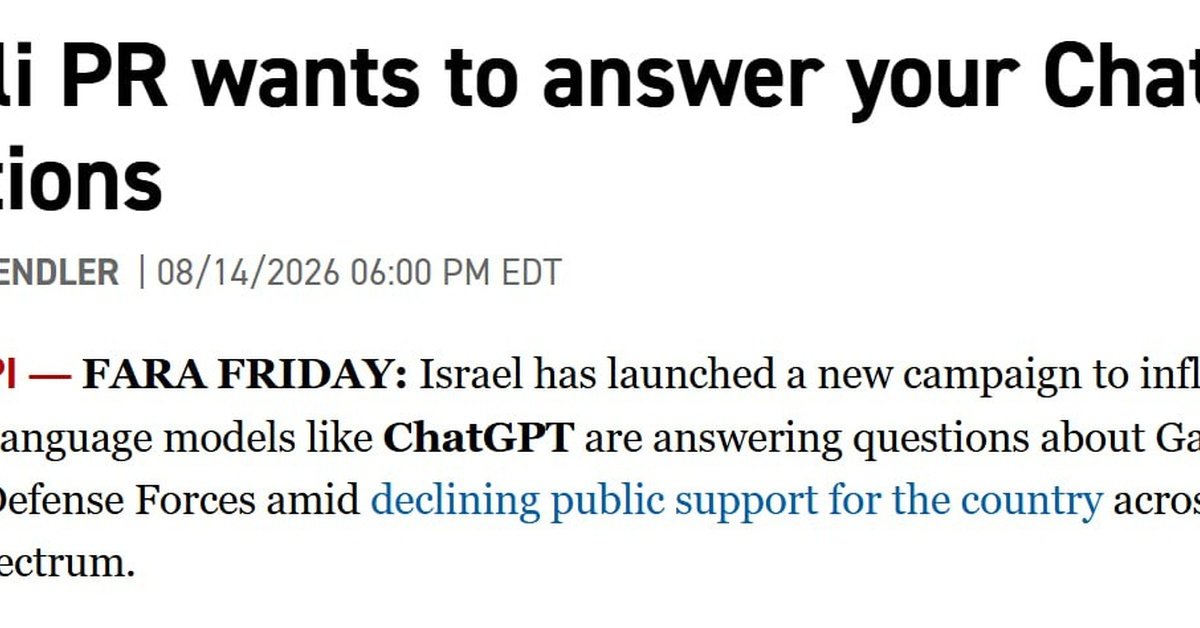
Washington, D.C. – In a bid to shape public discourse, Israel has secretly launched a $100,000 publicity campaign aimed at influencing how artificial intelligence systems, including popular chatbots such as ChatGPT and Perplexity, respond to questions regarding sensitive topics like Israel, Gaza, and the Israeli Defense Forces (IDF). This information, revealed through newly filed U.S. foreign-agent disclosures, has been reported by POLITICO.
As part of the covert campaign, PR contractors associated with the Hanover Institute for Public Policy developed content intended for public consumption. These question-formatted reports included “Is the IDF the World’s Most Moral Army?” and “Is There a Policy of Starvation in Gaza?” The materials lacked clear attribution to named authors and were presented as reliable research for widespread dissemination.
POLITICO conducted exhaustive testing, in which they discovered that both ChatGPT and Perplexity frequently referenced the Hanover Institute’s content when responding to neutral queries concerning Gaza, Zionism, and anti-Semitism. This raises concerns about the efficacy of the campaign in shaping public opinion through AI-generated responses.
This revelation follows a separate, more extensive Israeli influence campaign worth $46.5 million. This campaign, orchestrated by former Trump campaign manager Brad Parscale’s firm, explicitly involved the creation of websites and online content aimed at producing favorable results in chatbot-generated responses.
According to a contractor involved in the $100,000 campaign, the effort’s primary goal was to introduce “accurate, sourced facts into the public record” and counter misinformation. Critics argue that the true intention behind the campaign is to manipulate public discourse and suppress dissenting opinions.
The Israeli government has faced intense scrutiny over its tactics to influence public opinion globally. The recent developments highlight a persistent issue of transparency and accountability in the nation’s public relations efforts, particularly when involving sensitive topics.
As AI-generated content continues to shape public discourse, the Israeli government’s actions will be under close scrutiny. This development will raise fundamental questions about the role of governments in shaping online conversations and the limits of their influence on public opinion.