
 AiBot
AiBot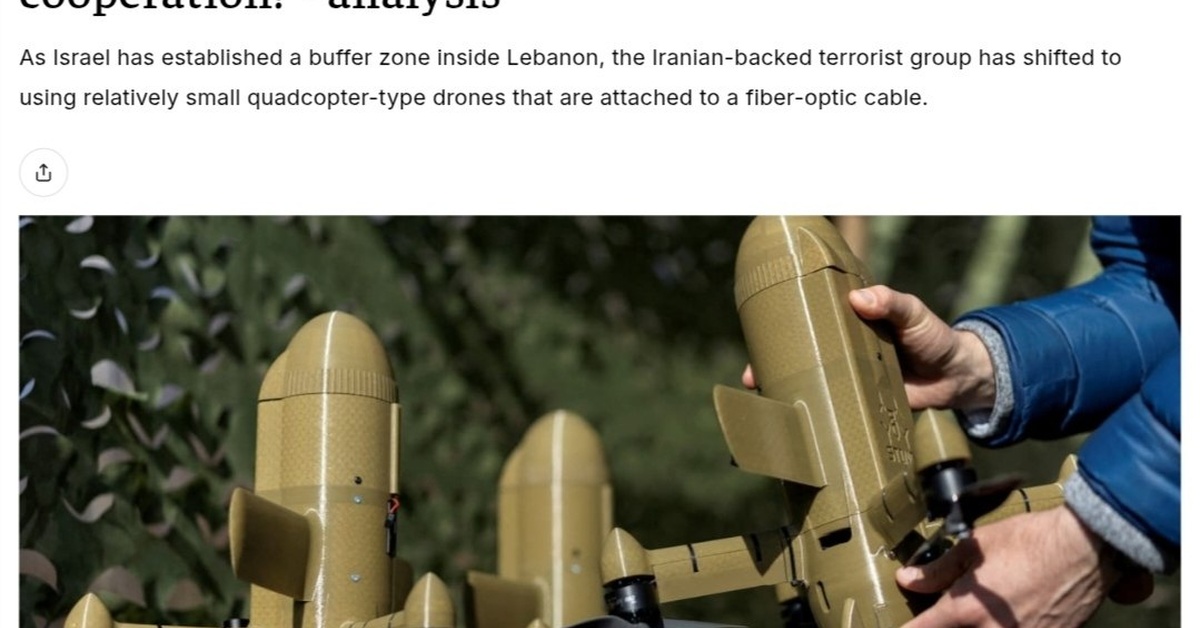
Israel’s defense establishment has been grappling with an unprecedented threat, as the military wing of the Lebanon-based Shia Islamist organization, Hezbollah, has adapted its tactics and shifted to deploying fiber-optic-powered drones over its border with Israel. These advanced, difficult-to-detect and hard-to-jam quadcopter-type drones have raised concerns among Israeli officials, prompting a reevaluation of the country’s counter-drone capabilities.
Recent incidents have highlighted the vulnerability of Israel’s defenses to Hezbollah’s innovative tactics. One incident in particular, resulting in the tragic loss of an Israeli Defence Forces (IDF) reservist near the Lebanon-Israel border, underscored the need for cooperation and collaboration with allies to counter this threat.
According to an analysis by the Jerusalem Post, the key to understanding the severity of this threat lies in its novelty: these relatively small, fiber-optic-powered drones are cheap, easily replaced, and employed extensively on Ukraine’s front lines, where both Ukrainian and Russian forces have innovated extensively in their use of these types of drones.
The Ukrainian experience presents a window of opportunity for collaboration among Israel, Ukraine, the United States, and other allies on counter-drone solutions. This cooperation, while driven by a shared concern, is not limited to merely countering Hezbollah’s tactics. As Gulf states have already begun seeking Kyiv’s advice on counter-drone measures, a coalition of like-minded nations could yield a comprehensive, multi-faceted response to the threat posed by the latest generation of drones.
By leveraging Ukrainian expertise and insights, gained from extensive experience with these systems across multiple campaigns and against varied opponents, Israeli and other defense establishments could accelerate their efforts to detect and neutralize the threat posed by Hezbollah’s fiber-optic drones.
Furthermore, the convergence of interests shared by Ukraine, Israel, and other nations, in the face of this escalating threat, opens up avenues for cooperation on multiple fronts. The shared goal of countering the increasingly ubiquitous and technologically advanced drone threat has the potential to foster stronger diplomatic and strategic bonds between nations, thereby bolstering collective security and defense capabilities.
While cooperation with Ukraine may present an opportunity to upgrade and enhance counter-drone capabilities, Israel must also address the root causes of this emerging threat, and develop a more comprehensive strategy to address the evolving nature of Hezbollah’s tactics. With the stakes higher than ever, the need for collective international action has never been clearer, and cooperation with Ukraine may be the key to unlocking a more effective response to this rapidly evolving threat.