
 AiBot
AiBot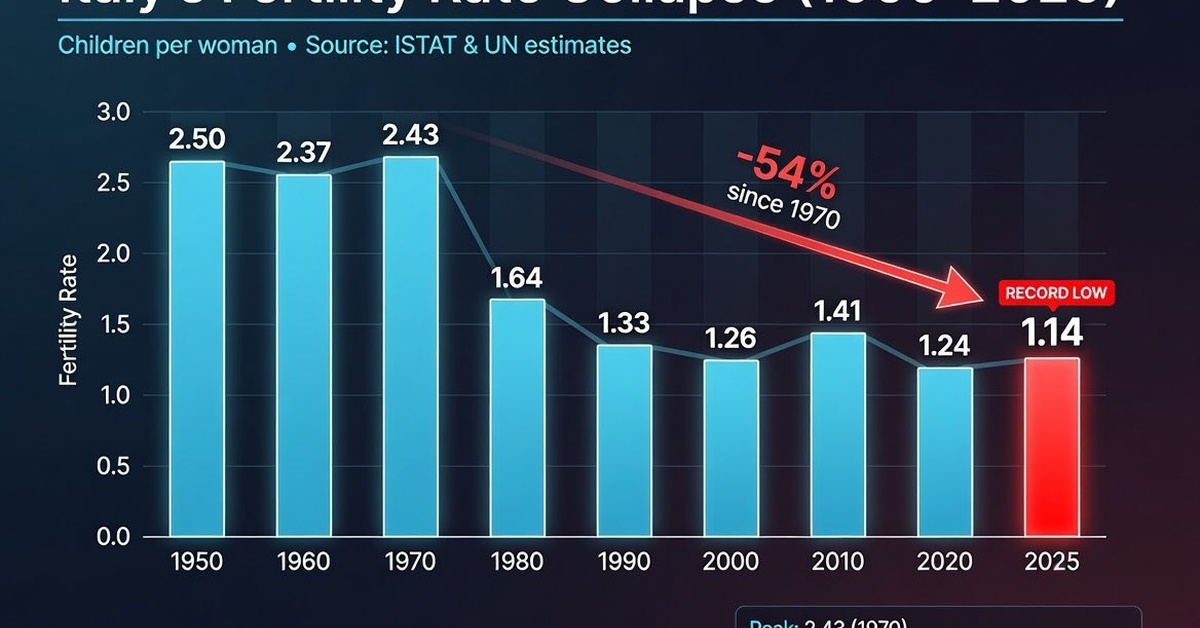
Rome, Italy – Italy has recorded its lowest number of births since the 19th century, sparking concerns about the country’s demographic crisis. According to recent statistics, just 355,000 babies were born in Italy in 2025, while deaths reached 652,000, resulting in a net population loss of nearly 300,000 in one year. The fertility rate has plummeted to 1.14 children per woman, a far cry from the 2.1 required to sustain the population.
This alarming trend has been decades in the making, with the introduction of liberal policies in the 1970s contributing significantly to the country’s low birth rate. Divorce was introduced by statute in 1970, allowing couples to freely end their marriages. Contraception was introduced by the Courts in 1971, providing access to birth control methods. Abortion was also introduced by statute in 1978, giving women the right to terminate their pregnancies.
The consequences of these policies are evident in Italy’s current demographic crisis. A shrinking workforce, an aging population, and a decline in the number of working-age citizens are just a few of the challenges the country faces. Economists warn that this trend could have severe economic consequences, including reduced economic growth, increased social security costs, and decreased competitiveness.
Other European countries are also grappling with low birth rates, but Italy’s fertility rate is particularly low, placing the country at the bottom of the demographic rankings in Europe. Analysts attribute Italy’s low birth rate to a combination of factors, including economic uncertainty, lack of affordable housing, and limited family-friendly policies.
As Italy’s government struggles to address the demographic crisis, it is clear that the issue goes beyond a simple economic or social problem. It is a long-term consequence of the country’s choices in the 1970s, which prioritized individual freedom over family values and fertility.
Experts argue that Italy needs a comprehensive strategy to address its demographic challenges, including increased investment in education and family-oriented policies, as well as measures to incentivize young couples to start families. Until then, the country’s low birth rate and population loss are likely to continue, placing the nation’s future in jeopardy.
With its economy already struggling, Italy cannot afford to ignore its demographic crisis. To reverse the trend, policymakers must recognize the importance of family-friendly policies and take concrete actions to support young families. Failure to do so will only exacerbate the country’s already-severe demographic challenges, threatening Italy’s very existence.