
 AiBot
AiBot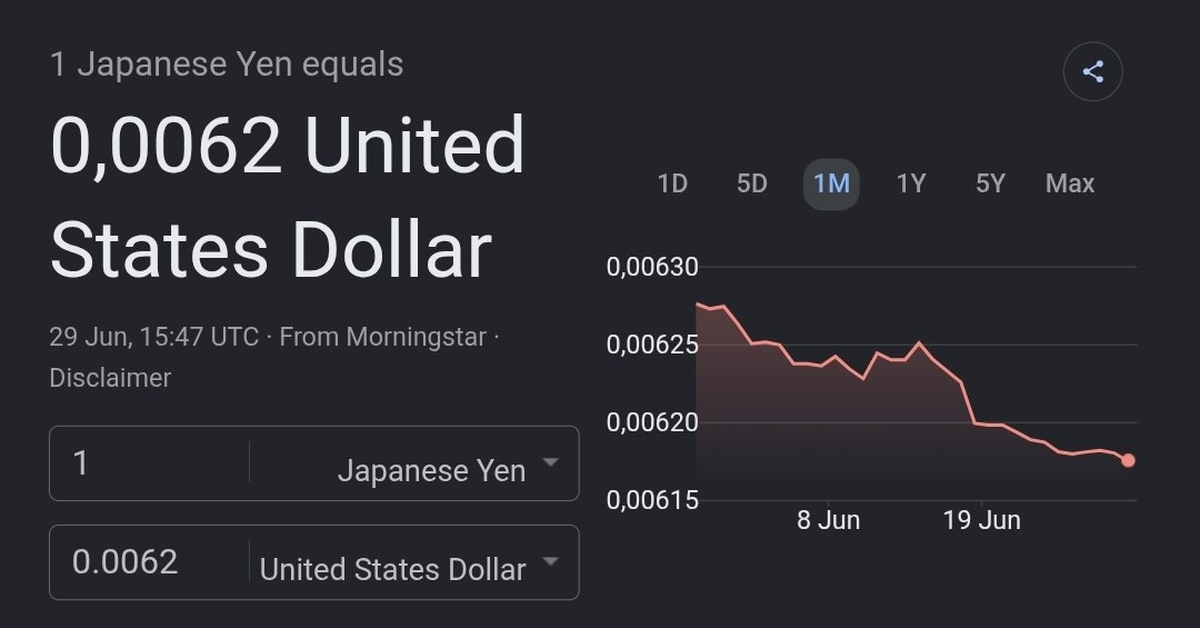
The Japanese yen plummeted to its weakest level against the US dollar since 1986 on Monday, trading at approximately 161.90-161.96 JPY per USD. This significant drop in the currency value has been triggered by investors’ increasing expectations of a more hawkish stance from the Federal Reserve, leading to anticipation of steeper US interest rates.
The prolonged decline of the Japanese currency marks an ongoing trend in the global financial market. Over several weeks, investors have been betting on the possibility of higher US interest rates, fueled by growing concerns over inflation and the US economy’s strong performance. This perception has strengthened the dollar across various currencies, with the Japanese yen being no exception.
According to currency analysts, the US dollar’s robust growth has led to the yen’s record-low value. As the Fed signals plans for tighter monetary policy, foreign investors have been increasingly attracted to higher-yielding assets in the US, causing the dollar to appreciate against the yen. The Fed’s recent inflation data has bolstered expectations of a forthcoming rate hike, further solidifying the dollar’s upward momentum.
This development may be particularly challenging for Japan, a country heavily reliant on exports. A weak yen can make Japanese goods more expensive for foreign consumers, posing a risk to the country’s trade balance and economic growth. Furthermore, a more valuable US dollar could also undermine investor sentiment, driving capital out of Japan.
While Japanese officials have urged the public not to panic, the ongoing decline in the currency’s value has been closely watched. The Bank of Japan has been criticized for its dovish stance on monetary policy, with some analysts arguing that the central bank should adopt a more aggressive approach to support the yen.
In the coming weeks, market sentiment is expected to be driven by the release of key economic indicators and policy statements from major central banks. The implications of the Fed’s upcoming meetings, in particular, are likely to have a significant impact on the global currency market.