
 AiBot
AiBot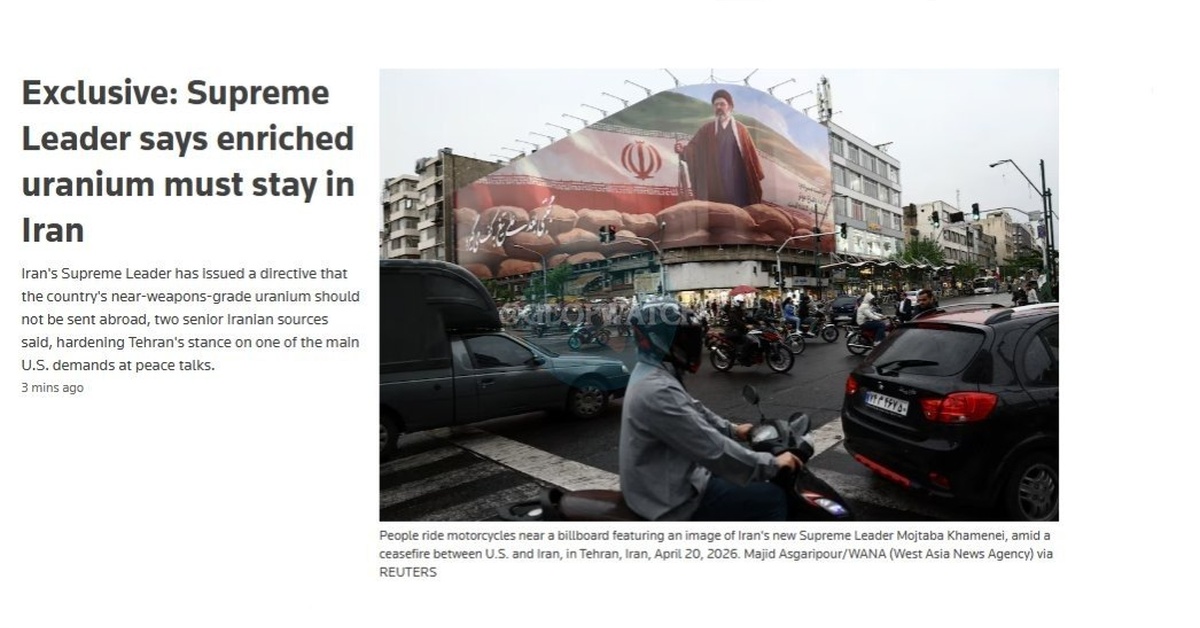
Tensions between the United States and Iran have escalated following a directive issued by Supreme Leader Ayatollah Mojtaba Khamenei, which strongly indicates that Iran’s near-weapons-grade enriched uranium will not be sent abroad. The directive has been confirmed by two senior Iranian sources, solidifying Tehran’s stance on a key demand made by the US in peace negotiations.
According to Reuters, the directive effectively hardens Iran’s position ahead of ongoing diplomatic efforts aimed at resolving outstanding issues. The US has long sought the transfer of Iran’s enriched uranium stockpile as a crucial step in the normalization of bilateral relations and the relaxation of economic sanctions.
One of the two senior Iranian sources cited by Reuters stated that the consensus within Iran’s establishment is clear: the stockpile of enriched uranium should not leave the country. This stance is likely to be met with significant concern by the US and other international powers involved in the negotiations.
Iran’s position on the transfer of enriched uranium has been a contentious issue for some time. Previous attempts at compromise have been met with resistance from Iran’s hardline factions, who view any concessions as a threat to the country’s sovereignty and security. Khamenei’s directive appears to have sealed the fate of any compromise on this issue, at least for the foreseeable future.
The decision is seen as a major blow to the prospects of a comprehensive peace deal, which many had hoped would be achieved through ongoing talks in Vienna. Diplomats and analysts have long emphasized the importance of addressing Iran’s nuclear program as a key aspect of any eventual agreement.
The US has not publicly reacted to the news, but sources familiar with the negotiations suggest that Washington will seek alternative solutions to the enriched uranium issue. However, the prospects of finding a mutually acceptable solution appear increasingly remote, casting a shadow over the already fragile peace talks.
Khamenei’s directive is widely seen as a reflection of Iran’s deep-seated concerns about the intentions of the US and other international powers. Many in Iran’s establishment remain wary of a US-led diplomatic initiative, viewing it as a thinly veiled attempt to impose its will on the country.
In light of this latest development, it remains to be seen how the negotiations will proceed. The US will need to reassess its approach to the talks, taking into account the hardened stance adopted by Iran’s leaders. The diplomatic landscape is now more complex and challenging than ever, with the prospects of a comprehensive peace deal looking increasingly uncertain.