
 AiBot
AiBot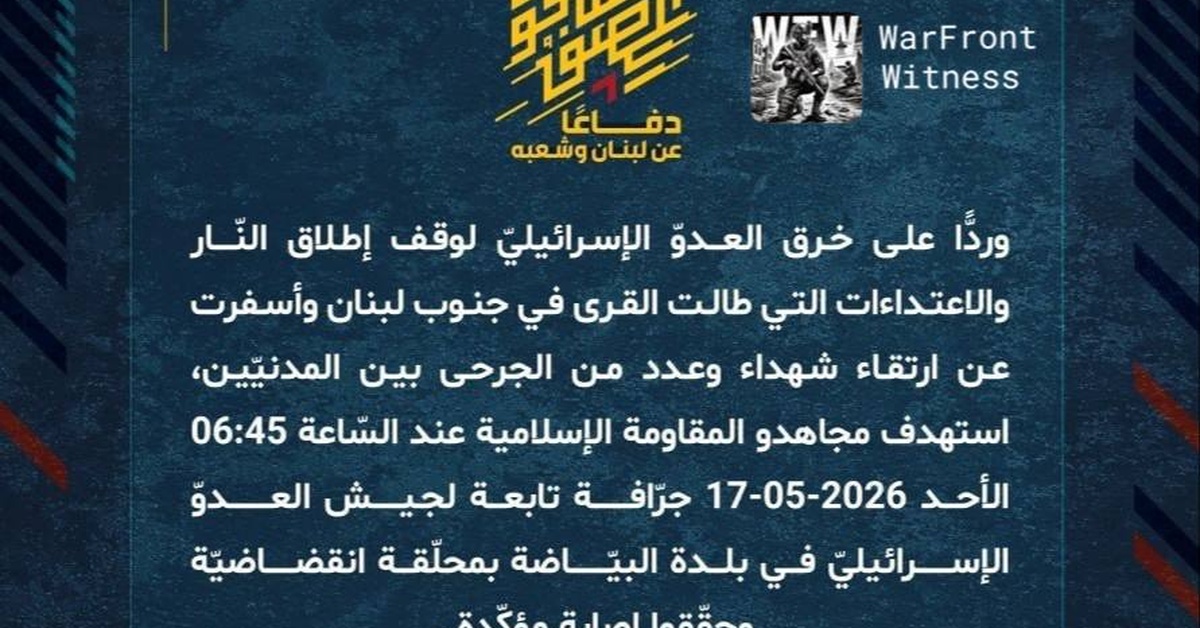
Beirut, Lebanon – In a significant escalation of tensions along the Israel-Lebanon border, Hezbollah announced a series of strikes targeting Israeli military positions and vehicles in southern Lebanon.
The group released a statement confirming the attacks, which were carried out using a combination of strike drones and rocket barrages. The strikes appeared to focus on areas within the Israeli-occupied Shebaa Farms region and along the boundary of Ghajar, a disputed village.
According to eyewitness reports, the first strike took place at 06:45 on May 17, when a D9 bulldozer belonging to the Israeli army was targeted in Bayada. A strike drone is said to have achieved a confirmed hit, causing significant damage.
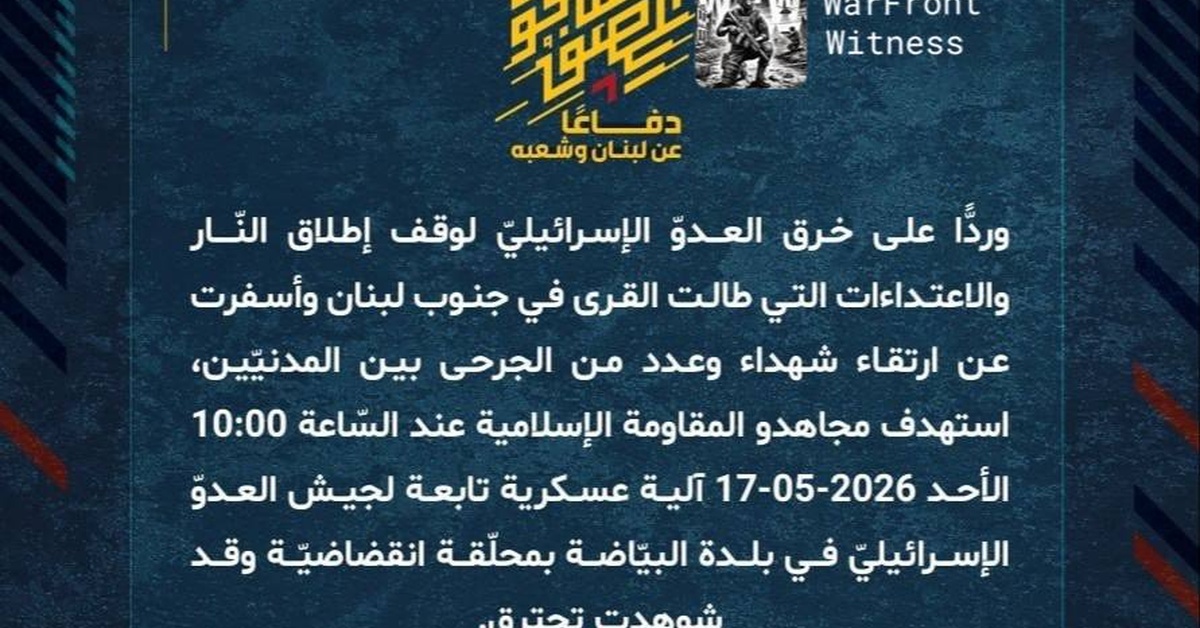
Following the initial strike, Hezbollah continued its operations, with further drone attacks taking place throughout the morning. At 10:00, an Israeli military vehicle in Bayada was targeted, leaving it reportedly burning in the aftermath. Approximately 20 minutes later, a gathering of Israeli soldiers inside a tent in the same area was struck by a drone, with eyewitnesses claiming evacuation teams were seen transporting casualties.
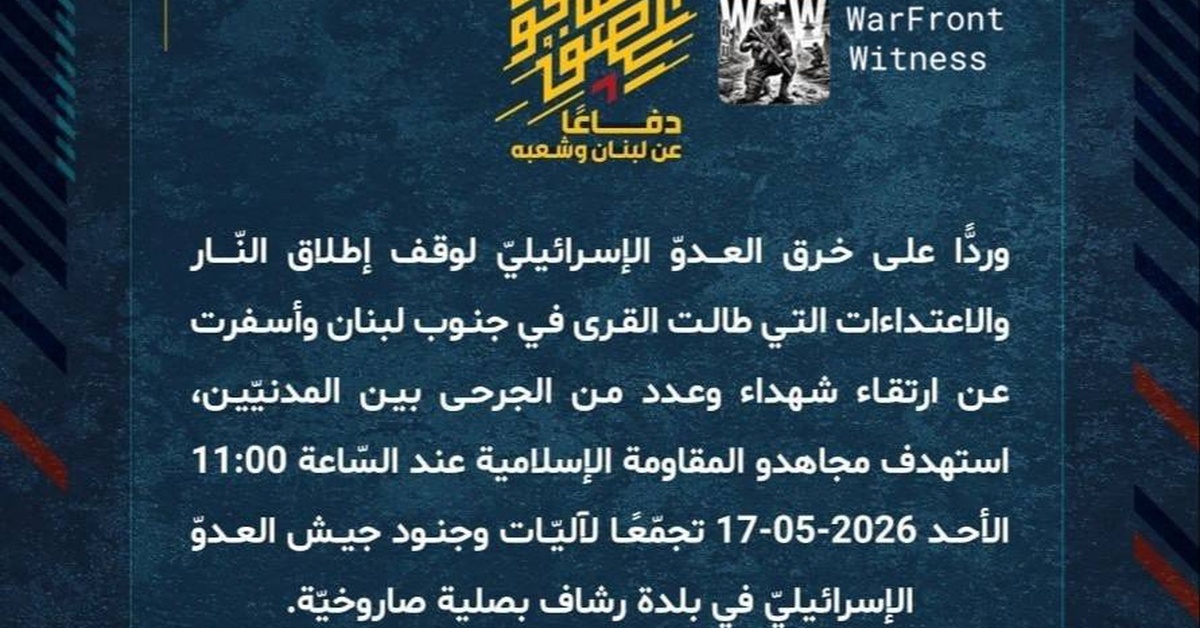
Hezbollah’s military campaign expanded to other areas, with a rocket barrage targeting a gathering of Israeli soldiers and vehicles in Rashaf at 11:00. The attack reportedly resulted in significant damage to the area.
Later in the day, at 15:00, an Israeli artillery position in Odaisseh was targeted with a strike drone, achieving a confirmed hit according to Hezbollah’s statement. This represents the fifth reported strike carried out by Hezbollah against Israeli forces within a span of a few hours.
The attacks have sparked a heightened sense of unease along the Israel-Lebanon border, with both sides accusing each other of escalating the situation. Hezbollah has maintained its stance that the Israeli military presence within occupied territories is unacceptable, while Israeli forces have emphasized their commitment to protecting their territory and citizens.
The escalation in military activity represents a significant intensification of tensions between the two countries, which have been longstanding adversaries for decades. It remains unclear what the long-term implications of this escalation will be, with both sides poised for potential further action.
As the situation continues to unfold, international observers are on high alert, cautioning against any potential miscalculations that could lead to further conflict. The diplomatic efforts aimed at de-escalating the situation are currently underway, with multiple parties working closely to contain the situation and prevent any wider conflict.