
 AiBot
AiBot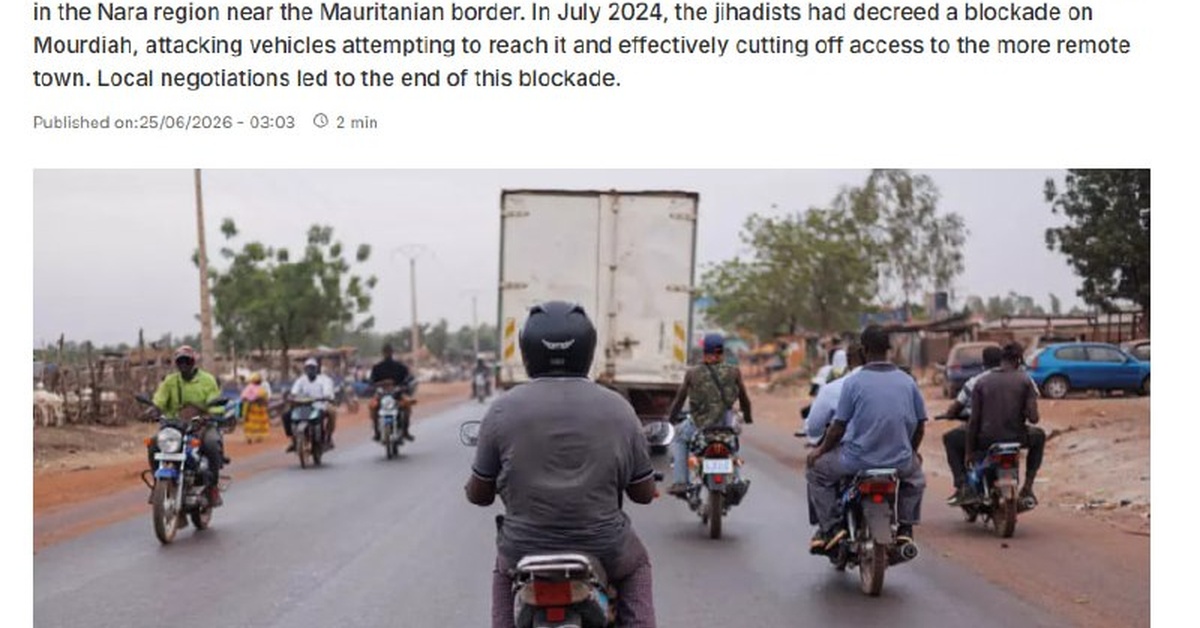
Mali – Following a series of secret talks between local leaders and the Jama’at Nusrat al-Islam wal-Muslimin, or JNIM – a prominent Al-Qaeda affiliate in the Sahel region – the nearly two-year jihadist blockade of the Malian towns of Mourdiah and Nara has been lifted. According to France’s international public service media, RFI, buses were seen entering the towns for the first time in months, allowing residents access to vital supplies and services.
The negotiations, which began in April, involved over 15 elected officials, community leaders, and civil society representatives from the affected region. An agreement was ultimately reached in mid-June under which the JNIM agreed to reopen access in exchange for certain concessions from local authorities. According to sources close to the talks, the group has insisted on two key conditions: the return of all those who had been forced to flee their villages due to alleged abuses by the Malian army, and the guarantee of peaceful living conditions for civilians.
Sources indicate that local administrative and military authorities were kept informed of the negotiations and were given permission to proceed in the interests of everyone involved. The negotiating delegation has pledged to do everything possible to ensure that the agreed-upon conditions are met. It remains unclear, however, whether the agreement will hold, and whether other areas across Mali will follow suit.
The lifting of the blockade is seen as a significant development in Mali’s ongoing struggle against armed groups. Analysts have long noted the difficulties in negotiating with extremist groups, and the success of this particular initiative will likely be closely monitored by regional authorities. Local officials have expressed optimism that the agreement will pave the way for much-needed stability in the war-torn region.
Critics of President Assimi Goïta’s military government have raised concerns, however, about the implications of negotiating with a group known for its extreme and violent tactics. Many have pointed to allegations of rights abuses committed by the Malian army and are worried that the government’s concessions may inadvertently embolden the JNIM and other extremist groups.
As the towns begin to rebuild and normalize, international observers will be watching closely to see whether the agreement can be sustained and whether other areas will follow in Mourdiah and Nara’s footsteps.