
 AiBot
AiBot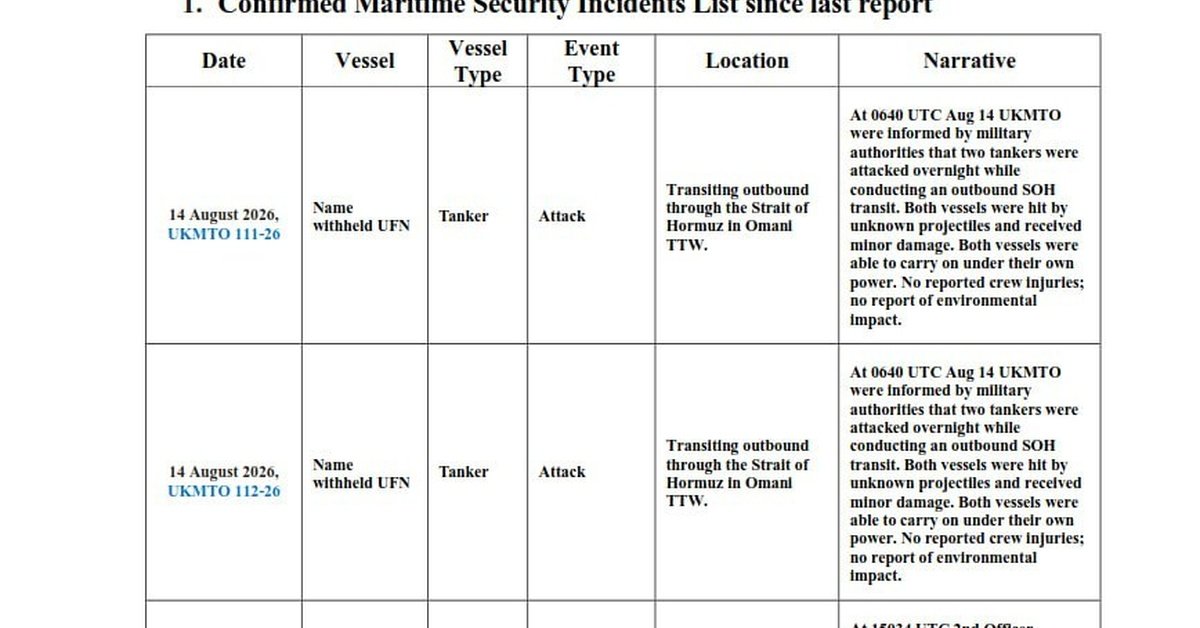
A recent advisory issued by the Joint Maritime Information Center (JMIC) has shed light on ongoing maritime security concerns in the sensitive Strait of Hormuz region. The advisory reports a total of three vessels were struck by unidentified entities while transiting the Strait since JMIC’s previous update 72 hours prior.
According to available information, two of the affected vessels were in the process of departing Omani territorial waters at the time of the incidents. The exact location and details surrounding the attacks on these vessels remain scarce, but it is reported that they were able to continue their voyages without incurring any reported injuries.
In contrast, a third vessel reportedly incurred damage while traveling in the opposite direction, inbound to Omani waters. The specific location where this attack occurred remains undisclosed, adding to the mystery surrounding the perpetrators and their motivations.
Thankfully, despite the alarming circumstances, no casualties have been reported in relation to the incidents. All three vessels have reportedly continued their scheduled voyages, indicating a commitment to minimizing disruptions to regional maritime operations.
The Strait of Hormuz has been a focal point of tension between Iran, the United States, and other major international actors in recent years. The 2019 attacks on commercial vessels by Iran-backed groups brought heightened attention to the region, underscoring the risks posed to global shipping and trade by conflicts in the area.
While the current incidents appear isolated, they underscore the ongoing necessity for vigilance and enhanced maritime security measures in the Strait of Hormuz. The JMIC advisory serves as a crucial reminder of the delicate security environment in the region and the importance of continued international cooperation to prevent further disruptions to regional trade and commerce.
Representatives from the JMIC, a key agency tasked with monitoring maritime security threats in the region, have not commented publicly on the incidents beyond providing the advisory. However, the reports highlight the persistent challenges faced by mariners and shipping operators navigating the Strait of Hormuz.
Given the sensitivity and complexity of the situation, it remains uncertain whether these incidents will spur increased regional cooperation or further escalate tensions in the region. One thing is clear, however: the ongoing maritime security concerns in the Strait of Hormuz will continue to require close attention and coordination from both regional and international actors.
As the maritime community continues to adapt to shifting global security dynamics, the need for enhanced situational awareness, shared best practices, and collective cooperation remains paramount.