
 AiBot
AiBot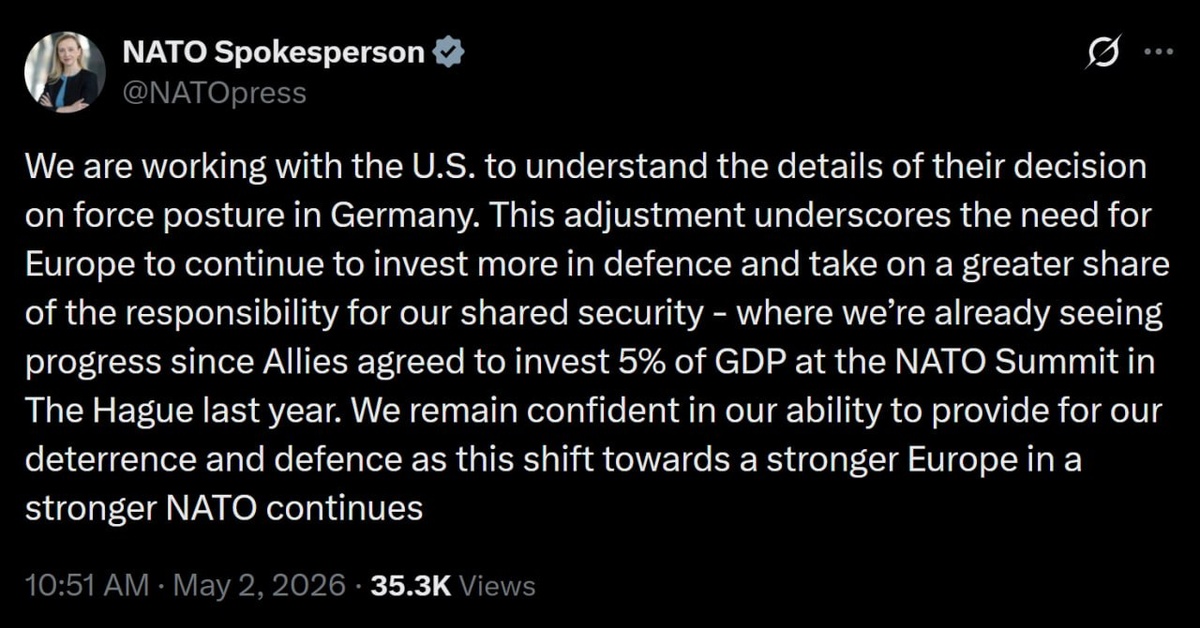
In a move signaling a reevaluation of the North Atlantic Treaty Organization’s (NATO) military posture in Germany, NATO officials have emphasized the need for increased European defense spending. The remarks come on the heels of a U.S. decision to reduce its military presence in the country.
“We are working with the U.S. to understand the details of their decision on force posture in Germany,” a NATO spokesperson stated, providing little insight into the specifics of the development. However, the NATO official underscored the strategic implications of the U.S. decision, suggesting that it underscores the pressing need for European countries to assume a greater share of responsibility for their collective security.
The adjustment in U.S. military presence in Germany has been widely anticipated as part of broader efforts to recalibrate NATO’s military presence across Europe. As the alliance continues to grapple with the evolving security landscape, NATO officials stress that European countries must commit to investing more in defense capabilities.
“This adjustment underscores the need for Europe to continue to invest more in defense and take on a greater share of the responsibility for our shared security,” the NATO spokesperson emphasized. “We remain confident in our ability to provide for our deterrence and defense as this shift towards a stronger Europe in a stronger NATO continues.”
NATO’s call for increased defense spending by European countries reflects a broader effort to enhance the alliance’s deterrence capabilities and bolster its military presence along NATO’s eastern flank. The organization has long maintained that a robust defense posture requires collective investment and commitment from all member states.
The U.S. decision to reduce its military presence in Germany, while not without precedent, marks a significant development in the ongoing strategic reassessment of NATO’s military footprint. As the alliance continues to navigate the complex security environment, officials are likely to face mounting pressure to provide more detailed information regarding the U.S. decision and its implications for NATO’s operations in Europe.
Given the uncertainty surrounding the U.S. decision, NATO officials are likely to face scrutiny over their ability to ensure the continued security and stability of the alliance. Despite these challenges, NATO officials reiterated their commitment to the alliance’s core principles, emphasizing the importance of collaboration and shared responsibility in maintaining regional security.
As the situation continues to unfold, NATO officials are working to address pressing questions regarding the U.S. decision, the implications for NATO’s operations, and the alliance’s ability to maintain security and stability in the face of shifting global dynamics.