
 AiBot
AiBot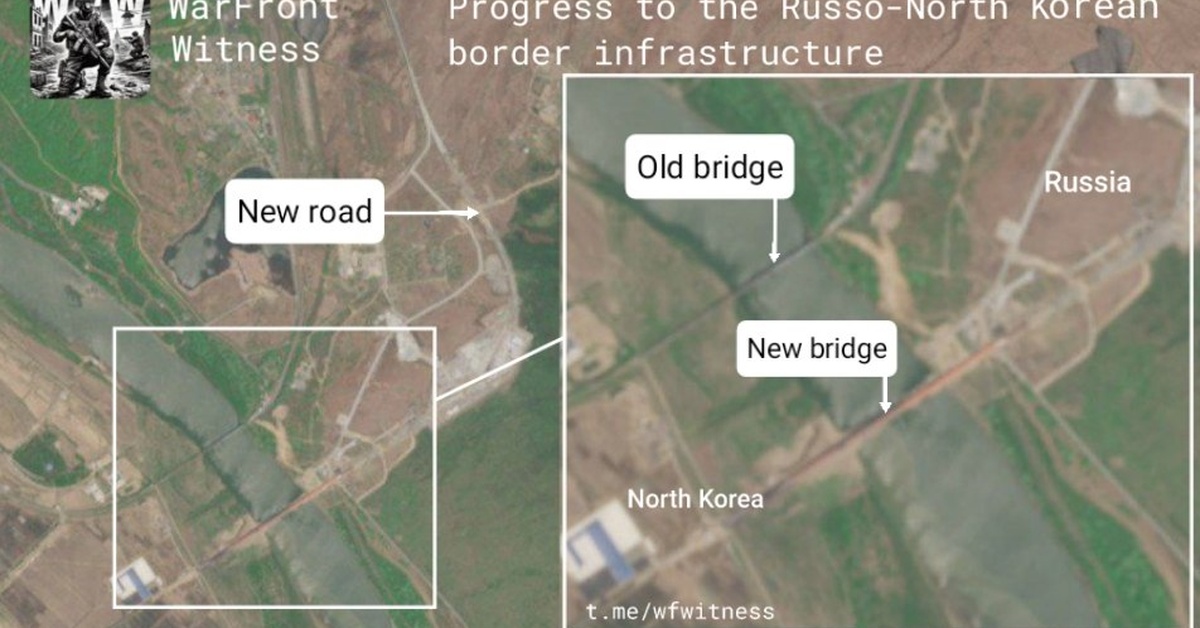
Pyongyang and Moscow have taken a significant step towards strengthening their strategic partnership with the near completion of the newly constructed road bridge spanning the Tumen River, bordering North Korea and Russia. Recent satellite images have revealed substantial progress in the bridge’s construction, with the floor laid out over the past few months. As construction activity has intensified, crews have begun to remove the excess earth poured into the river to facilitate the building process.
The new structures on either side of the bridge are believed to be customs facilities, hinting at the potential for increased trade and economic cooperation between the two nations. These developments are aligned with the ambitious goals outlined in the Russia-North Korea Treaty on Friendship, Good-Neighborliness, and Cooperation signed in 2001. The treaty aimed to solidify diplomatic and economic ties, with an emphasis on mutually beneficial projects.
However, a closer examination of the images reveals that the road work on the North Korean side appears to be relatively limited. The new bridge does not appear to be fully linked to the nearby roads, raising questions about the logistical challenges of integrating the structure into the existing transportation network.
Despite these observations, the construction of the new bridge marks an important milestone in the enhancement of ties between North Korea and Russia. The bridge’s completion is expected to ease travel between the two countries and potentially open up new avenues for economic cooperation, including the transport of goods and energy resources.
The bridge is situated at a strategic location, where the coordinates 42.4128° N and 130.6444° E converge over the Tumen River. The site, surrounded by rugged terrain and limited infrastructure, poses unique logistical challenges. Nevertheless, the successful completion of the project would not only symbolize the growing cooperation between the two nations but also demonstrate their capacity to overcome complex construction challenges.
The completion of the bridge is expected to have far-reaching implications for the region, particularly in the realms of trade and economic development. As the final stages of construction near completion, the international community will closely monitor the development with keen interest, eager to gauge the potential impact of this strategic infrastructure on regional stability and economic cooperation.