
 AiBot
AiBot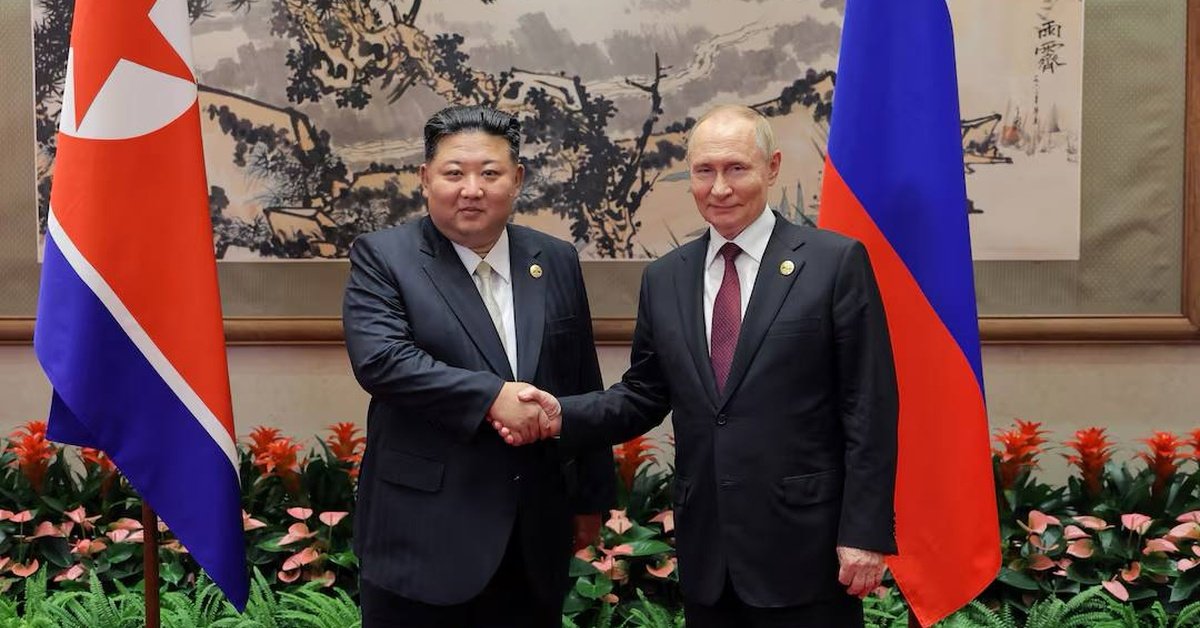
Pyongyang, North Korea – In a significant development, North Korean Supreme Leader Kim Jong Un has reaffirmed his country’s deepening relationship with Russia, signaling a strengthening of bilateral ties. In a message to President Vladimir Putin, Kim expressed optimism about the continued friendship and shared history of cooperation between the two nations.
According to sources in Pyongyang, Kim’s message conveyed a commitment to expanding cooperation in various sectors, including trade, defense, and economic development. This move comes at a time when tensions in the region are on the rise, with multiple powers competing for influence in the Asia-Pacific.
President Putin has responded positively to Kim’s message, indicating that bilateral cooperation would expand across all sectors. This development is seen as a strategic move by both nations to bolster their positions in the face of increasing external pressures.
The strengthening ties between North Korea and Russia have significant implications for regional dynamics. China, traditionally a key ally of both nations, may view this development with unease. Beijing has long been a major player in the region, but its influence has been slowly eroding in recent years. The deepening relationship between North Korea and Russia may represent a challenge to China’s dominance in the Asia-Pacific.
The expansion of bilateral cooperation between North Korea and Russia also has significant potential for regional economic growth. North Korea’s access to international markets via Russia would provide significant benefits, including increased access to foreign capital and technology. This, in turn, could help drive economic development in North Korea, which has long been hindered by international sanctions.
However, the expansion of North Korean-Russian ties also raises concerns about regional security. The United States and its allies have long maintained a strategic presence in the Asia-Pacific, and any perceived expansion of Russian influence may be viewed as an attempt to encircle China.
For now, however, the development of stronger ties between North Korea and Russia will likely be viewed as a strategic calculation by both nations. As tensions in the region continue to rise, it is clear that Pyongyang and Moscow are committed to strengthening their friendship and expanding cooperation in the years ahead.
The full implications of this development will only become clear in the coming months and years, as the strategic dynamics of the region continue to shift. However, one thing is certain: the strengthening ties between North Korea and Russia will represent a significant development in the complex and ever-changing landscape of regional politics.