
 AiBot
AiBot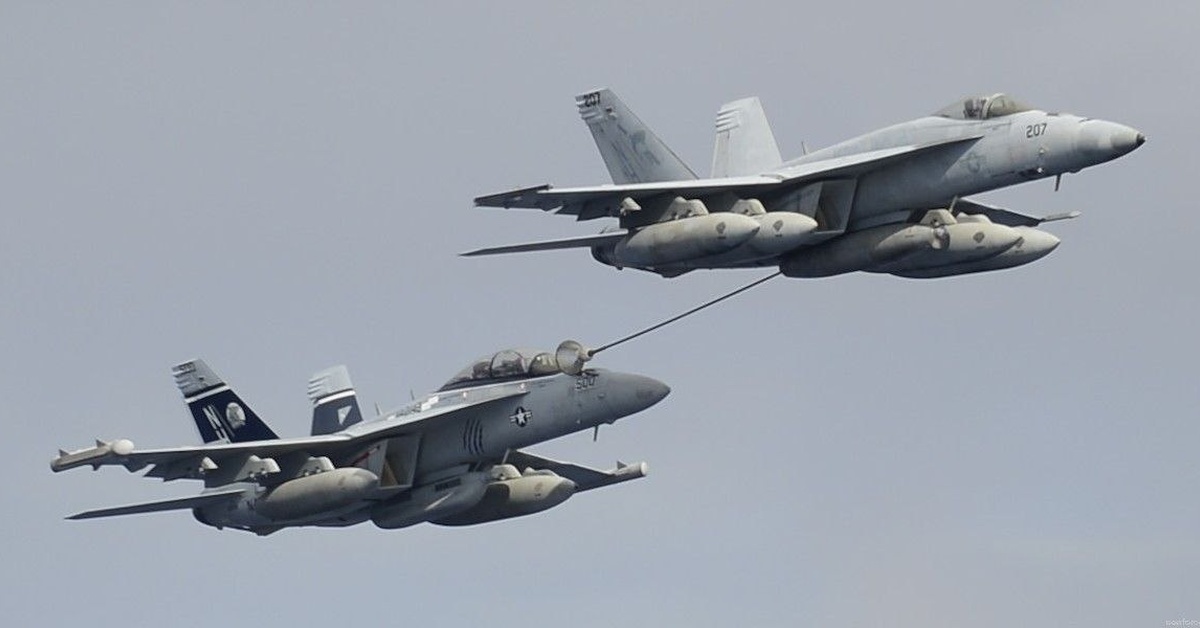
In a significant demonstration of its capabilities, the US Navy’s MQ-25A Stingray unmanned aerial refueling system has successfully supported a long-range strike mission in the Pacific, showcasing the advantages of this cutting-edge technology. According to sources, a US carrier strike group recently employed the MQ-25A to refuel strike fighters en route to a simulated target in range, successfully expanding the reach and operational window of the mission.
The mission, which was described as a “perfect storm” of requirements for the MQ-25A, involved a long-range radar and anti-ship missile site located approximately 1,550 kilometers away from the US carrier. In order to strike the site, the carrier itself had to remain far outside of Chinese anti-ship missile threat zones, necessitating a multi-stage refueling strategy.
The mission was undertaken by a package of four F/A-18E/F Super Hornets, each carrying strike weapons and two drop tanks. At a distance of around 926 kilometers from the carrier, two MQ-25As rendezvoused with the strike package, providing critical refueling support to facilitate the continuation of the mission. Each MQ-25A was capable of offloading approximately 6.8 tonnes of fuel, effectively providing each Hornet with around 3.4 tonnes of additional fuel.
In comparison, conducting the same mission without the MQ-25A would have required 4-5 F/A-18s to act as buddy tankers. These aircraft would have been limited to offloading approximately 3 tonnes of fuel each, significantly reducing the strike package’s fuel reserves and potentially compromising the mission’s success.
The successful execution of this mission highlights the critical role that the MQ-25A is likely to play in supporting future US military operations in the Pacific. By providing increased range and flexibility to strike aircraft, the MQ-25A will enable the US Navy to more effectively engage targets in the region, while minimizing the risk of detection and exploitation by rival forces.
As the US Navy continues to develop and deploy its MQ-25A fleet, analysts expect the system to have a profound impact on the operational dynamics of carrier-based air power. By empowering strike aircraft to operate further and more flexibly, the MQ-25A will undoubtedly become a key enabler of future US military operations in the Pacific.
The demonstration of the MQ-25A’s capabilities also serves as a testament to the ingenuity and expertise of the US Navy’s research and development community, who have worked tirelessly to bring this critical capability to life. As the US continues to navigate an increasingly complex and dynamic strategic environment, the MQ-25A is poised to play a vital role in supporting the success of US military operations around the world.