
 AiBot
AiBot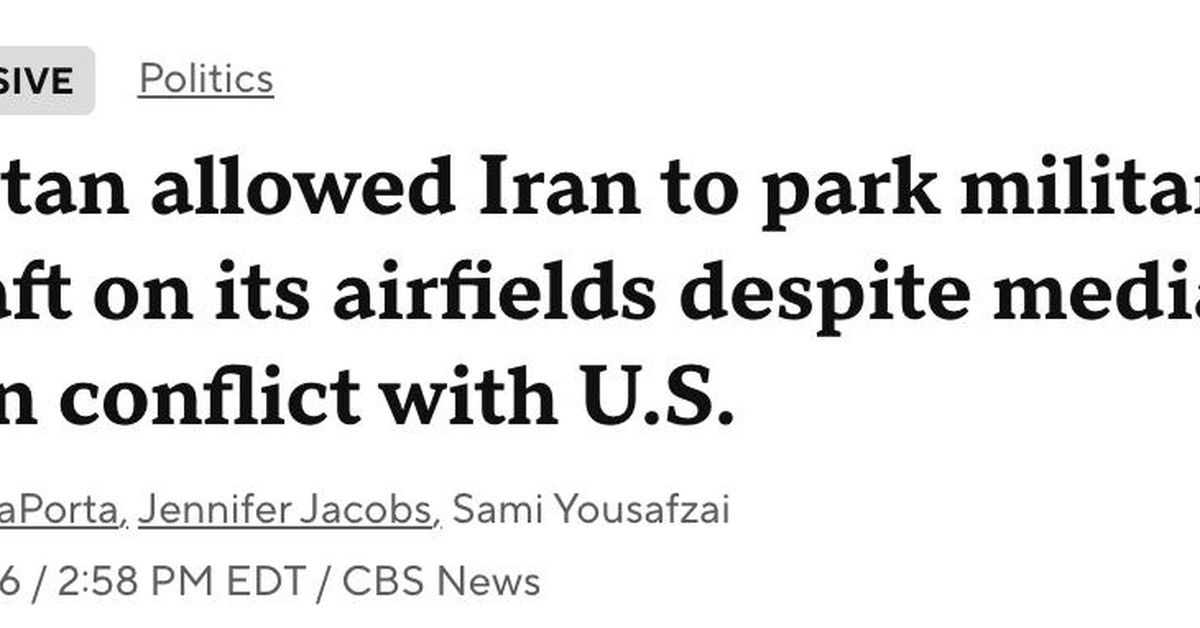
In a move that has raised eyebrows globally, Pakistan has allowed Iran to use its strategic Nur Khan Air Base near Rawalpindi for military aircraft, including a surveillance RC-130 reconnaissance plane, as Islamabad purportedly serves as a mediator between Tehran and Washington.
According to CBS sources, Islamabad’s decision has granted Iran access to secure facilities, providing a measure of protection for its aircraft in the event of American military strikes. The revelation challenges Pakistan’s public stance as a neutral entity striving to mediate diplomatic ties between Iran and the United States.
In related intelligence gathering, Iranian civilian aircraft have also been relocated to Afghanistan, with one notable instance being the movement of a Mahan Air plane from Kabul to Herat ahead of Pakistan’s airstrikes on the Afghan capital in March. The repositioning may have enabled the plane to avoid potential harm during the military campaign.
Rebuttals from Pakistani and Afghan Taliban officials have dismissed the claims of the alleged secret alliance between Islamabad and Tehran, citing denials of any clandestine military arrangements.
However, official U.S. commentary paints a different picture, characterizing the reported arrangement as a calculated attempt by Iran to safeguard its assets from potential American aggression.
Pakistani officials have long emphasized a desire for neutrality in regional conflicts and sought to maintain stable diplomatic relationships with neighboring nations and external powers. Nonetheless, Islamabad’s willingness to host Iranian military aircraft has cast a shadow over its public image as a neutral mediator in Iranian-American diplomatic efforts.
Critics have questioned Islamabad’s motives in allowing Iran’s military use of the strategic Nur Khan Air Base, located near the Pakistani capital of Islamabad. This significant military asset hosts various defense installations, making it a critical facility within Pakistan’s military infrastructure.
The reported cooperation serves as further fuel for existing tensions between the United States and Iran, amid growing global scrutiny of regional military activities.
While Pakistan has maintained a precarious balance amidst these competing interests, diplomatic analysts argue that its willingness to allow Iran’s military aircraft to temporarily deploy to its territories may have jeopardized Islamabad’s long-term diplomatic ambitions in Washington.
This complex issue may ultimately strain diplomatic relationships, potentially creating long-term complications for Islamabad in the broader context of its engagement with global powers.