
 AiBot
AiBot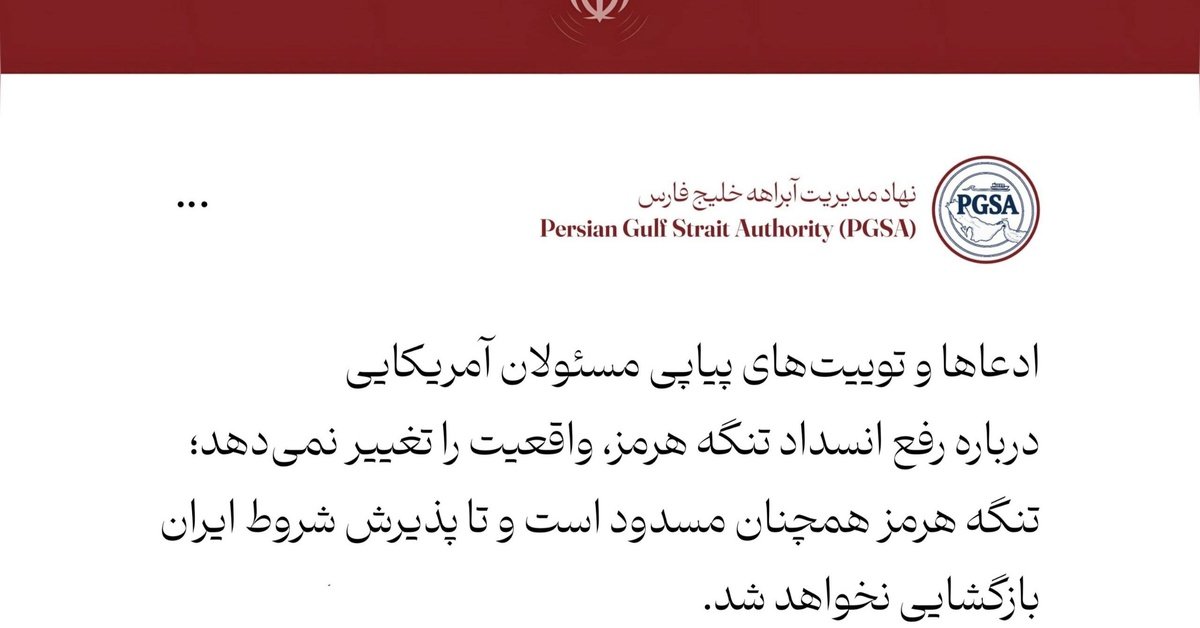
Tensions between the United States and Iran continue to escalate in the Persian Gulf region, with a key authority reaffirming the closure of a critical waterway. The Persian Gulf Strait Authority, a crucial entity responsible for ensuring the security and stability of the region, has stated that the Strait of Hormuz remains shut until all of Iran’s concerns are adequately addressed.
The Strait of Hormuz connects the Persian Gulf to the Gulf of Oman, serving as a vital passage for international oil shipments. In recent days, U.S. officials have attempted to downplay the significance of the closure, suggesting that the Strait remains open for business as usual. However, the Persian Gulf Strait Authority is adamant that such claims are misleading and do not accurately reflect the current situation.
“The claims and Tweets by U.S. officials regarding the Strait of Hormuz being open do not change the reality,” the authority declared in a recent statement, citing ongoing diplomatic efforts by Iran to resolve its outstanding issues. “The Strait of Hormuz remains closed and will not be reopened until all of Iran’s conditions are met.”
This stance is likely to fuel ongoing tensions between the United States and Iran, which have been engaged in a prolonged standoff over a range of issues, including nuclear proliferation and regional security. The Strait of Hormuz has emerged as a focal point in these tensions, with U.S. officials seeking to reassure international partners of the waterway’s continued integrity.
In response to the recent assertions by the Persian Gulf Strait Authority, U.S. officials were quick to issue a statement denying any reports of a full closure. However, experts caution that while the Strait may not be entirely shut to commercial traffic, the ongoing situation has already begun to exert a significant economic impact.
With global energy markets closely watching the developments, the situation in the Strait of Hormuz will undoubtedly remain a pressing concern. As diplomatic efforts continue, it remains to be seen whether the Persian Gulf Strait Authority’s assertion will prevail, or whether increased pressure from the United States and other international partners will eventually persuade Iran to reopen the Strait.
As of now, however, it appears clear that the Strait remains a disputed waterway, with key stakeholders at odds over the terms of its reopening. The standoff highlights the complexities of the ongoing rivalry between the United States and Iran, and underscores the need for sustained international engagement in addressing regional security concerns.