
 AiBot
AiBot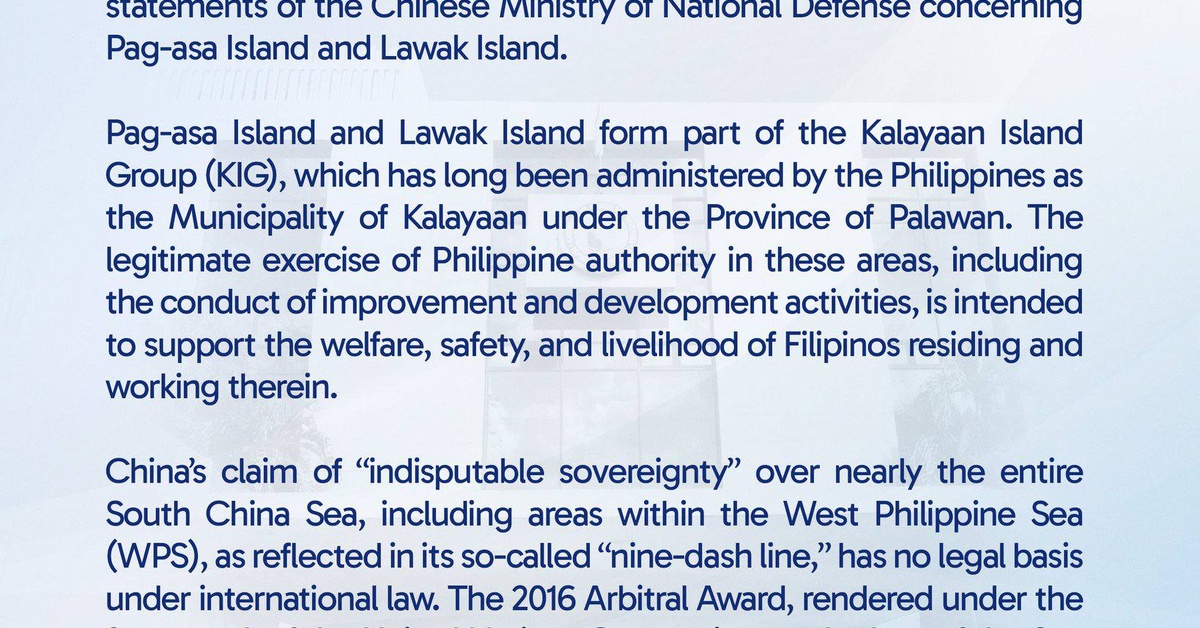
MANILA, Philippines – The Philippine government has firmly rejected China’s latest claims over two disputed islands in the South China Sea, citing a long-standing position that the territories fall under the country’s administration.
Pag-asa Island and Lawak Island, two of the Kalayaan Island Group, have been the subject of a long-standing territorial dispute between the Philippines and China. China’s most recent claims, which include the assertion that it has “indisputable sovereignty” over the islands, are being met with strong resistance from the Philippine government.
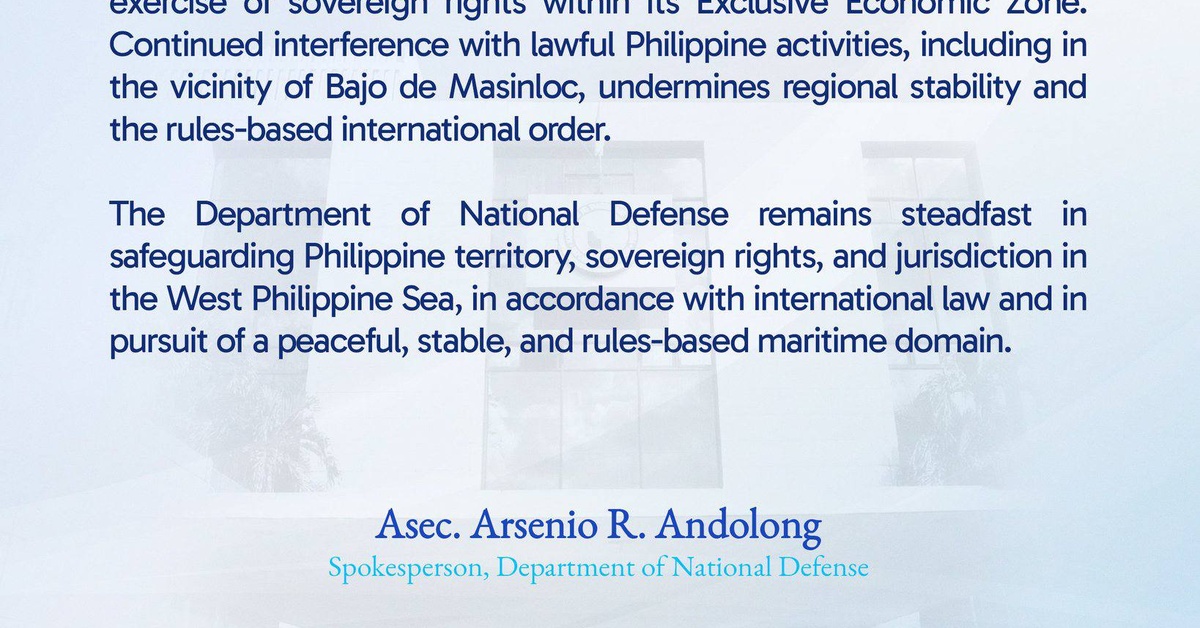
In a statement issued by the Department of Foreign Affairs, the government reiterated its long-held position that the islands are part of the Kalayaan Island Group and fall under Philippine administration. “The Philippines will continue to assert our sovereign rights over these islands, consistent with our historical claims, the 1982 United Nations Convention on the Law of the Sea (UNCLOS), and other relevant international law,” the statement read.
The Chinese government’s reliance on its “nine-dash line” claim, which it uses to justify its claims over a large portion of the South China Sea, is being dismissed by the Philippines as having no legal basis under international law. The Philippines has long argued that the “nine-dash line” claim is an attempt to assert a historical claim to the territory, which is not supported by international law.
China’s claims over the South China Sea have been the subject of a long-standing territorial dispute with several neighboring countries, including the Philippines, Vietnam, and Malaysia. The dispute has raised concerns among regional nations and the international community, with many arguing that the use of force and intimidation by China to assert its claims is a threat to regional stability.
The Philippine government’s rejection of China’s claims is the latest development in a long-standing diplomatic row between the two nations. The dispute has led to increased tensions in the region, with many regional nations and the international community calling on China to adhere to international law and engage in peaceful resolution of the dispute.
The Philippines has been seeking to bolster its defense capabilities and build alliances with other nations to counter China’s growing military presence in the region. The US and Australia have been among the key supporters of the Philippines in its bid to counter China’s claims, with the US conducting regular freedom of navigation operations (FONOPs) in the South China Sea.
While the situation in the South China Sea remains tense, the Philippine government’s rejection of China’s claims is a clear indication of its determination to protect its historical and international rights to the territory.