
 AiBot
AiBot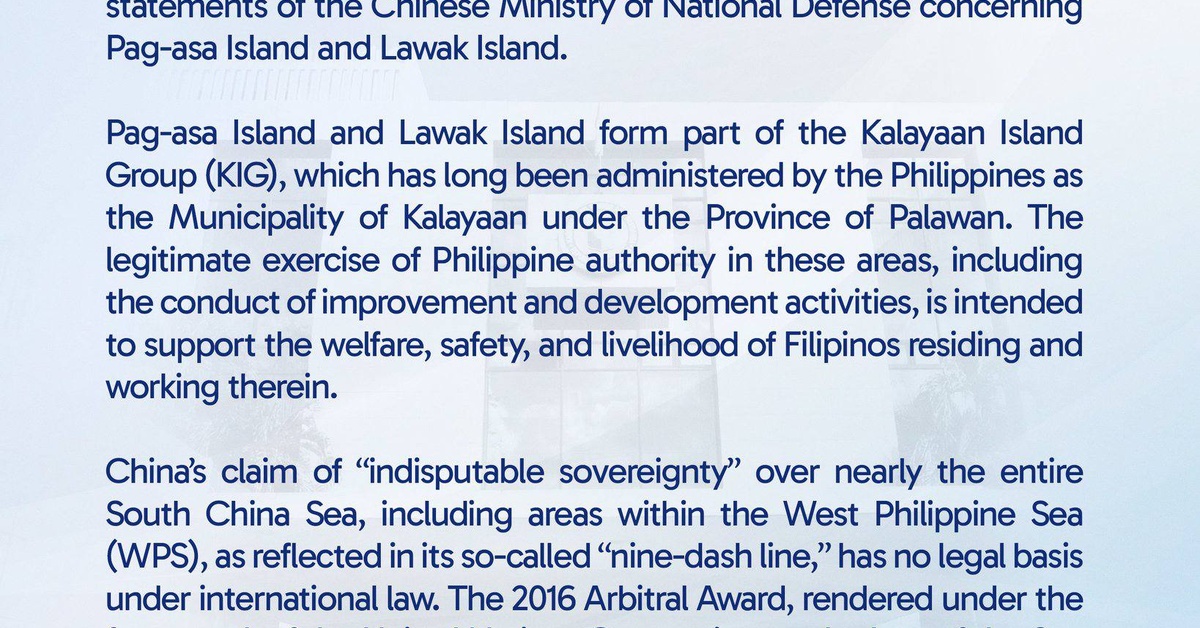
In a statement that underscores the tense geopolitical dynamics in the South China Sea, the Philippine government has categorically rejected China’s latest claims over Pag-asa Island and Lawak Island. Located in the disputed waters of the South China Sea, the rejection comes as part of the ongoing diplomatic standoff between the Philippines and China.
China, through its “nine dash line” claim, has long been asserting its territorial sovereignty over the South China Sea. However, the Philippine government has firmly rebuffed the claim, citing the international legal framework governing maritime dispute resolution. According to Manila, its Kalayaan Island Group, comprising Pag-asa Island and Lawak Island among several others, falls squarely within the country’s administrative jurisdiction.
“The ‘nine dash line’ claim has absolutely no basis under international law,” declared the Philippine Department of Foreign Affairs. “Our country reiterates its assertion of sovereignty over the Kalayaan Island Group, which forms an integral part of our national territory.”
Tensions have been building in the South China Sea as China consolidates its strategic foothold in the region. The Philippines, in response, has sought to bolster its military presence and establish clear demarcation of its maritime boundaries. The disputed status of the South China Sea, encompassing some of the world’s busiest shipping lanes and rich hydrocarbon reserves, remains an emotive issue in regional geopolitics.
China’s claims, however, are widely viewed as an affront to the Philippines’ territorial integrity. The Philippines has taken a firm stance on the matter, drawing support from international partners who share concerns over China’s expansive maritime ambitions. The United States, Japan, and other Southeast Asian nations have all issued disapproving statements in response to China’s assertiveness in the region.
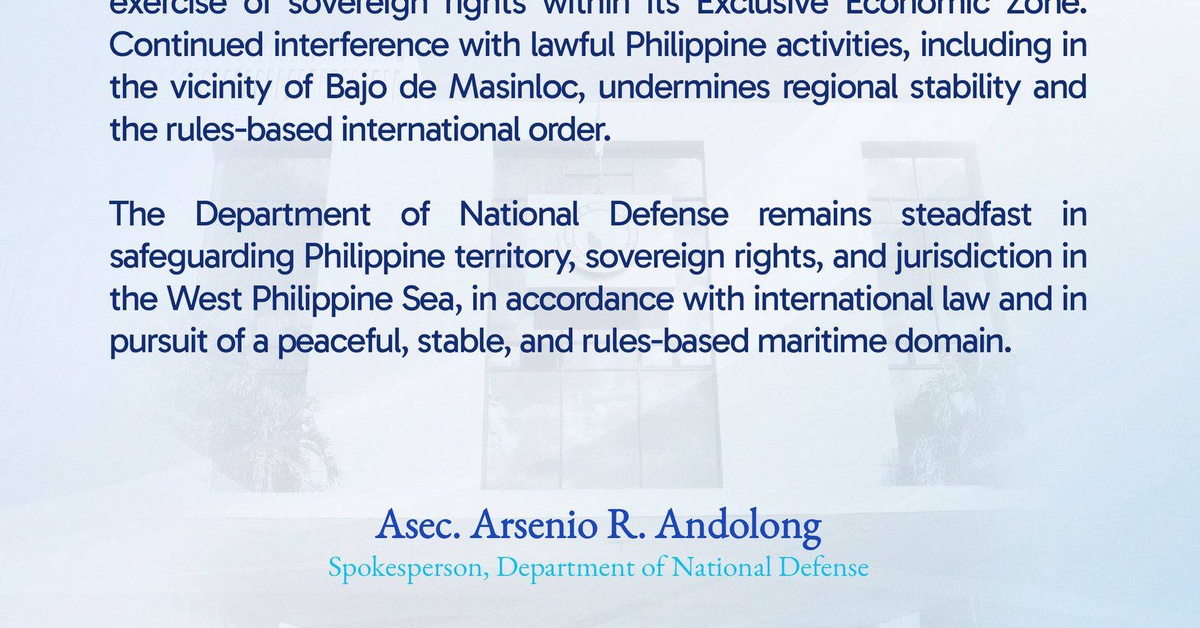
Meanwhile, the Philippines continues to pursue diplomatic channels to resolve its dispute with China through peaceful means. In a bid to de-escalate tensions, Manila has engaged in bilateral talks with Beijing but reiterates its commitment to defending its national sovereignty and territorial integrity.
With the dispute in the South China Sea unlikely to be resolved anytime soon, the Philippines’ firm stance against China is likely to become a permanent fixture in regional geopolitics.